
Silica sand production is a major trend in the mining industry. Many customers want to know the entire process of quartz sand production. This article lists the production process of silica sand in detail for everyone.
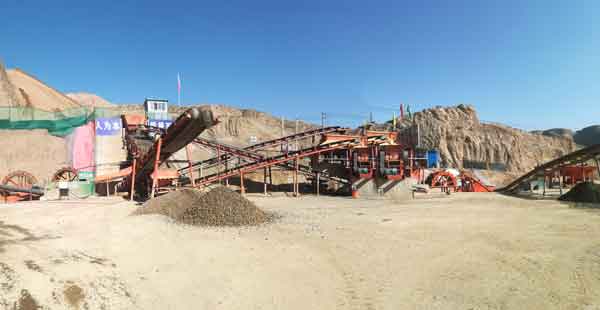
Beneficiation involves sorting and classifying ore, followed by water washing, grading desliming, scrubbing, and acid leaching.
Water Eluting Mud: The SiO2 grade in silica sand decreases as the grain size of quartz sand becomes finer, while the grade of impurity minerals shows the opposite trend. This phenomenon is particularly evident in silica sand containing significant amounts of clay minerals, making it essential to wash and remove sludge from raw quartz sand before selection.
Scrubbing: Utilizing mechanical forces and the grinding/peeling action between sand particles to remove thin-film iron and muddy impurity minerals from the surface of silica sand. This process further breaks down unconsolidated mineral aggregates, achieving enhanced purification of quartz sand through subsequent classification operations. Currently, two primary methods are employed: rod scrubbing and mechanical scrubbing.
Acid Leaching: Dilute acid is highly effective for removing iron and aluminum, while concentrated sulfuric acid and aqua regia are used to remove titanium and chromium. Typically, a mixed acid solution comprising these acids is employed for leaching and eliminating impurity minerals. The parameters of the acid leaching process must be optimized based on the required final grade of silica; specifically, acid concentration, temperature, and dosage should be minimized to achieve quartz purification at a lower beneficiation cost.
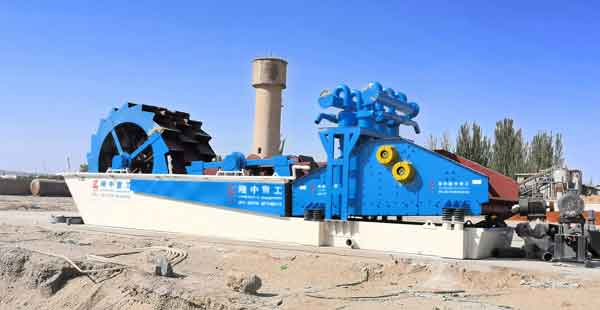
Ore washing is applied when no obvious impurities are visible to the naked eye. This process involves scrubbing ores cemented by clay or containing significant mud using hydraulic or mechanical forces to break up the ore and wash off and separate fine surface mud. Commonly used equipment includes cylinder scrubbers, hydraulic ore washing sieves, trough-type ore washing machines, vibrating ore washing sieves, belt sieve scrubbers, and more. Additionally, various screening devices (such as fixed screens and roller screens) and spiral classifiers can also serve as ore washing equipment.
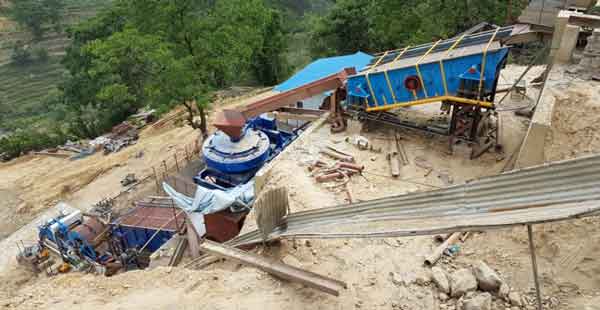
Set the furnace temperature to 860°C, feed the silica sand into the furnace, and discharge the material based on the redness of the stones.
Use cooling water to quench the silica sandstone to achieve a loose structure.
The material is first crushed by a jaw crusher and then further reduced in size by a roller mill.
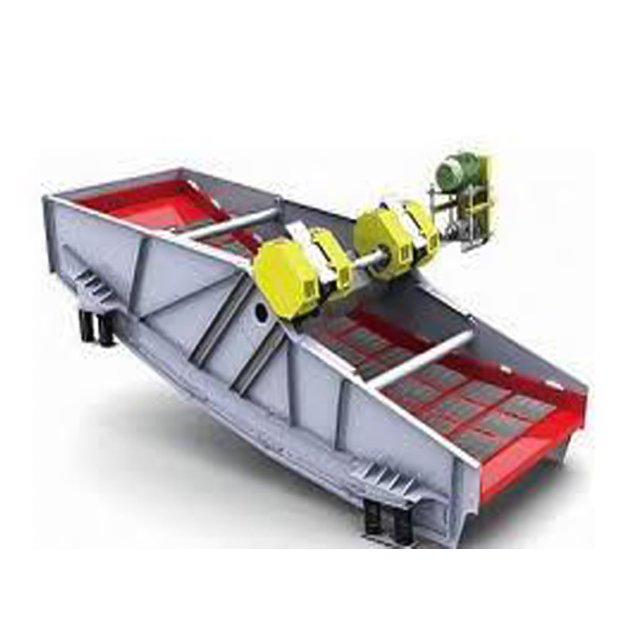
The crushed silica sand needs to be classified by mesh number and is typically screened using a vibrating screen.
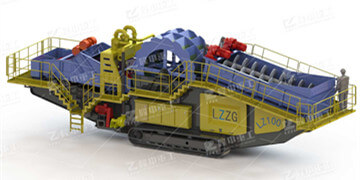
The sieved silica sand requires multiple washing cycles. Generally, the washing equipment used is a sand washing machine. Common types include wheel sand washing machines, spiral sand washing machines, and drum sand washing machines.
The washed silica sand needs to be dewatered using a centrifuge.
The dewatered silica sand must enter the dryer for drying treatment.
The material then passes through a magnetic separator again to remove iron impurities.
Finally, it enters the flotation machine for further purification and selection
appropriate silica sand.
Finally, after manual inspection, the silica sand is packaged and put into storage.
The process requires strict operational control and high-quality raw materials to ensure the quality and output of the final product. Additionally, silica sand production may generate pollutants such as exhaust gas, wastewater, and waste residue, which must be properly treated and disposed of to meet environmental requirements.
Please enter your inquiry and contact. We will reply you as soon as possible.
We are here for your questions anytime 24/7, welcome your consultation.
The latest sand washer price.
Installation and maintenance.
Screening
Sand Washing Machines
Sludge Treatment
Sand Recycling Machines
Address: Shuangyue Road, Changdai Town, Mengjin County, Luoyang, China
Email: export@lylzzg.com
Tel: +86-18736301510


 日本語
日本語 Русский
 中文
中文 Español
 Français
 Português
 العربية
 Tiếng Việt
 Deutsch
 한국어
한국어 Türkçe
 বাংলা
বাংলা हिन्दी
 Bahasa Melayu
 Kiswahili