
Vibrating screens come in many classifications, primarily divided into circular vibrating screens and linear vibrating screens based on the movement trajectory of the materials. Both categories are commonly used screening equipment in daily production. Today, we will explore the differences between them.
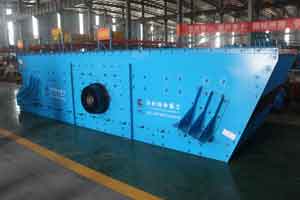
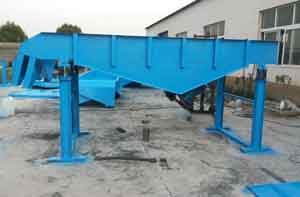
The motor drives the eccentric block of the vibration exciter via V-belts to generate high-speed rotation, creating significant centrifugal inertia force that induces circular motion with a specific amplitude in the screen box. Material on the screen experiences impulses transmitted by the screen box across the inclined surface, resulting in continuous throwing action. As particles contact the screen surface, those smaller than the mesh openings pass through, achieving effective classification.
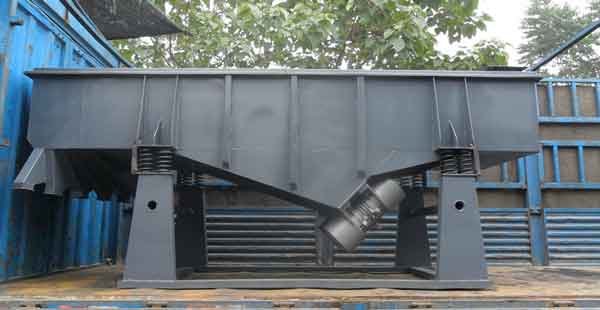
Vibration motors serve as the excitation source, causing material to be thrown upward while advancing linearly across the screen. Feed enters the screening machine inlet uniformly from the feeder and passes through multi-layer screens, producing several sizes of oversize and undersize materials, which are discharged separately through their respective outlets.
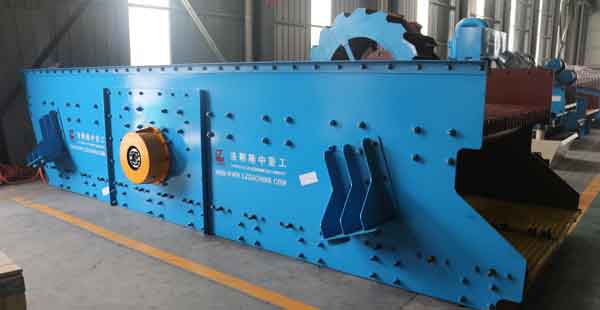
On a circular vibrating screen, materials follow a circular motion path, whereas on a linear vibrating screen, materials move forward in a straight line.
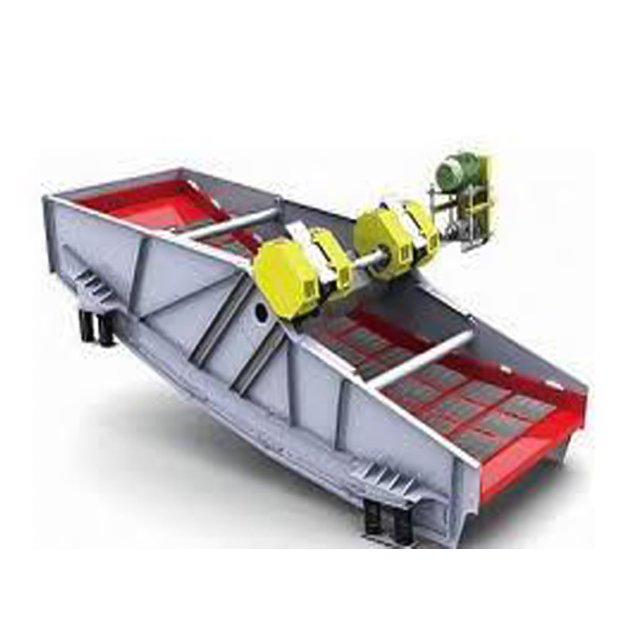
The circular vibrating screen is also known as a single-shaft vibrating screen because its exciter consists of a shaft driven by an inertial motor. In contrast, the linear vibrating screen’s exciter comprises two shafts and operates based on vibration motor excitation principles, hence it is also referred to as a double-shaft vibrating screen.
On a circular vibrating screen, materials move in a parabolic trajectory across the screen surface. This motion maximizes material dispersion and enhances bounce force, helping dislodge particles stuck in mesh openings and significantly reducing screen blinding.
The linear vibrating screen features a low inclination angle on its screen surface, resulting in a reduced overall height that facilitates easier process layout and integration.
For circular vibrating screens, the screen surface inclination can be adjusted based on material particle size. This adjustment alters the material’s travel speed along the screen, thereby increasing the machine’s processing capacity. In contrast, the screen surface inclination of linear vibrating screens is typically kept relatively small during production operations.
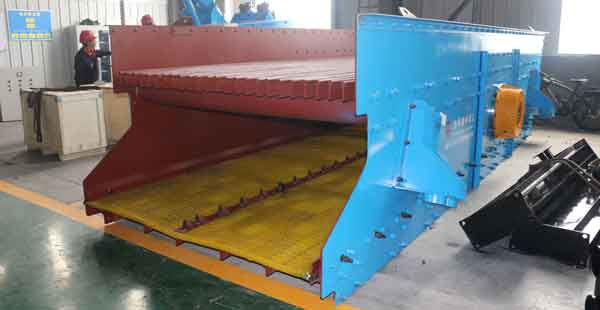
Typically, circular vibrating screens are constructed from thicker plates, with the box made of manganese steel to withstand material impact during screening. In contrast, linear vibrating screens primarily utilize lightweight plates or stainless steel plates in their production.
Circular vibrating screens are designed for materials with high specific gravity, large particle sizes, and high hardness, making them widely used in mining, coal processing, quarrying, and other extraction industries. Linear vibrating screens are suited for fine particles, low-specific-gravity materials, and those with lower hardness—such as dry powders, fine granules, or micro-powders—and are commonly applied in the food, chemical, building materials, and pharmaceutical sectors.
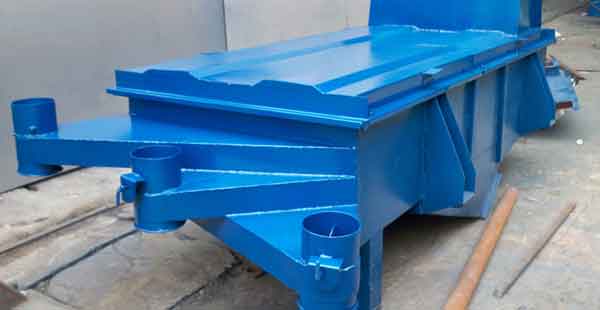
In circular vibrating screens, the exciter is positioned above the center of gravity of the screen box. This configuration causes the major axes of the elliptical motion at both ends of the screen box to form a lower-eight pattern. At the feed end, the upper part of the elliptical major axis faces the discharge direction, facilitating rapid material spread. Conversely, at the discharge end, the upper part of the elliptical major axis opposes the discharge direction, slowing down material movement and enhancing the penetration of difficult-to-screen materials. Additionally, the arc-shaped screen surface increases the effective screening area, thereby improving overall processing capacity.
Linear vibrating screens can be designed with a fully enclosed structure to prevent dust leakage, offering superior environmental protection benefits.
Please enter your inquiry and contact. We will reply you as soon as possible.
We are here for your questions anytime 24/7, welcome your consultation.
The latest sand washer price.
Installation and maintenance.
Screening
Sand Washing Machines
Sludge Treatment
Sand Recycling Machines
Address: Shuangyue Road, Changdai Town, Mengjin County, Luoyang, China
Email: export@lylzzg.com
Tel: +86-18736301510


 日本語
日本語 Русский
 中文
中文 Español
 Français
 Português
 العربية
 Tiếng Việt
 Deutsch
 한국어
한국어 Türkçe
 বাংলা
বাংলা हिन्दी
 Bahasa Melayu
 Kiswahili