
Date: Dec. 14, 2020
Filter press is a commonly used solid-liquid separation equipment. Various failures will occur during the production process. This article introduces the failures and countermeasures of the filter press.
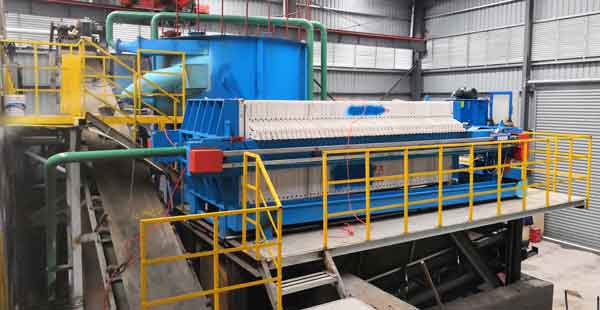
Excessively thick mud or residual dry blocks can cause blockage at the feed port. When there is no material between the filter plates, only the pressure from the hydraulic system acts on them, making the plates highly susceptible to damage due to prolonged stress. Insufficient feeding or the presence of inappropriate solid particles in the feed can also result in excessive force or structural damage to the frame. If the discharge outlet is blocked by solids, or if the feed valve or discharge valve is closed during startup, pressure cannot be released, potentially leading to severe damage. Inadequate cleaning of the filter plate may cause medium leakage. Once leakage occurs, the edges of the plate frame are prone to developing small grooves from impact. Significant medium leakage prevents pressure buildup, thereby hindering the formation of mud cakes.
Treatment method: Carefully use a nylon cleaning scraper to remove mud from the feed inlet. After completing this cycle, reduce the volume of the filter plate. Thoroughly inspect the filter cloth for any issues. Next, verify that the drain outlet is clear and unobstructed; open the corresponding pressure valve to release pressure. Finally, carefully clean and repair the filter plate.
Low hydraulic pressure. Wrinkles or gaps in the filter cloth. If these occur, replace the filter cloth immediately. Unknown objects resembling blockages on the sealing surface.
Treatment method: Increase hydraulic pressure accordingly, change the filter cloth, or use a nylon scraper to remove unknown lumps from the sealing surface.
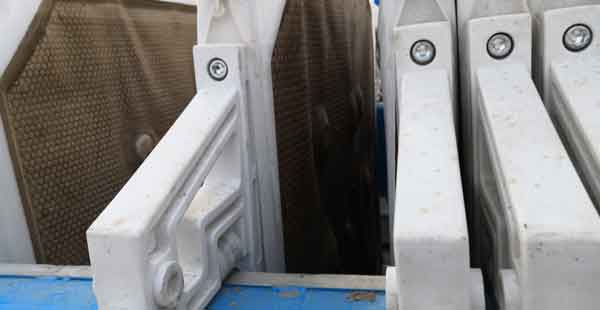
Main causes: Feed particle size is too small, concentration is too low, insufficient feeding, or blocked outlets, leading to uneven distribution and difficulty in forming a filter cake.
Treatment method: Adjust the production workflow, optimize material supply (increase or decrease as needed), clear blockages, clean feed and discharge holes, clean or replace filter cloths, increase pressure or pump power, start at low pressure, and maintain constant pressure increases.
The oil pump fails to discharge oil. The sequence valve is set to a pressure that is too low, or the valve core is stuck in the open position. The oil filter is clogged. The oil level in the tank is too low, causing the oil pump to run dry. The viscosity of the hydraulic oil is too high, making it difficult for the pump to draw oil. Internal components of the pump are severely worn, resulting in significant internal leakage and preventing the system from reaching rated pressure and flow values.
Treatment methods: Overhaul the oil pump. Overhaul the sequence valve. Clean the oil filter. Refill the oil reservoir. Change the oil or raise the oil temperature. Overhaul or replace the oil pump.
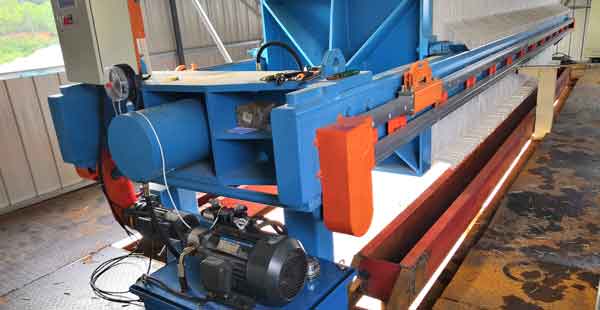
Filter plates may move slowly due to excessive oil and dirt accumulation on the guide rod, potentially leading to detachment—a significant safety hazard.
Solution: Promptly clean oil and stains from the guide rod and apply grease to ensure proper lubrication and prevent accidents. Strictly avoid using thin oil on the rod, as this increases the risk of plate slippage and potential personal injury.
Abnormal noise can result from motor aging combined with excessive load, or damage to the high-pressure oil pump. Typically a plunger pump, the high-pressure oil pump is prone to plunger damage if hydraulic oil quality is compromised or its service life has expired. Additionally, misalignment of the coupling during hydraulic station installation can cause excessive motor vibration and increased load.
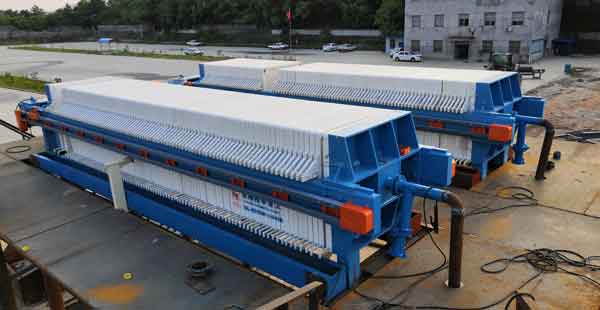
The filter cake is clamped against the sealing surface of the filter plate frame, and the filter cloth requires washing. If the filter cloth is damaged and fails to meet sealing requirements, it must be replaced. If the feed concentration is too low, appropriately increase it to 500g/l.
Loose wires, incorrect wiring, poor contact or damage to components, and unsecured screws are common causes of electrical failures.
To effectively handle electrical faults, qualified electrical personnel must possess a solid understanding of electrical principles, as well as the fundamental operating principles and systems of various filter presses. This expertise ensures that any electrical issues with the filter press can be resolved promptly. During maintenance, priority should be given to inspecting components prone to failure, thereby ensuring rapid repair and preventing unnecessary losses.
Please enter your inquiry and contact. We will reply you as soon as possible.
We are here for your questions anytime 24/7, welcome your consultation.
The latest sand washer price.
Installation and maintenance.
Screening
Sand Washing Machines
Sludge Treatment
Sand Recycling Machines
Address: Shuangyue Road, Changdai Town, Mengjin County, Luoyang, China
Email: export@lylzzg.com
Tel: +86-18736301510


 日本語
日本語 Русский
 中文
中文 Español
 Français
 Português
 العربية
 Tiếng Việt
 Deutsch
 한국어
한국어 Türkçe
 বাংলা
বাংলা हिन्दी
 Bahasa Melayu
 Kiswahili