
The project design outlined in this article is built on the core concept of green mining. It focuses on the comprehensive utilization of stripped limestone from mines, gypsum powder from power plant solid waste, and fly ash. The process employs environmentally friendly, safe, and high-quality technologies for crushing, shaping, screening, and control. The facility produces high-quality sand and gravel aggregates, building materials, and ready-mixed mortar, with an effective output of 600 t/h and an average annual effective output of 1.8 million tons.
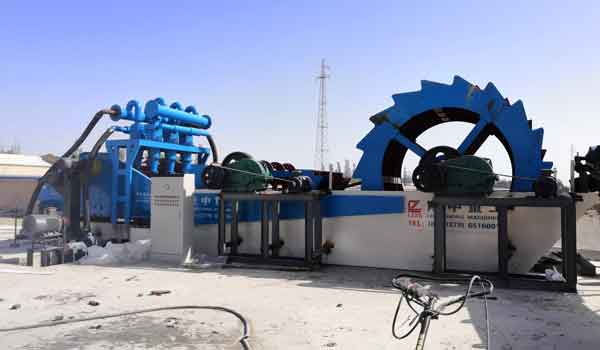
The entire production line, from raw material intake to finished product storage and delivery, encompasses civil engineering, machinery, structural, hydraulic, pneumatic, electrical, and automation control systems across the following subsystems:
1) Raw material transportation and desilting.
2) Raw material crushing; shaping and screening of semi-finished aggregates; shaping and screening of semi-finished machine-made sand products.
3) Process dust suppression, removal, collection, powder control, and humidification/stirring of machine-made sand.
4) Finished product transportation, finished product warehousing, finished product storage, and automatic loading of finished products.
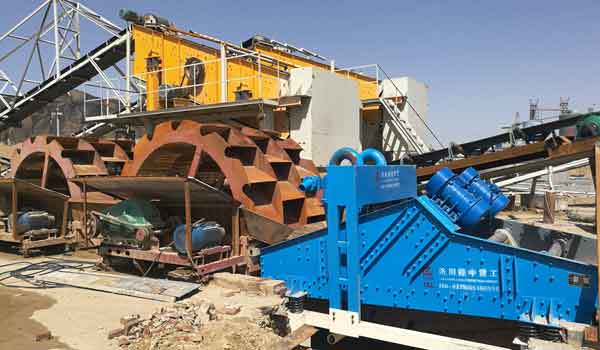
1) Overall Process Flow: Desilting + Crushing + Precision Shaping + Dry Dust Removal + Stone Powder Control + Graded Sand Production + Simultaneous Sand and Gravel Processing
2) Core Equipment Configuration: Multi-Cylinder Hydraulic Cone Crusher + Ultra-Fine Sand Making Machine + Vertical Shaft Impact (VSI) Shaping Machine + Vibratory Screen + High-Efficiency Dust Collector + Automatic Loading System
3) Layout Structure: Three-dimensional configuration with a compact footprint, maximizing land use efficiency.
4) Technical Positioning: Green mine design + Garden-style factory environment + Centralized control via single-operator interface + Convenient inspection with no blind spots.
5) Core Control Objectives: Real-time monitoring and adjustment of particle shape, gradation, powder content, and product variety to ensure consistency and superior quality.
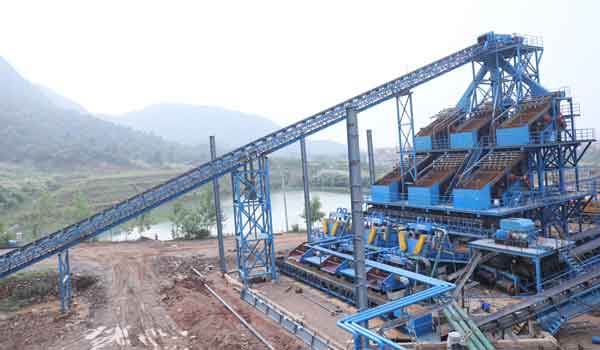
6) High-Quality Aggregate Production: Features low void ratio control, helping to reduce concrete costs and enhance concrete performance.
7) An intelligent loading system is adopted, ensuring organized discharge throughout the plant with no secondary pollution and zero material spillage within the facility area.
8) A dedicated high-efficiency centralized dust removal system features automatic air volume control and automated pipe cleaning, delivering energy savings and superior efficiency.
9) Dedicated software for fully automatic control and operation integrates intelligent, intensive technology from the variable frequency drive system to achieve high-efficiency performance and low energy consumption.
10) The organized emission concentration of particulate matter is maintained at a low index of ≤10mg/m³, with an optional ultra-low emission index of ≤5mg/m³ available.
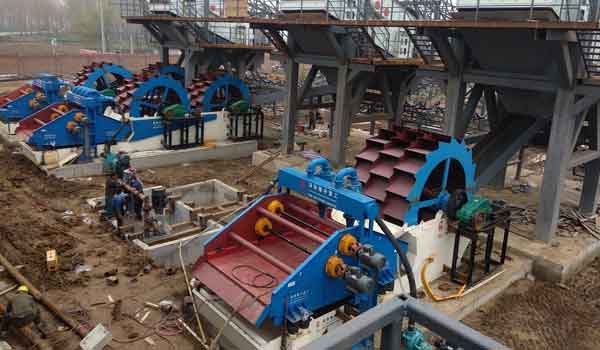
11) Factory boundary noise levels are controlled to ≤70dB.
12) Total power consumption across all stages (crushing + screening + conveying + shaping + dust removal + loading + control) is 2.63kWh/t.
13) Full-process three-dimensional design and optimized spatial layout significantly reduce costs and maintenance requirements for subsequent installation and commissioning, saving time and enhancing efficiency.
14) Finite element software-assisted analysis and calculations ensure that design results maximize production safety while utilizing materials in the most scientific and reasonable manner.
15) The deep integration of production process technology and structural assembly technology, combined with the multi-dimensional deployment of online monitoring and early warning systems, ensures maximum installation reliability, a low failure rate, and rapid maintenance throughout the entire life cycle of the complete production line. This approach further embodies the refined economic and technical concept of maximizing effective production time.
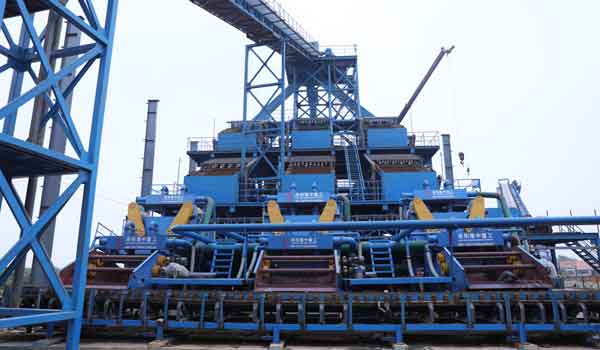
1) Transit operation: Uniformly extract material (particle diameter <100mm) at a rate of 1000t/h from the nearby limestone quarrying station and transport it via belt conveyor to the desilter screen for desilting operations.
2) Desilting operation: After passing through the vibrating screen group in the desilter screen, the material is separated into two fractions: soil/rock powder and ore (>10mm). The soil and rock powder are conveyed by belt conveyor to the mud bin (capacity: 2000t), where the limestone mud can be returned to the cement production line via belt conveyor. The ore fraction (>10mm) is transported by belt conveyor to the transfer warehouse (capacity: 15000t).
3) Fine crushing and shaping operation: The ore is conveyed to the by the belt conveyor at the bottom of the silo, where it is separated into two fractions: 0–45 mm and >45 mm. The former enters the shaping machine directly for processing and is then transported via belt conveyor to the at the screening building station; the latter goes straight into the fine crushing cone crusher for fine crushing, after which the crushed material is returned to the second screen using a belt conveyor and bucket elevator.
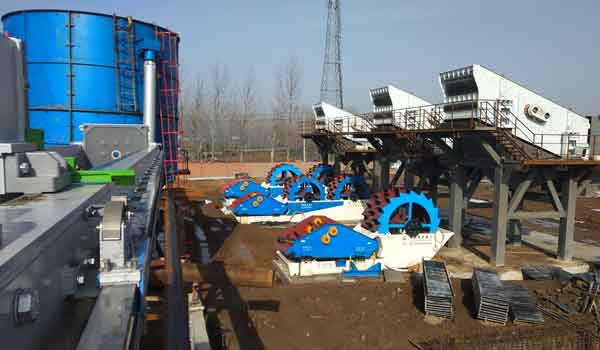
4) Finished product screening, sand making, and grading adjustment operations: Once the shaped ore reaches the bucket elevator at the screening building station, it is lifted and fed into the , where it is classified into five products: 0–5 mm, 5–10 mm, 10–21.5 mm, 21.5–31.5 mm, and >31.5 mm.
5) Automatic Loading Operation: Finished aggregates stored in the product warehouse are transported to the loading station via belt conveyors at the warehouse base for automated loading.
6) Dust Collection Operation: Dust is generated during the production process. The dust produced by the 1# sieve group enters the , where it is purified before being discharged into the atmosphere via the exhaust fan. The concentration of dust in the discharged gas is less than 10mg/m³, meeting national emission standards. The dust collected by the is wet-mixed using a wet mixer, then conveyed to the desilting belt conveyor by a screw conveyor and sent to the mud bin.
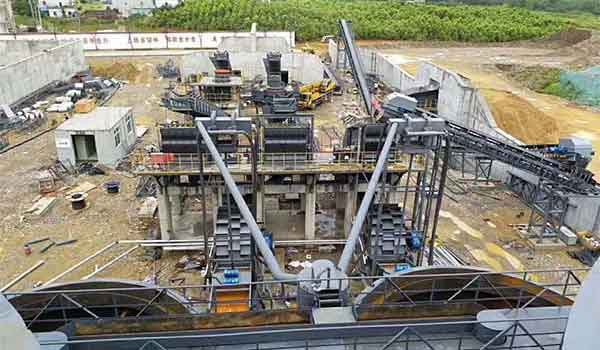
Vibrating screen, , and crusher (single-cylinder cone crusher, multi-cylinder cone crusher, aggregate shaping machine, vertical shaft impact crusher), ultra-fine crushing sand-making machine, grading control powder machine, wet mixer, pneumatic conveying system.
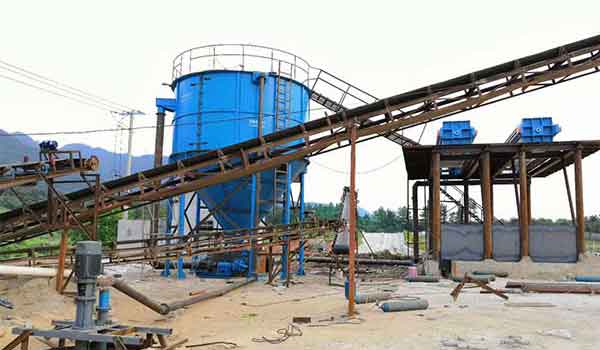
The project will simultaneously construct a dry-mixed mortar production line with an annual output of 300,000 tons. This line will be fed directly from the powder concentrator and will reserve interfaces for aggregate supply to a commercial concrete station (with an annual output of 300,000 m³) in the second phase, as well as for transportation via large-scale storage yards outside the plant using belt conveyors for remote material handling. This article primarily details the aggregate production line; specifics regarding the dry-mixed mortar production line are not covered here. If you have any questions, please leave a message in the dialog box for consultation.
Please enter your inquiry and contact. We will reply you as soon as possible.
We are here for your questions anytime 24/7, welcome your consultation.
The latest sand washer price.
Installation and maintenance.
Screening
Sand Washing Machines
Sludge Treatment
Sand Recycling Machines
Address: Shuangyue Road, Changdai Town, Mengjin County, Luoyang, China
Email: export@lylzzg.com
Tel: +86-18736301510


 日本語
日本語 Русский
 中文
中文 Español
 Français
 Português
 العربية
 Tiếng Việt
 Deutsch
 한국어
한국어 Türkçe
 বাংলা
বাংলা हिन्दी
 Bahasa Melayu
 Kiswahili