
Date: May. 04, 2021
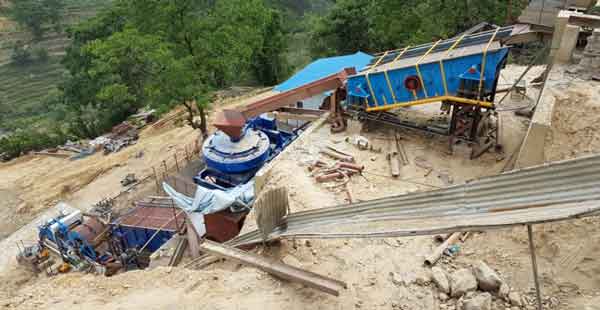
Under normal conditions, the silica sand sieve undergoes a 4-hour no-load test run, during which the bearing temperature should remain between 35°C and 60°C. If the bearing temperature exceeds this range during testing, the following causes may be responsible:
Since the bearings on the silica sand sieve support heavy loads at high frequencies with constantly varying forces, they require generous radial clearance to operate effectively.
A specific gap must exist between the gland of the silica sand sieve and the outer ring of the bearing to ensure proper heat dissipation and allow for necessary axial movement. This gap can be adjusted using gaskets placed between the end cover and the bearing seat.
The bearing may suffer from insufficient or excessive oil, contamination, or inconsistent oil quality. In such cases, it is essential to replenish oil, clean the components, replace the oil and seals, and verify both oil quality and filling levels. Regular inspections should also check for signs of bearing wear.
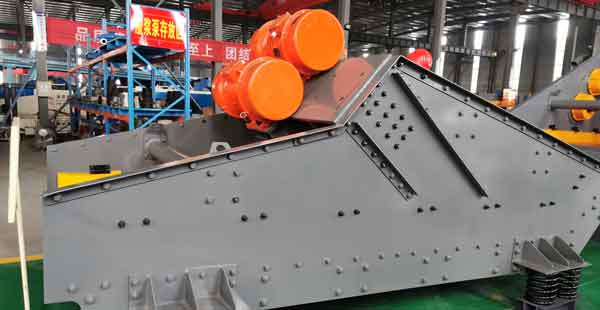
Damaged springs generate significant noise. Replace the springs promptly to prevent production accidents.
Severe bearing wear causes loud noises. Immediately stop the silica sand sieve and replace the bearings in a timely manner.
Loose bolts securing the bearings result in abnormal noise during silica sand sieve operation. Tighten the bolts immediately.
An improperly tightened sieve mesh produces abnormal sounds during operation and compromises screening efficiency. Ensure the sieve mesh is securely fastened without delay.
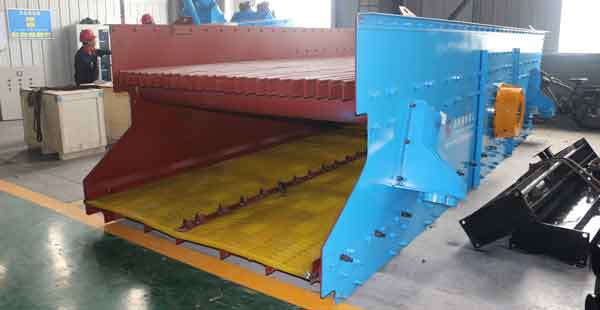
When the vibrating screen fails to start or shows low amplitude, first check for electrical faults. Motor damage or insufficient voltage can cause such issues. If electrical systems are normal, investigate mechanical causes. Check if material is heavily accumulated on the screen surface; if so, remove it promptly. Inspect whether coupling bolts on the vibration exciter have loosened or fallen off, and whether grease has agglomerated. Tighten bolts and replace grease as needed.
Low speed may stem from electrical issues. Identify and address the root cause immediately. It could also be due to a loose transmission belt, which requires proper tensioning.
Weak vibration force may result from incorrect or too-light weights on the flywheel. Adjust the flywheel weights accordingly.
e silica sand sieve is inconsistent
Inconsistent amplitude across the four corners of the screen may result from unsynchronized operation of the two exciters on the same axis or material segregation. In such cases, synchronize the two exciters and promptly address any material segregation to restore uniform performance.
Please enter your inquiry and contact. We will reply you as soon as possible.
We are here for your questions anytime 24/7, welcome your consultation.
The latest sand washer price.
Installation and maintenance.
Screening
Sand Washing Machines
Sludge Treatment
Sand Recycling Machines
Address: Shuangyue Road, Changdai Town, Mengjin County, Luoyang, China
Email: export@lylzzg.com
Tel: +86-18736301510


 日本語
日本語 Русский
 中文
中文 Español
 Français
 Português
 العربية
 Tiếng Việt
 Deutsch
 한국어
한국어 Türkçe
 বাংলা
বাংলা हिन्दी
 Bahasa Melayu
 Kiswahili