
Date: Jul. 01, 2021
As a key piece of screening equipment in South Africa, the vibrating screen primarily utilizes its vibration characteristics to perform classification, dewatering, and desliming operations, making it widely applied in concentrator screening processes. In production practice, due to the complex operating environment, prolonged continuous operation, and heavy loads, the vibrating screen is inevitably subject to wear or even malfunction. To ensure reliable concentrator screening operations, daily maintenance and repair of the vibrating screen are essential, along with prompt emergency measures in case of failure. The following section outlines common operational issues and their solutions for vibrating screens.
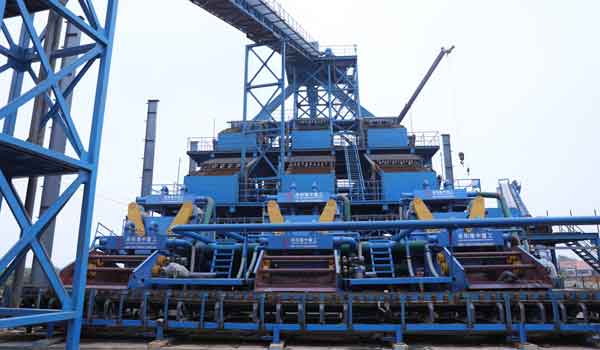
Our range of vibrating screens primarily includes linear vibrating screens, high-frequency vibrating screens, and circular vibrating screens. The causes for suboptimal screening performance vary by equipment type. For circular vibrating screens, insufficient inclination of the screen surface is a primary factor leading to poor results. For linear and high-frequency vibrating screens, inadequate screening efficiency may stem from the movement direction of the eccentric blocks. If the two sets of eccentric blocks are not in phase, the direction of the exciting force will not align with the vibration direction, preventing efficient screening.
To address this issue, it is necessary to raise the rear support seat. In practical applications, the screen surface inclination should be maintained at 20°, while the typical inclination angle for general circular vibrating screens is set between 16° and 20°. An inclination angle below 16° can cause material roll-up or poor discharge from the screen. If the screening performance of linear or high-frequency vibrating screens is unsatisfactory, operators need to verify whether the phases of the two se
ts of eccentric blocks are level, and adjust them in time.
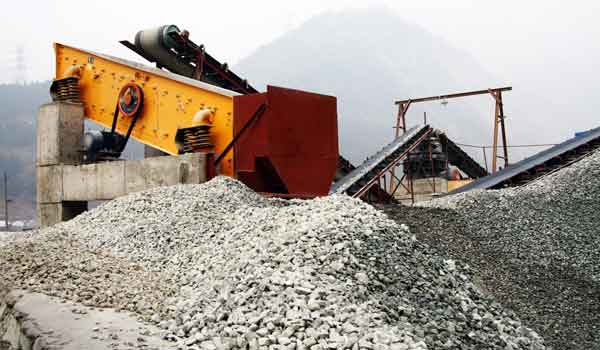
During operation, the screen frame of the vibrating screen undergoes continuous vibration, which can easily lead to bending fatigue, resulting in local deformation or even cracking of the screen frame and side plates. If the screen frame fractures, the potential causes may include:
1. The sieve plate is too thin.
2. Failure of the damping spring. After prolonged use, the spring may suffer permanent deformation due to rubber aging or sustained stress, leading to functional failure.
3. The eccentric wheel of the exciter is severely worn and out of specification. During operation, this causes uneven distribution and reflection of vibration forces across the vibrating screen body, resulting in inconsistent amplitude among different sections. This can lead to excessive vibration at connection points or cracking of welds on these connections.
Properly increasing the thickness of the screen is the most effective way to address issues caused by insufficient screen thickness. Alternatively, adding reinforcement plates to the side plates near the exciter can enhance the overall rigidity of the screen body. This prevents the screen frame from trembling and breaking. Additionally, it is essential to regularly inspect the wear of the shock absorber springs and the exciter’s eccentric wheel to prevent spring failure and quality deviations.
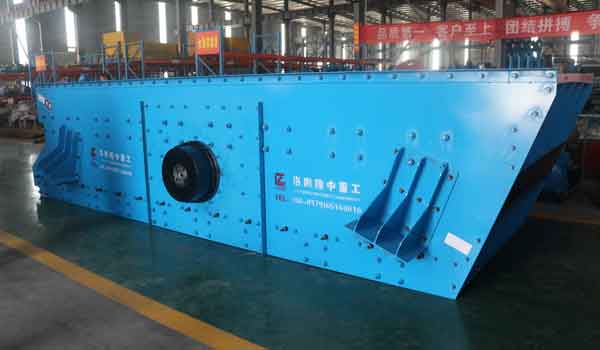
The quality of the vibrating screen directly determines screening efficiency and output quality. The reasons for high screen damage rates are categorized as follows:
1. Substandard screen quality. When screen manufacturing technology is inadequate, two screens cannot fit tightly together, preventing proper discharge of drill cuttings.
2. Incorrect rotation direction of the vibration motor.
3. Clay accumulation. The vibration amplitude of the mound is too small to effectively overcome the viscous force of the clay, which causes the clay to quickly accumulate on the screen and damage the screen.
1. Strictly check the quality of the screen.
2. The operator can remove the protective cover of the vibrator and check the rotation direction of the eccentric block. Under normal circumstances, the eccentric blocks all rotate to the outside.
3. Wash the screen and soil debris with sprayed water to reduce the viscosity of the soil debris.
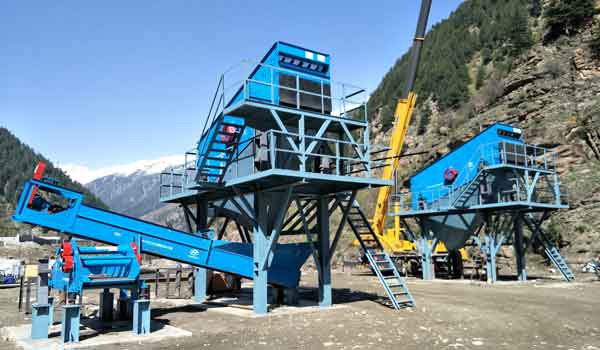
The technical level and quality of the screening equipment in South Africa directly affect the production efficiency of the equipment and the economic benefits of the concentrator. Therefore, it is necessary to master some common vibrating screen problem diagnosis and solution methods in production practice.
Please enter your inquiry and contact. We will reply you as soon as possible.
We are here for your questions anytime 24/7, welcome your consultation.
The latest sand washer price.
Installation and maintenance.
Screening
Sand Washing Machines
Sludge Treatment
Sand Recycling Machines
Address: Shuangyue Road, Changdai Town, Mengjin County, Luoyang, China
Email: export@lylzzg.com
Tel: +86-18736301510


 日本語
日本語 Русский
 中文
中文 Español
 Français
 Português
 العربية
 Tiếng Việt
 Deutsch
 한국어
한국어 Türkçe
 বাংলা
বাংলা हिन्दी
 Bahasa Melayu
 Kiswahili