
Date: Jan. 25, 2021
In sand and gravel production, do you frequently experience ruptures or perforations in the circular motion vibrating screen? If you want to resolve this issue but are unsure how to proceed, replacing the screen with a new one is often the only option. This approach increases operational costs for users. Today, we will provide some effective solutions to these common problems.
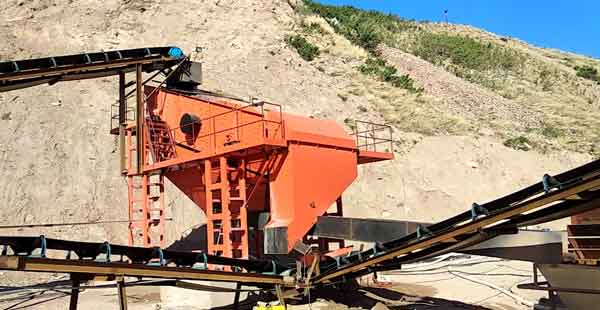
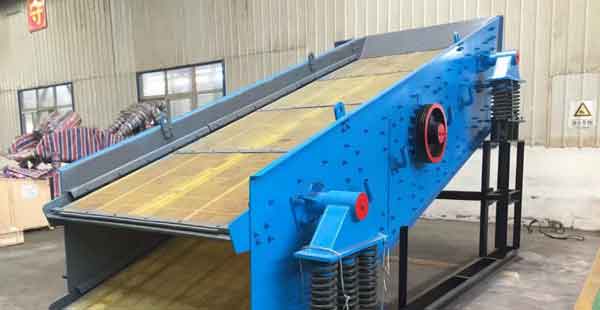
The round vibrating sieve consists of nine key components: frame, left screen frame, right screen frame, polyurethane support beams, screen mesh, upper ore powder collection bucket, lower ore powder collection bucket, vibration motor, and electrical control panel. The screen mesh is mounted on the support beams, with one layer installed across the upper, middle, and lower beams respectively. These support beams engage with reinforcing ribs on the screen to provide structural stability.
The circular vibrating sieve utilizes an internal eccentric shaft as the excitation source. The motor drives the rotation of the eccentric shaft, causing the vibrating screen to follow a circular trajectory—moving up, forward, down, and backward. This motion ensures that materials are screened evenly and efficiently through the mesh.
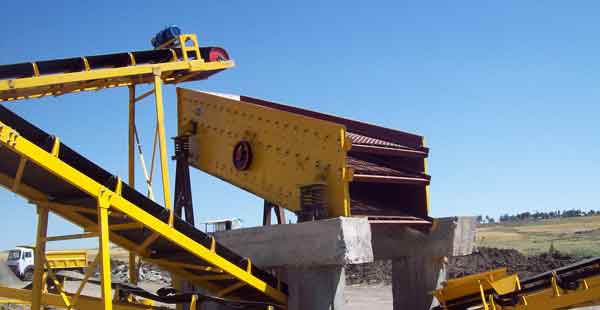
If the circular vibrating screen is narrower than its supporting beam, or if the reinforcing ribs do not align perfectly with the support structure, this mismatch can lead to premature screen rupture.
During high-frequency operation of the circular vibrating screen, worn, misaligned, or uneven support beams continuously impact and abrade the screen surface. This accelerates wear, causing early breakage and perforation.
Inconsistent feeding rates, excessive drop height, or overly high feed flow volumes during production place undue stress on the screen, resulting in rupture and perforation.
Circular vibrating screens are typically manufactured from polyurethane using mold casting processes. Variations in material composition, molding temperature fluctuations, and operator inconsistencies can compromise quality stability. This leads to reduced abrasion resistance, lower flex fatigue life, and diminished load-bearing capacity.
an style=”color: #333333;”>5. Improper installation of the screen
Improper installation of the vibrating screen will increase the pressure on the screen, which will eventually lead to rupture and perforation of the part where the screen mesh is combined with the narrow reinforcement.
1. Optimize feeding conditions by reducing the feed gap and total volume, ensuring uniform material distribution.
2. Establish a quality assurance agreement with the manufacturer to guarantee the reliability of screen mesh supplies.
3. Enhance installation precision so that the screen’s reinforcing ribs align perfectly with the support beams, maximizing the effective support area.
4. Promptly replace worn-out support beams.
Please enter your inquiry and contact. We will reply you as soon as possible.
We are here for your questions anytime 24/7, welcome your consultation.
The latest sand washer price.
Installation and maintenance.
Screening
Sand Washing Machines
Sludge Treatment
Sand Recycling Machines
Address: Shuangyue Road, Changdai Town, Mengjin County, Luoyang, China
Email: export@lylzzg.com
Tel: +86-18736301510


 日本語
日本語 Русский
 中文
中文 Español
 Français
 Português
 العربية
 Tiếng Việt
 Deutsch
 한국어
한국어 Türkçe
 বাংলা
বাংলা हिन्दी
 Bahasa Melayu
 Kiswahili