
Date: May. 13, 2021
The belt filter press is primarily composed of a distribution device, dehydration device, automatic dosing system, air compressor, and an electro-pneumatic control system. During operation, improper coordination among these components can easily lead to malfunctions. Common issues include the filter belt in Sri Lanka carrying mud and low solid content in the mud cake. Below is an analysis of the causes and solutions for these two problems.
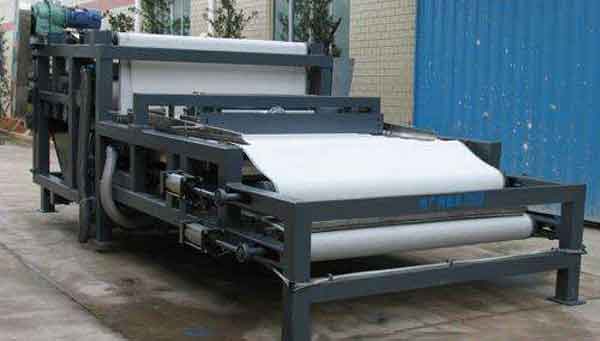
When the moisture content of the sludge to be dewatered is excessively high, sludge may overflow from both sides of the filter during operation. This occurs because liquid slurry exhibits high fluidity during the transition from a liquid to a semi-solid state, causing it to spill over the edges of the rollers. The common causes of sludge overflow on the filter belt are as follows:
Poor flocculation prevents capillary water from converting into free water and being removed in the gravity drainage zone. Consequently, fluid sludge can easily escape once it enters the squeezing zone and undergoes compression. To address this issue, an appropriate dosage of PAM solution should be added based on the sludge’s flocculation characteristics and the target moisture content of the sludge cake.
Sludge concentration refers to its solid content. When the solid content falls below a certain threshold, dewatering efficiency decreases, and flocculant consumption increases. If low-concentration sludge enters the belt filter press, leakage may occur, and the filter belt may fail to effectively compress the material during operation. This problem can be resolved by adjusting
of the aeration and maximizing the sludge concentration time.
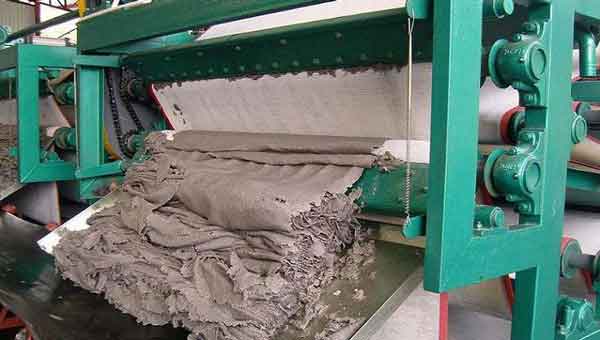
Filter belt arching occurs when the two belts wrapped around the roller surface fail to overlap, causing the outer belt to bow or the lower belt to open. This issue typically stems from uneven tension in the filter belt, which prevents it from overcoming running resistance and leads to slackness and subsequent arching. To resolve this, inspect the operational status of adjacent rollers at the point of arching and ensure bearings are properly maintained. Alternatively, check the tensioning system of the arched belt to reduce friction on the tensioning guide rod. Adjusting the pneumatic tensioning pressure can also help maintain both filter belts at an optimal tension level.
When flocculated material enters the extrusion zone, excessive cylinder pressure forces the filter belts to apply too much force before the material stabilizes from its flow state. In such cases, adjust the air pressure to a suitable range to prevent over-compression.
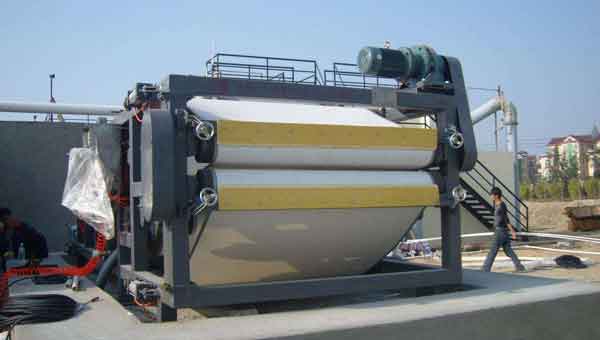
The dewatered sludge has a low solid content, which will cause the wet sludge to stick to the filter cloth and be difficult to remove, which increases the difficulty of the sludge dewatering operation. At the same time, the high water content will increase the cost of sludge treatment. The main reasons for the low solid content of the sludge cake after sludge dewatering are as follows.
If the filter belt speed is too fast, it will cause insufficient time for sludge pressing and pre-dehydration, which will make the mud cake thinner and decrease the solid content. The solution is to reduce the belt speed.
The wrong choice of flocculant will cause changes in the properties of the sludge or the amount of sludge inflow, resulting in a decrease in the dewaterability of the sludge. At this time, the test should be carried out again to select the appropriate type or dosage of the flocculant.
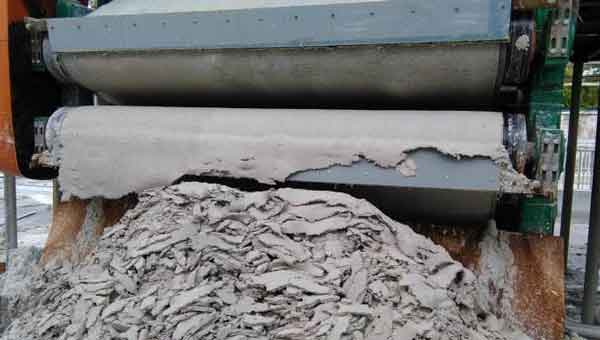
If the filter belt tension is too low, the squeezing force applied to the sludge will be inadequate, resulting in reduced solid content in the dewatered sludge cake. In this case, the filter belt tension should be appropriately increased. The pressure of the belt filter press is typically adjusted to 0.5–0.6 MPa.
Clogging of the filter belt prevents effective water filtration and increases the moisture content of the dewatered sludge. If this occurs, immediately shut down the machine and flush the sludge from the filter belt before resuming operation.
That concludes today’s insights. If you encounter other issues during the operation of your belt filter press that require assistance, please consult us. We are committed to providing you with the optimal solution.
Please enter your inquiry and contact. We will reply you as soon as possible.
We are here for your questions anytime 24/7, welcome your consultation.
The latest sand washer price.
Installation and maintenance.
Screening
Sand Washing Machines
Sludge Treatment
Sand Recycling Machines
Address: Shuangyue Road, Changdai Town, Mengjin County, Luoyang, China
Email: export@lylzzg.com
Tel: +86-18736301510


 日本語
日本語 Русский
 中文
中文 Español
 Français
 Português
 العربية
 Tiếng Việt
 Deutsch
 한국어
한국어 Türkçe
 বাংলা
বাংলা हिन्दी
 Bahasa Melayu
 Kiswahili