
Date: Jul. 17, 2021
The hydrocyclone is one of the most effective fine-grain classification devices in modern mineral processing. In daily operations, hydrocyclones may experience various equipment failures. If these issues are not identified and resolved promptly, they can lead to unplanned shutdowns. So, what are the common faults encountered during routine operation? How can we address them? This article examines five typical failure modes, analyzing their root causes and providing practical countermeasures.
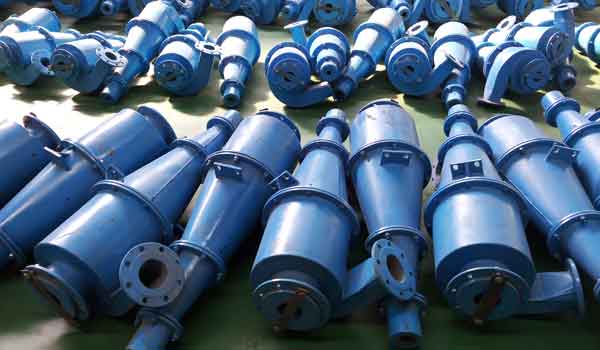
In the production process, feed pressure directly impacts the hydrocyclone’s processing capacity and classification particle size. Generally, the hydrocyclone’s feed pressure should be maintained at a stable level as required; significant fluctuations must be avoided, as they can compromise equipment performance and degrade classification efficiency. Large feed pressure fluctuations are typically caused by insufficient pump supply due to low tank liquid levels or air entrainment, or by debris blockage within the pump. If a drop in hydrocyclone pressure occurs after prolonged operation, it is primarily attributed to pump wear.
1) If feed pressure fluctuations result from low pump tank liquid levels, adjust by increasing the liquid level, closing one or two cyclones, or reducing the pump speed.
2) If feed pressure fluctuations are caused by pump blockage or wear, the pump requires repair.
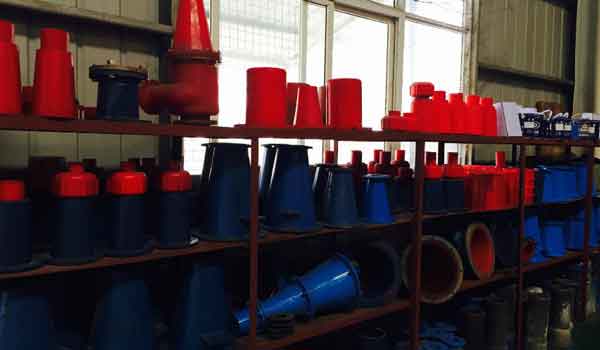
Determining whether a hydrocyclone is blocked primarily involves observing the discharge status of its overflow and underflow during operation. Signs of blockage include an increase in coarse particles within the overflow, reduced flow rates in both the overflow and underflow, complete cutoff of the underflow, or the discharge of sediment in a solid column shape. Additionally, prolonged violent vibration of the hydrocyclone also indicates a blockage.
1) If the flow rates of both the overflow and underflow decrease, the feed port may be blocked. In this case, close the feed valve supplying the hydrocyclone, remove the component, and clear the obstruction.
2) If the underflow flow decreases or stops completely, the underflow port is likely blocked. Remove the flange to clear any debris from the underflow port.
3) To prevent blockages, install facilities such as chip removal screens in the feed pool of the hydrocyclone unit to filter out coarse materials and debris. Furthermore, ensure the feed pool is emptied promptly when the machine is shut down to avoid clogging caused by sedimentation and high concentration buildup.
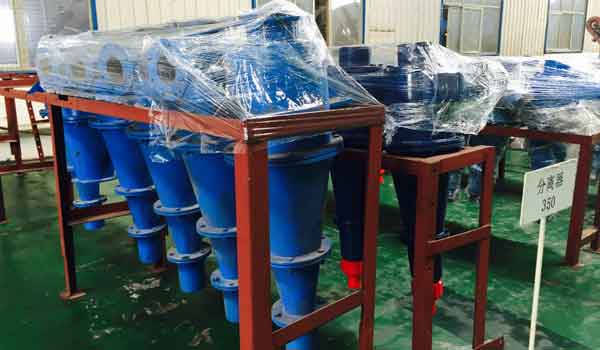
During operation, hydrocyclone operators must frequently monitor the underflow discharge status and regularly check the underflow concentration and fineness. If fluctuations in underflow concentration or “underflow pinching” occur, immediate adjustments are required. Under normal operating conditions, the hydrocyclone underflow should discharge in an “umbrella shape.” If the underflow concentration is excessively high, the discharge may appear “columnar” or intermittently “lumpy.”
1) High underflow concentration may result from elevated feed slurry concentration or an undersized underflow orifice. Initially, add an appropriate amount of water to the feed. If the underflow concentration remains too high, replace the underflow orifice with a larger one.
2) If the underflow discharges in an “umbrella shape” but the concentration falls below production requirements, this may be due to low feed concentration. In this case, increase the feed concentration.
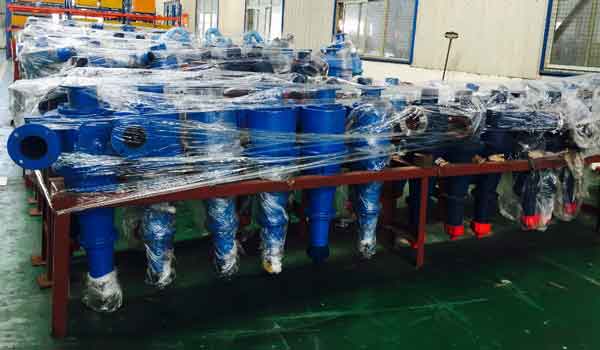
During operation, hydrocyclone operators must periodically monitor the concentration and fineness of the cyclone overflow. An increase in overflow concentration or “coarse overflow” is typically caused by higher feed ore concentration or blockage at the underflow port.
1) If “thick overflow” is detected, first check whether the underflow nozzle is blocked. Next, verify the feed concentration and adjust accordingly based on specific conditions. If the underflow port is obstructed, open it to clear the blockage.
2) If the overflow concentration is low and the fineness is too fine, reduce the operating pressure, adjust the ore feed concentration, or replace the nozzle with a smaller grit size to meet requirements. Conversely, if the overflow concentration is high and the fineness is too coarse, increase the pressure, adjust the ore feed concentration, or switch to a larger grit nozzle to achieve the desired specifications.
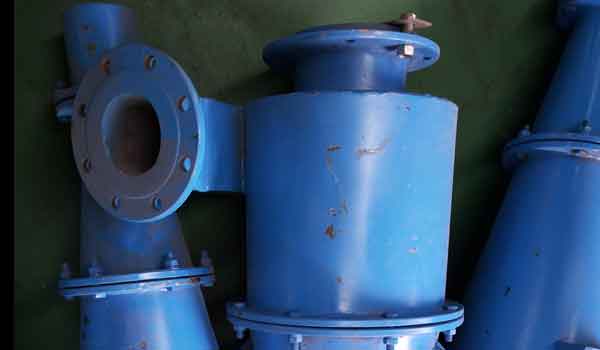
Under normal operating conditions, the hydrocyclone underflow is discharged in an umbrella shape. The discharge angle typically ranges between 10° and 20°, with a concentration of approximately 75%, representing the ideal working state for the hydrocyclone. If the grit discharge appears spray-like, it indicates that the spread angle is too wide, suggesting the grit nozzle diameter is oversized. Conversely, if the discharge forms a rope-like stream, potential causes include excessive feed ore concentration, an undersized grit nozzle, partial blockage of the nozzle, or insufficient slurry density.
1) When the grit discharge is spray-like, replace the current nozzle with one of a smaller diameter to adjust the flow.
2) When the grit discharge is rope-like, appropriately increase the grit nozzle size. Additionally, stop the cyclone operation to clear any blockages within the system.
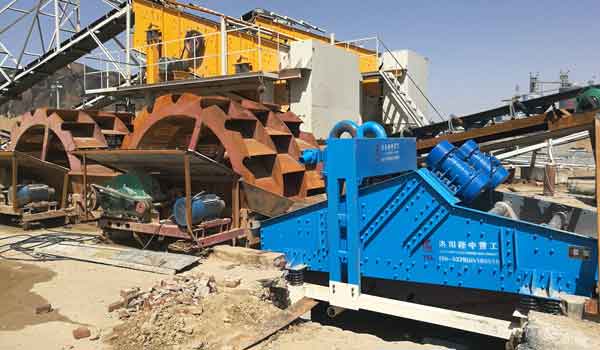
The above outlines the common causes of hydrocyclone failures and their corresponding countermeasures. To ensure stable and efficient equipment operation, selecting models that align with your beneficiation process is essential—but so is rigorous daily maintenance. We recommend that mine owners consult with professional hydrocyclone manufacturers during procurement to comprehensively evaluate frame selection processes and beneficiation equipment, thereby maximizing operational efficiency and economic returns for the plant.
Please enter your inquiry and contact. We will reply you as soon as possible.
We are here for your questions anytime 24/7, welcome your consultation.
The latest sand washer price.
Installation and maintenance.
Screening
Sand Washing Machines
Sludge Treatment
Sand Recycling Machines
Address: Shuangyue Road, Changdai Town, Mengjin County, Luoyang, China
Email: export@lylzzg.com
Tel: +86-18736301510


 日本語
日本語 Русский
 中文
中文 Español
 Français
 Português
 العربية
 Tiếng Việt
 Deutsch
 한국어
한국어 Türkçe
 বাংলা
বাংলা हिन्दी
 Bahasa Melayu
 Kiswahili