
Date: Dec. 02, 2020
In Sri Lanka, based on the principles of fracture mechanics, the vibrating screen frame undergoes shaking that induces bending fatigue during operation. This makes the screen frame and side plates susceptible to local deformation or cracking. The primary causes of vibration failure in vibrating screens during use are as follows.
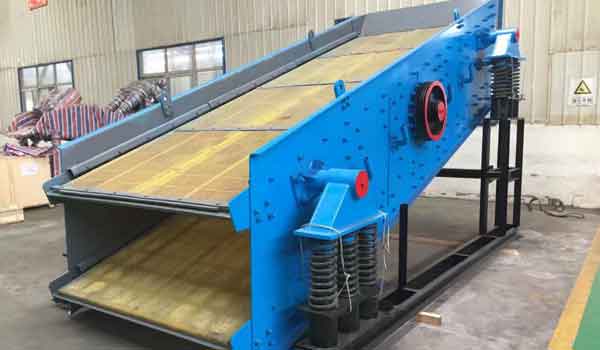
After prolonged service, springs may suffer permanent deformation due to rubber aging or sustained stress, leading to functional failure. This results in uneven fulcrum heights across the four sets of vibration-damping spring seats on the vibrating screen body. Consequently, amplitude inconsistencies arise throughout various parts of the vibrating screen, causing linked vibrations at specific locations or cracks in the welds of connecting components.
Solution: Inspect the damping springs regularly. The spring material is typically 60Si2MnA, and its heat-treated hardness should reach HRC45–50.
Improper eccentric weight can also lead to unbalanced vibration amplitude in the screen. If the weight is increased excessively, the amplitude may exceed the allowable limit, causing vibrations in the linkage components or cracking at welded joints.
Solution: Set the eccentric weight strictly according to the manufacturer’s specifications for the vibrating screen and perform regular checks.
During the installation of the vibration exciter, after connecting it via a universal coupling, torsion in the drive shaft may cause the eccentric wheel’s weight vertical line to misalign with the natural weight vertical line. This results in asynchronous rotation of the eccentric wheels, leading to inconsistent amplitude across different parts of the vibrating screen. Consequently, cracks may appear at connection points or weld seams of the vibrating screen structure.
Solution: Ensure proper alignment between the eccentric weight vertical line and the natural weight vertical line during exciter installation. Conduct regular shutdown inspections to maintain optimal performance.
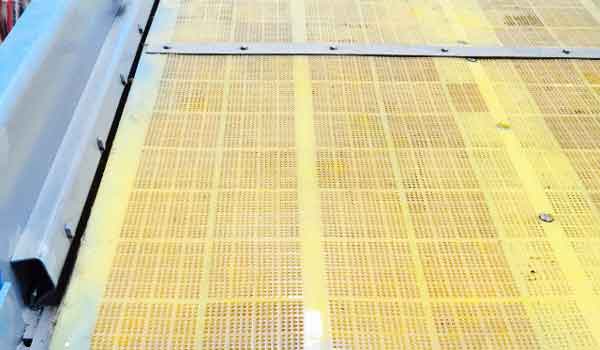
Screen frame fractures can also result from using sieve plates that are too thin.
Solution: The most effective approach is to appropriately thicken the side plates or add supplementary plates near the exciter to enhance the rigidity of the entire screen body, thereby preventing frame trembling and breakage. When performing weld repairs, ensure that welding seams run along the longitudinal direction of the screen frame; transverse welding seams are strictly prohibited, as they significantly increase the risk of pipe beam failure at these joints.
A thorough understanding of the vibrating screen’s working principles, performance characteristics, and common failure modes—combined with correct operation and routine maintenance—can effectively reduce failure rates. This not only lowers maintenance costs and reduces labor intensity for maintenance personnel but also enhances overall work efficiency.
Please enter your inquiry and contact. We will reply you as soon as possible.
We are here for your questions anytime 24/7, welcome your consultation.
The latest sand washer price.
Installation and maintenance.
Screening
Sand Washing Machines
Sludge Treatment
Sand Recycling Machines
Address: Shuangyue Road, Changdai Town, Mengjin County, Luoyang, China
Email: export@lylzzg.com
Tel: +86-18736301510


 日本語
日本語 Русский
 中文
中文 Español
 Français
 Português
 العربية
 Tiếng Việt
 Deutsch
 한국어
한국어 Türkçe
 বাংলা
বাংলা हिन्दी
 Bahasa Melayu
 Kiswahili