
Concrete is an artificial stone formed by mixing, shaping, and hardening cementitious materials, coarse and fine aggregates, and other admixtures in appropriate proportions. Water, cement, sand, and stones constitute the four basic components of concrete. Currently, natural sand mining is restricted, leading to a gradual shift toward machine-made sand as its replacement. However, many still question whether machine-made sand can fully replace natural sand in concrete applications.
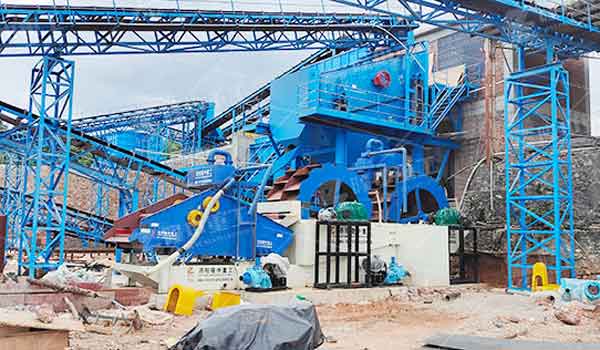
The preliminary investment budget for machine-made sand production primarily covers the following five aspects.
1. The total surface area of sand particles should be minimized, with the sand being as coarse as possible.
In concrete, the cement paste bonds effectively through the surface of aggregate particles. Therefore, reducing the total surface area of the aggregates leads to more economical cement usage.
2. The particle gradation of the sand should be well-graded
Grain gradation refers to the combination of sands with varying particle sizes. By reasonably matching sand particle sizes to achieve step-by-step filling, porosity is reduced and cement consumption is saved. Additionally, this increases concrete density, thereby enhancing both strength and durability.

High-quality machine-made sand is produced using professional crushing and screening equipment, characterized by a fineness modulus of 2.6–3.0, stone powder content of 3%–8%, cumulative sieve residues at sieves 1, 3, 6, 8, and 9, needle/flake particle content <8%, and moisture content of 3%–5%.
1. Concrete made with high-quality machine-made sand exhibits better initial slump performance, greater expansion, lower loss over time, and overall superior concrete properties.
2. Due to the use of gradation adjustment technology, the particle size distribution of fine machine-made sand is more optimized, with lower mud and mud block content. Consequently, the dosage of concrete admixtures required is reduced.
3. Under the action of the Barmac principle, high-quality machine-made sand grains exhibit a polyhedral circular shape with reasonable gradation, low porosity, and minimal mud content. This results in superior bonding capability with cement paste, yielding more compact concrete.

In summary, the application of high-quality machine-made sand in concrete is a mature technology that enhances concrete workability, increases compressive strength, and improves impermeability. It can completely replace natural sand and is widely used in concrete production, often outperforming natural sand in improving concrete properties. However, the processing of fine machine-made sand remains a top priority.
Please enter your inquiry and contact. We will reply you as soon as possible.
We are here for your questions anytime 24/7, welcome your consultation.
The latest sand washer price.
Installation and maintenance.
Screening
Sand Washing Machines
Sludge Treatment
Sand Recycling Machines
Address: Shuangyue Road, Changdai Town, Mengjin County, Luoyang, China
Email: export@lylzzg.com
Tel: +86-18736301510


 日本語
 Русский
 中文
 Español
 Français
 Português
 العربية
 Tiếng Việt
 Deutsch
 한국어
 Türkçe
 বাংলা
 हिन्दी
 Bahasa Melayu
 Kiswahili