
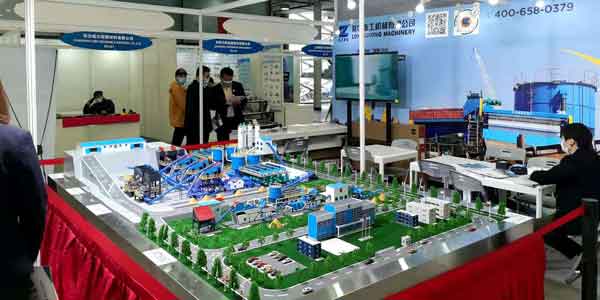
Protection Measures For Sand Washing Machine
Date: Nov. 25, 2020
The sand washing machine delivers higher processing capacity and superior sand cleanliness, making it a critical asset in the sand-making industry. However, its efficiency may gradually decline over time. To ensure sustained long-term performance, several protective measures are recommended. 1. Installation Process Upon arrival of the sand washer , verify that all components are complete and undamaged, ensuring the machine is intact before installation. During no-load operation, technicians should continue adding lubricating oil to check the firmness of connection points, followed by a load test run lasting approximately 8–12 hours. 2. Regular Inspection and Maintenance Before starting the sand washer, inspect the drain holes for debris and clean them promptly to prevent blockages. Conduct regular maintenance and inspections of the sand washer equipment; failure to perform timely maintenance can lead to various issues, reducing production efficiency. 3. Solid Foundation Ensure the production line has a solid foundation and sufficient space to facilitate material transportation and production. After cleaning, adequate storage space must be available to avoid secondary pollution to the sand. 4. Regular Lubrication and Cleaning After using the sand washer, establish a routine of timely cleaning. Prolonged accumulation can block the sand washer’s pipes, reducing its service life. When lubricating, please use the specified grade and brand of lubricating oil. 5. Rust Prevention and Removal If the sand washer is exposed outdoors for extended periods, rust should be removed promptly. Long-term contact with water without timely treatment will cause equipment components to corrode, leading to operational issues. 6. Regular Parts Replacement Inspect internal wear on the sand washing machine regularly, typically every two months. Replace severely worn parts immediately. If belt damage is detected, replace it promptly. Clean any…
Date: Nov. 24, 2020
The vibrating screen seal is an indispensable component of the vibrating screen. This article analyzes the differences between silicone and rubber materials used in these seals. Classification of Seals Sealing rings are categorized into three material types: rubber, silicone, and polyurethane. Rubber sealing rings serve as the standard configuration for most vibrating screens. Silicone and polyurethane variants are specifically engineered for materials with unique properties, such as those exposed to high temperatures, oil, or corrosive environments. Rubber Sealing Rings A rubber seal ring is an annular cover, constructed from one or multiple components, that mounts onto a bearing ring or washer. It contacts another ring or washer or forms a narrow labyrinth gap to prevent lubricant leakage and block the intrusion of foreign particles. Silicone Sealing Rings Silicone sealing rings are primarily utilized for waterproof sealing and preservation in consumer goods such as food storage containers, rice cookers, water dispensers, lunch boxes, thermal flasks, incubators, water bottles, ovens, insulated cups, and coffee makers. They offer superior sealing performance, excellent waterproofing, and reliable preservation capabilities while being completely non-toxic and odorless. Cold Resistance While ordinary rubber becomes brittle at temperatures between -20°C and -30°C, silicone rubber maintains excellent elasticity even in…
Date: Nov. 19, 2020
Aggregate washing machine, also known as a stone washer, is primarily used to remove impurities from sand products. Since water washing is the standard method, these machines are commonly referred to as sand washers. Today, sand washers are widely utilized across various industries, including building materials, mining, gravel yards, and concrete mixing plants. Types Sand washing machines come in various models. Common types include spiral sand washers, wheel sand washers, drum sand washers, vibrating sand washers, and bucket sand washers. Currently, the two most prevalent types on the market are spiral sand washing machines and bucket wheel sand washing machines. The spiral sand washer operates on the principle of differential settling speeds based on particle size and specific gravity. This allows impurities and high-quality sand to be discharged through two separate outlets, effectively achieving both screening and cleaning functions. The bucket-type sand washer is driven by a motor that powers the gear, V-belt, and reducer to rotate the impeller. This causes the sand from the feeding trough to enter the washing trough, where it rolls and grinds against itself, destroying surface impurities while grinding away the water vapor layer on the sand grains for effective cleaning and dewatering. Subsequently, water…
Date: Nov. 16, 2020
In crushing, sand making, and ore dressing production lines, screening is an indispensable process, with a wide variety of equipment available. This article details the characteristics of 8 types of screening machines and identifies the most suitable equipment for different stages of sand and gravel production. Commonly used screening equipment primarily includes vibrating screens, fixed screens, and roller screens. 1. Fixed Screen A fixed screen is a screening machine featuring a stationary screen surface. It is installed at an incline, with material fed from the higher end. Relying solely on gravity—without any external driving force—the ore passes through the sieve openings, separating into undersize material (smaller than the aperture) and oversize material (larger than the aperture), resulting in two distinct particle size fractions. Fixed screens generally offer lower screening efficiency and are prone to clogging when handling materials with high moisture or viscosity. Additionally, operation can be labor-intensive. However, due to their simple structure, ease of manufacturing, lack of power requirements, and low cost, they are widely utilized in crushing operations. Fixed screens are typically categorized into two types: grid sieves and bar sieves. 1). Grid screen: Primarily installed at the top of raw ore receiving bins and coarse crushed…
Date: Nov. 13, 2020
As production time increases, various issues inevitably arise with the vibrating screen, or adjustments to the vibration amplitude may be required. If you are unfamiliar with the installation or debugging of its components, making these adjustments can be difficult. This article outlines the operating procedures for six common scenarios. 1. Adjusting the Vibration Amplitude Increasing the amplitude benefits solid-phase transportation and boosts processing capacity, whereas reducing it extends the lifespan of the screen mesh and vibrator bearings. To modify the amplitude, follow the steps below. 1) Turn off the power supply. 2) Remove the protective cover from the vibrator. 3) Rotate the outermost weight in each pair of balance weights on the vibrator shaft to alter the exciting force generated by the vibrator. 4) Position the balance weights at the same percentage of maximum excitation force and lock the eccentric weights. 2. Circuit Connection The factory's electrical system is equipped with an independent overload protection device, which interlocks the two vibrators to prevent equipment damage in the event of a single vibrator failure. 1) Apply sealant to the mating surfaces of the wiring port threads and the motor junction box to prevent water ingress during operation. 2) Seal the inlet…
We are here for your questions anytime 24/7, welcome your consultation.
The latest sand washer price.
Installation and maintenance.
Screening
Sand Washing Machines
Sludge Treatment
Sand Recycling Machines
Address: Shuangyue Road, Changdai Town, Mengjin County, Luoyang, China
Email: export@lylzzg.com
Tel: +86-18736301510


 日本語
 Русский
 中文
 Español
 Français
 Português
 العربية
 Tiếng Việt
 Deutsch
 한국어
 Türkçe
 বাংলা
 हिन्दी
 Bahasa Melayu
 Kiswahili