
Date: Nov. 16, 2020
In crushing, sand making, and ore dressing production lines, screening is an indispensable process, with a wide variety of equipment available. This article details the characteristics of 8 types of screening machines and identifies the most suitable equipment for different stages of sand and gravel production. Commonly used screening equipment primarily includes vibrating screens, fixed screens, and roller screens.
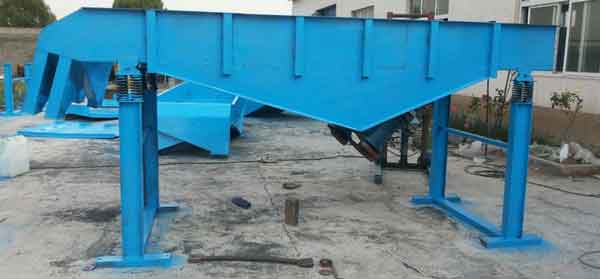
A fixed screen is a screening machine featuring a stationary screen surface. It is installed at an incline, with material fed from the higher end. Relying solely on gravity—without any external driving force—the ore passes through the sieve openings, separating into undersize material (smaller than the aperture) and oversize material (larger than the aperture), resulting in two distinct particle size fractions.
Fixed screens generally offer lower screening efficiency and are prone to clogging when handling materials with high moisture or viscosity. Additionally, operation can be labor-intensive. However, due to their simple structure, ease of manufacturing, lack of power requirements, and low cost, they are widely utilized in crushing operations. Fixed screens are typically categorized into two types: grid sieves and bar sieves.
1). Grid screen: Primarily installed at the top of raw ore receiving bins and coarse crushed ore bins, mainly used to control ore particle size.
2). Bar screen (bar screen): Commonly used for pre-screening before coarse and medium crushing stages.
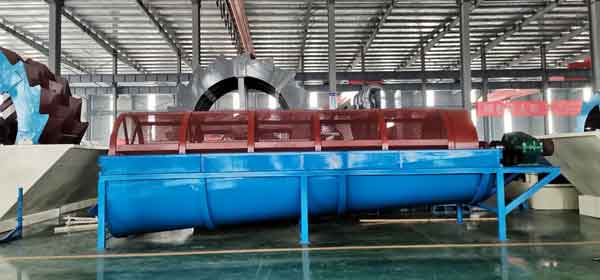
The screening surface of a roller screen consists of multiple parallel rollers fitted with staggered sieve discs. The gaps between adjacent rollers and discs form the apertures of this type of screen. Driven by sprockets or gears, the rollers rotate in the same direction as the material flow.
Roller screens are frequently employed for screening coarse-grained materials and are suitable for soft to medium-hard substances. Their key advantage is resistance to screen blinding. However, disadvantages include bulky equipment design, lower screening efficiency, and rapid wear of the rollers.
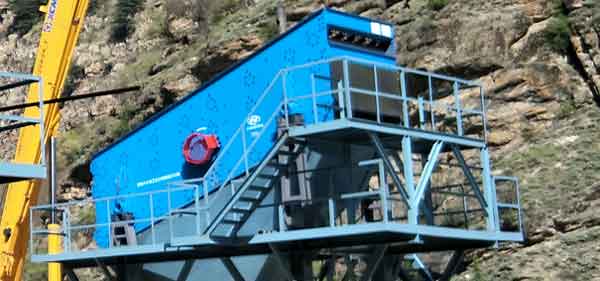
The vibrating screens commonly used in mining are a specific category of screening equipment. Typical types include inertial vibrating screens, self-centering vibrating screens, eccentric shaft vibrating screens, heavy-duty vibrating screens, circular motion vibrating screens, and linear motion vibrating screens. Below, we compare the key characteristics of these vibrating screen types.
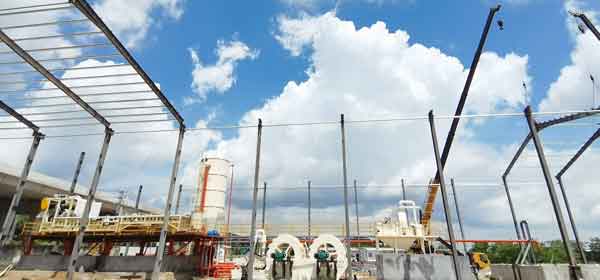
Stage 1 Screening: Fixed screen (low screening efficiency, low capital investment), Heavy-duty vibrating screen (high screening efficiency, high capital investment), Roller screen (medium screening efficiency, high capital investment).
Stage 2 Screening: Circular vibrating screen (high screening efficiency, low capital investment), Linear vibrating screen (medium screening efficiency, low capital investment).
Stage 3 Screening: Circular vibrating screen (high screening efficiency, low capital investment), Linear vibrating screen (medium screening efficiency, low capital investment).
Inspection and screening: circular vibrating screen (high screening efficiency, low equipment investment), linear vibrating screen (medium screening efficiency, low equipment investment).
Please enter your inquiry and contact. We will reply you as soon as possible.
We are here for your questions anytime 24/7, welcome your consultation.
The latest sand washer price.
Installation and maintenance.
Screening
Sand Washing Machines
Sludge Treatment
Sand Recycling Machines
Address: Shuangyue Road, Changdai Town, Mengjin County, Luoyang, China
Email: export@lylzzg.com
Tel: +86-18736301510


 日本語
 Русский
 中文
 Español
 Français
 Português
 العربية
 Tiếng Việt
 Deutsch
 한국어
 Türkçe
 বাংলা
 हिन्दी
 Bahasa Melayu
 Kiswahili