
The commonly used mine vibrating screen is not a kind of screening equipment, but a kind. Usually, there are inertial vibrating screens, self-centering vibrating screens, eccentric vibrating screens, heavy-duty vibrating screens, circular vibrating screens, linear vibrating screens, etc. Below we focus on comparing the characteristics of these types of vibrating screens.
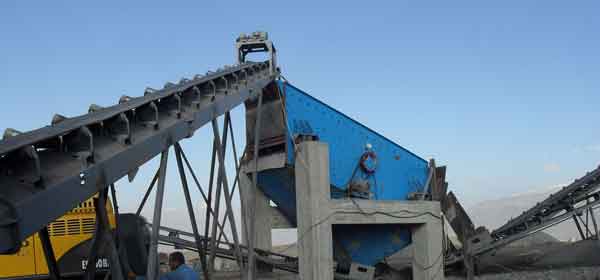
The vibrator is installed on the screen box. As the screen box vibrates up and down, the instability of the amount of ore will affect the screening efficiency, and the processing capacity is small, which is suitable for medium and fine grades.
When the self-centering vibrating screen (single shaft vibrating screen) is working, the screen vibrates at high speed, but the spatial position of the grooved pulley remains unchanged, so it is called a self-centering vibrating screen. It has the same working principle as the pure inertial vibrating screen, but the belt wheel is concentric with the drive shaft in the structure, the center of the belt wheel remains stationary during the working process, and the motor runs smoothly.
Key advantages include a simple structure, ease of manufacturing, strong screen surface vibration, and high screening efficiency. The main disadvantages are significant structural vibration and lower processing capacity. This type is suitable for fine subdivision levels.
The eccentric vibrating screen operates by utilizing the high-speed rotation of an eccentric drive shaft to induce vibration in the screen, hence its name. The eccentric shaft directly drives the screen frame to perform a trajectory movement in the vertical plane, with an amplitude equivalent to twice the eccentricity. The sieve size typically ranges from 100~250mm. It is commonly used for pre-screening or as the first screening stage for sand and gravel materials. However, it is rarely used today, having been largely replaced by inertial vibrating screens.
The key advantage lies in its robust structure, which maintains a consistent amplitude regardless of feed volume fluctuations. It delivers strong and stable vibration intensity, significantly reducing the risk of screen mesh clogging.
On the downside, the bearing structure is complex, resulting in high inertia. Furthermore, incomplete dynamic balance during operation can cause simultaneous vibrations in the supporting building structure.
Designed for sieving large lumps and dense ores, this equipment offers higher screening efficiency compared to fixed screens. While it requires a higher initial investment, it is ideal for classifying large blocks.
Featuring a circular motion trajectory and an inclined screen surface, this design allows material lodged in the mesh to dislodge naturally. This prevents screen blinding effectively, making it suitable for handling large blocks and intermediate size fractions.
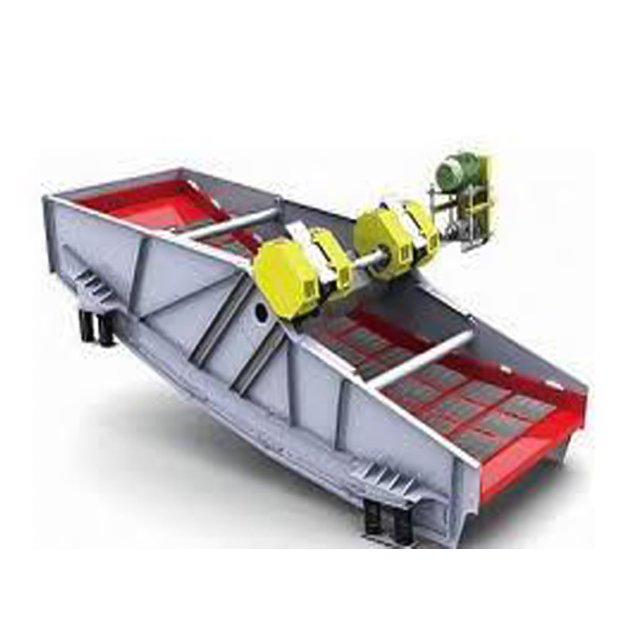
With a horizontally installed screen surface and straight-line motion trajectory, this unit provides a large screening area, strong amplitude, high efficiency, and substantial processing capacity. However, it involves a more complex structure, higher cost, increased energy consumption, and difficult amplitude adjustment. It is well-suited for screening coarse, medium, and fine aggregates, and can also serve as dehydration and desliming equipment in wet processing operations.
Please enter your inquiry and contact. We will reply you as soon as possible.
We are here for your questions anytime 24/7, welcome your consultation.
The latest sand washer price.
Installation and maintenance.
Screening
Sand Washing Machines
Sludge Treatment
Sand Recycling Machines
Address: Shuangyue Road, Changdai Town, Mengjin County, Luoyang, China
Email: export@lylzzg.com
Tel: +86-18736301510


 日本語
日本語 Русский
 中文
中文 Español
 Français
 Português
 العربية
 Tiếng Việt
 Deutsch
 한국어
한국어 Türkçe
 বাংলা
বাংলা हिन्दी
 Bahasa Melayu
 Kiswahili