
The dust removal efficiency of a is directly related to the particle size of the dust. Generally, larger particles result in higher separation efficiency. When particle size exceeds a specific threshold, the can achieve 100% removal efficiency. So, how can we optimize the performance of a ?
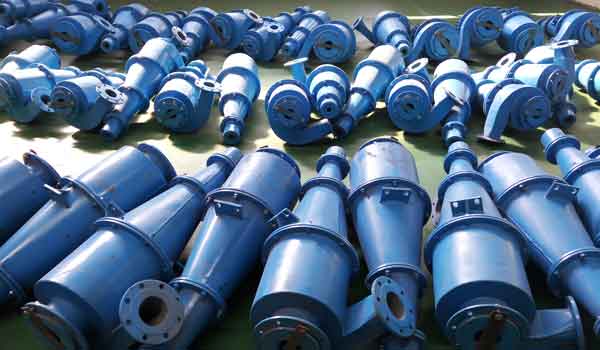
Increasing the inlet flow velocity within an optimal range enhances dust removal efficiency. However, if the velocity is too high, some separated particles may be entrained by the inner vortex and carried away, reducing overall efficiency. Additionally, pressure drop increases with the square of the inlet velocity; excessive velocity leads to significantly higher energy consumption. Based on technical best practices and operational experience, the recommended inlet velocity range is typically 12–20 m/s. It should not fall below 10 m/s to prevent dust accumulation in the inlet duct.
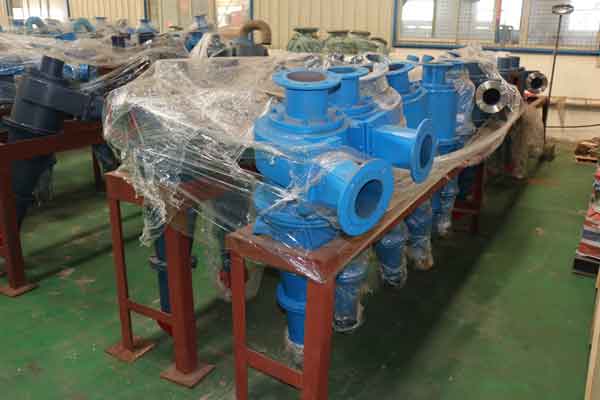
The smaller the simplified diameter, the greater the centrifugal force on the dust particles and the higher the separation efficiency under the same tangential speed. The change in simplified height has no obvious effect on dust removal efficiency, while appropriately lengthening the cone height helps improve dust removal efficiency.
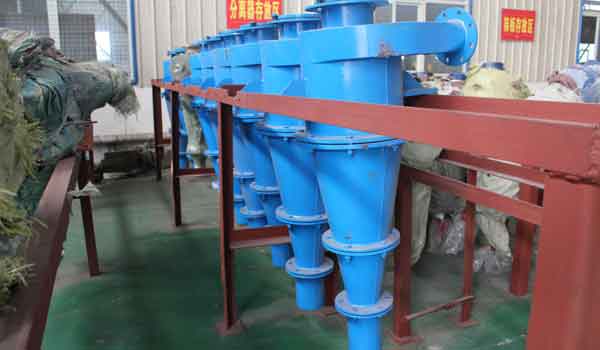
Since the centrifugal force acting on dust particles is proportional to the cube of the particle size, while the radial air resistance they experience is only proportional to the first power of the particle size, larger particles are easier to capture than smaller ones. Dust removal efficiency increases with the true density of the dust particles; lower-density particles are more difficult to separate, resulting in reduced dust removal efficiency.
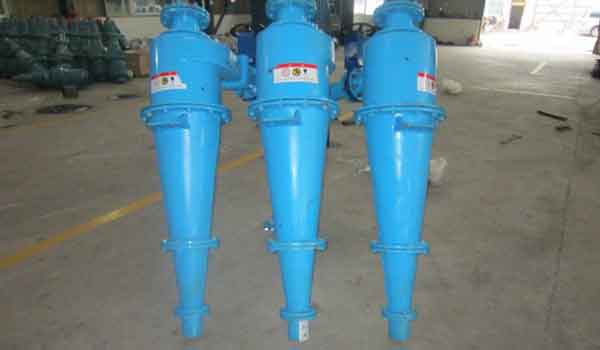
Gas viscosity increases with rising temperature, and the cut-off particle size is proportional to the square root of the viscosity. Consequently, the dust removal efficiency of a decreases as gas temperature and viscosity increase.
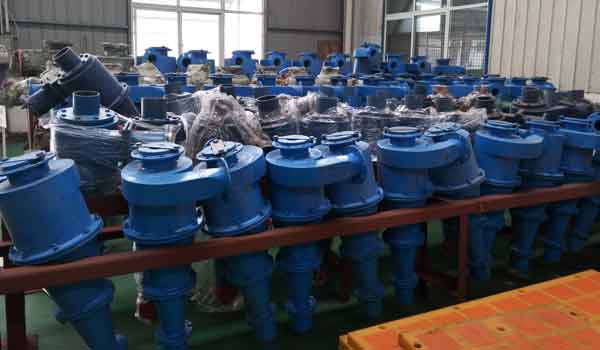
The internal static pressure within the gradually decreases from the outer wall toward the center. Even when operating under positive pressure, the bottom of the cone may experience negative pressure. If the lower section of the is not airtight and air leaks in, dust that has settled into the ash hopper will be re-entrained, significantly reducing dust removal efficiency.
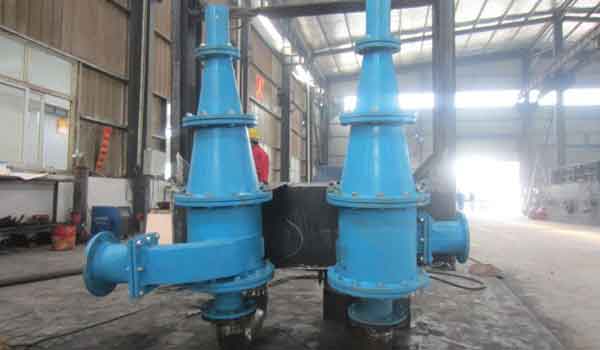
If these five factors are effectively controlled, the efficiency of the can be improved. For any further questions regarding the use of , please feel free to contact us at any time.
Please enter your inquiry and contact. We will reply you as soon as possible.
We are here for your questions anytime 24/7, welcome your consultation.
The latest sand washer price.
Installation and maintenance.
Screening
Sand Washing Machines
Sludge Treatment
Sand Recycling Machines
Address: Shuangyue Road, Changdai Town, Mengjin County, Luoyang, China
Email: export@lylzzg.com
Tel: +86-18736301510


 日本語
日本語 Русский
 中文
中文 Español
 Français
 Português
 العربية
 Tiếng Việt
 Deutsch
 한국어
한국어 Türkçe
 বাংলা
বাংলা हिन्दी
 Bahasa Melayu
 Kiswahili