
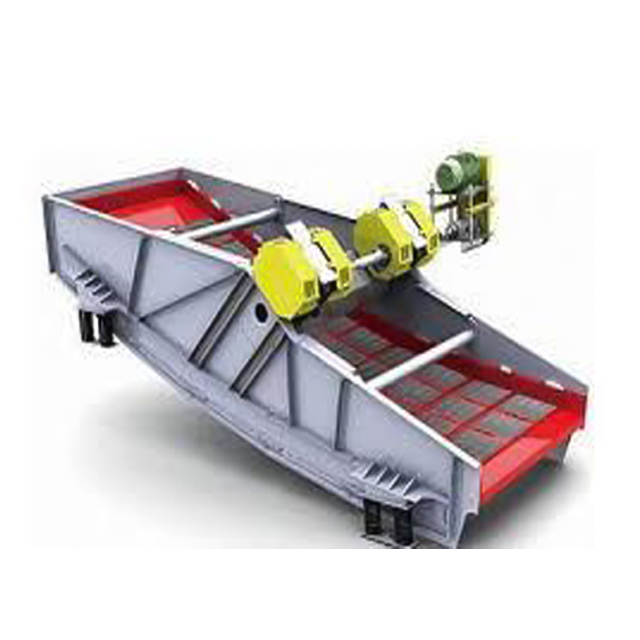
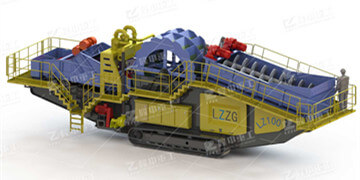
Silica sand production equipment includes a vibrating feeder, jaw crusher, sand making machine, vibrating screen, belt conveyor, and sand washing machine. Various types of equipment are combined to meet different process requirements according to customer needs.

Silica sand is a hard, wear-resistant, and chemically stable silicate mineral. It is a non-metallic mineral with SiO2 as its main component. Silica sand appears milky white or colorless and translucent, serving as an important industrial mineral raw material. It is widely used in glass, casting, ceramics and refractory materials, ferrosilicon smelting, metallurgical flux, metallurgy, construction, chemical industry, plastics, rubber, abrasives, and other industries.

Silica sand production methods are primarily categorized into dry processing and wet processing. Dry processing eliminates water usage, conserves energy, prevents dust pollution, yields products with low iron content, and requires a smaller footprint. Wet processing offers higher yield rates.
The dry silica sand production process involves crushing, separation, rough selection, fine selection, wind separation, and dust collection. Quartz stone is fed into one end of the equipment, while qualified products in various specifications are discharged from the other end for immediate bagging.
This type of silica sand is predominantly used in glass manufacturing, refractory materials, ferrosilicon smelting, metallurgical flux, ceramics, abrasives, and casting. In construction applications, it provides strong resistance to acidic media, enabling the production of acid-resistant concrete and mortar.
Wet processing technology is commonly adopted by new and large-scale processing enterprises. Its advantages include uniform particle size distribution, effective over-grinding control, and reduced presence of oversized particles. A typical process flow includes: raw ore → crushing → wet rod milling → fine screening (removing coarse particles) → hydraulic classification (removing fine particles) → magnetic separation and iron removal → dehydration. This method features a relatively high degree of mechanization.

Initially, raw stone materials are coarsely crushed by a primary crusher. The resulting coarse aggregate is then conveyed via belt conveyor to a fine crusher for secondary crushing. The finely crushed material enters a vibrating screen, which separates it into two fractions to meet specific feed size requirements: one fraction proceeds to the sand-making machine, while the other is returned for further fine crushing. Inside the sand-making machine, part of the material is processed into sand, which may be washed by a sand washing machine (optional) to produce finished sand; the remaining portion is recirculated for additional crushing.
The silica sand production line features high automation, low operating costs, high crushing efficiency, energy savings, large output capacity, minimal pollution, and easy maintenance. The manufactured sand produced meets national construction sand standards, offering uniform particle size, excellent grain shape, and reasonable gradation.
Please enter your inquiry and contact. We will reply you as soon as possible.
We are here for your questions anytime 24/7, welcome your consultation.
The latest sand washer price.
Installation and maintenance.
Screening
Sand Washing Machines
Sludge Treatment
Sand Recycling Machines
Address: Shuangyue Road, Changdai Town, Mengjin County, Luoyang, China
Email: export@lylzzg.com
Tel: +86-18736301510


 日本語
 Русский
 中文
 Español
 Français
 Português
 العربية
 Tiếng Việt
 Deutsch
 한국어
 Türkçe
 বাংলা
 हिन्दी
 Bahasa Melayu
 Kiswahili