
The dewatering screen is an essential piece of equipment for sand and gravel production lines. Below are answers to common questions regarding dewatering screens in production operations.

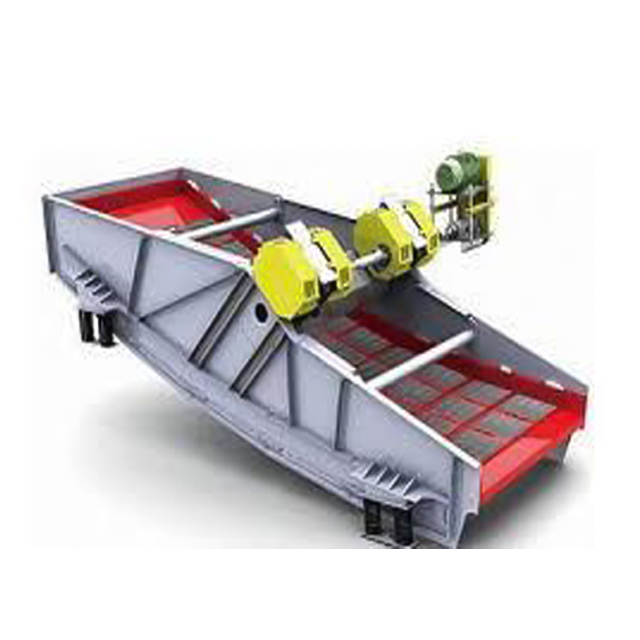
Dewatering screens are primarily used for dewatering, desliming, and degrading processes. They are widely applied in sand washing at aggregate plants, coal slime recovery in coal preparation facilities, and dry tailings processing at concentrators. Consequently, they are also referred to as sand dewatering screens, mine dewatering screens, coal slime dewatering screens, tailings dewatering screens, high-frequency dewatering screens, etc.
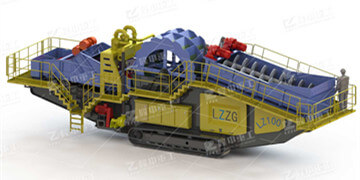
Generally, standard sand washing equipment includes the spiral sand washer, impeller sand washer, and vibrating dewatering screen. These machines are mainly utilized for washing materials across industries such as sand quarries, mining, building materials, chemical processing, and concrete mixing plants, facilitating selection, classification, and dehydration.

Although both fall under the category of , their structural designs vary depending on the specific material being processed. For instance, the sand dewatering screen used in a sand washing production line differs from the tailings dewatering screen commonly employed in concentrators. The former is primarily designed for wet sand production lines, operating either in conjunction with a sand washing machine or independently.
Sand discharged directly from a sand washing machine often retains high moisture content and excessive mud levels, failing to meet standard production requirements for clean aggregate. Therefore, a dewatering screen is essential. After initial cleaning by the sand washing machine, the sand and gravel pass through the dewatering screen for secondary water washing, hydraulic classification, desliming, and dewatering. This process ensures an optimal particle size distribution and reduces the mud content to less than 0.7%.

The dewatering screen can also operate independently when processing materials with low mud content, such as quartz sand. In these cases, a sand washing machine is unnecessary. Since quartz sand typically has minimal mud content, using a sand washing machine not only consumes extra energy but also yields suboptimal results. Furthermore, the capital investment for a dewatering screen is lower than that of a sand washing machine.
The dewatering screen has relatively few wear parts, primarily consisting of screens, screen plates, and vibration motors. The replacement frequency depends on specific operational conditions and may vary significantly from one application to another.
Please enter your inquiry and contact. We will reply you as soon as possible.
We are here for your questions anytime 24/7, welcome your consultation.
The latest sand washer price.
Installation and maintenance.
Screening
Sand Washing Machines
Sludge Treatment
Sand Recycling Machines
Address: Shuangyue Road, Changdai Town, Mengjin County, Luoyang, China
Email: export@lylzzg.com
Tel: +86-18736301510


 日本語
 Русский
 中文
 Español
 Français
 Português
 العربية
 Tiếng Việt
 Deutsch
 한국어
 Türkçe
 বাংলা
 हिन्दी
 Bahasa Melayu
 Kiswahili