
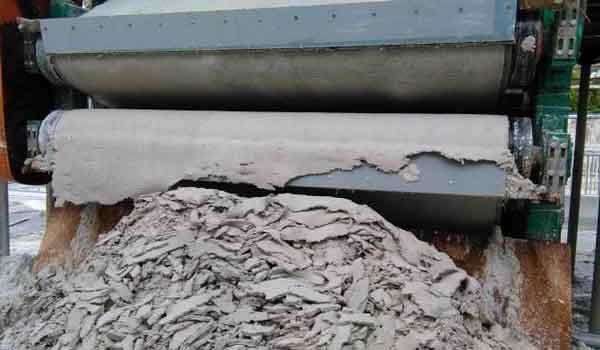
Factors Influencing the Price of Sludge Treatment Belt Filter Presses
Date: Jun. 23, 2021
The filter press is primarily used for treating sludge generated by sewage and mud in water washing plants. It not only helps users achieve economic benefits but also plays a significant role in environmental protection. Many customers inquire: What is the price of a belt filter press for sludge treatment? What factors influence its cost? This article addresses these two questions. 1. Market Price Analysis of Belt Filter Presses The belt filter press comes in various configurations to meet different user requirements, resulting in varying purchase prices. Naturally, the total investment cost is also closely related to the number of units purchased. Standard models typically start at several hundred thousand, while high-specification configurations can reach approximately one million. A precise and detailed quotation will be determined based on each customer's specific needs. Customers can obtain a customized quote by contacting the manufacturer's customer service via "online chat." 2. What Factors Influence Belt Filter Press Pricing? The cost of a belt filter press is determined by multiple variables. To secure cost-effective equipment, it is essential to understand these key pricing drivers. Primary factors include configuration, material selection, functional capabilities, and brand reputation. 1) Configuration Configuration level is the primary determinant of your capital investment and directly impacts the final quotation. Higher-spec configurations command premium prices, while basic setups offer more budget-friendly options. 2) Material Selection Material quality significantly influences equipment costs. Superior materials enhance durability and performance but increase the price point, whereas lower-grade materials reduce initial costs. Consequently, material choice is closely linked to overall equipment pricing. 3) Function Each user has different requirements for equipment functions. Different functional specifications lead to varying levels of manufacturing complexity and investment costs,…
Date: Jun. 16, 2021
The artificial sand production line is specialized equipment engineered for the manufacture of construction-grade sand and aggregates. It achieves a 50% reduction in energy consumption compared to traditional sand-making machines. This system processes materials such as rock, gravel, and river pebbles into various particle sizes that meet construction sand specifications. The resulting artificial sand features uniform particle size and high compressive strength, outperforming both natural sand and ordinary hammer crushers. The produced sand aligns more closely with construction requirements, thereby enhancing overall build quality. 1. Equipment Configuration of the Artificial Sand Production Line In the operation of the sand production line, large stones are evenly fed into the jaw crusher via a vibrating feeder from the silo for coarse crushing. The coarsely crushed material is then transported by belt conveyor to either a cone crusher or an impact crusher for medium crushing. Subsequently, the crushed stone is conveyed by belt to the vibrating screen for classification. Finished sand (undersize) is moved by belt conveyor to the sand washing machine for cleaning and finally deposited onto the finished product pile via another belt conveyor. Oversize stones are sent by belt conveyor to the vertical shaft impact crusher (sand-making machine) for fine…
Date: Jun. 11, 2021
The fifth day of the fifth month in the lunar calendar marks a significant traditional Chinese festival: the Dragon Boat Festival. On this day, families across China observe customs such as eating zongzi (sticky rice dumplings), drinking realgar wine, and hanging calamus and wormwood. In many regions, vibrant dragon boat races are also held to celebrate the occasion. A widely circulated legend underpins the origins of the Dragon Boat Festival. In ancient China, there lived a renowned patriotic poet named Qu Yuan. On the fifth day of the fifth lunar month in 278 AD, overwhelmed by despair and anger, Qu Yuan drowned himself in the Miluo River. Upon hearing the news, local villagers immediately rowed out in rescue attempts. However, despite searching all the way to Dongting Lake, they were unable to recover his body. To express their grief and honor his memory, people began rowing boats on the river, a tradition that has evolved into today’s dragon boat races. Additionally, fearing that fish might consume Qu Yuan’s remains, villagers threw rice cakes from their homes into the water to distract the aquatic creatures. This act gave rise to the enduring custom of eating zongzi. Based on the story above,…
Date: Jun. 04, 2021
The China silica sand washing machine is widely applied across various sectors, including construction sites, sand and gravel plants, and concrete dam projects at hydropower stations. It delivers high cleanliness levels, a robust structural design, substantial processing capacity, and low energy consumption. While versatile, sand washing machines have specific requirements regarding material compatibility. Processing unsuitable materials can compromise equipment integrity. Therefore, if you encounter the following types of materials, pre-processing and disposal are required before cleaning. 1. Alkali-reactive aggregates. When handling alkali-reactive aggregates, alkaline content must be treated first, followed by washing with the sand washer. 2. Materials that do not meet quality indicators must undergo proper processing. Cleaning should only proceed once the materials reach the required standards. 3. Weathered rock mass. If weathering does not compromise the physical and mechanical properties or chemical stability of individual stones, these materials can be cleaned directly using the sand washer. 4. When selecting sandstone and other rocks with significant lithological variations as materials, the stability of their physical and chemical composition must be verified before cleaning them with a . 5. If the content of crushed aggregate exceeds the specified limit, it cannot be cleaned directly using a . The shape…
Date: Jun. 01, 2021
The mobile aggregate washing plant machine functions as a versatile, all-in-one solution equivalent to a compact sand production line. Its key advantages—eliminating the need for pile foundation installation and offering flexibility across multiple sites—have attracted numerous investors in manufactured sand projects. A frequently asked question is: What is the price of a 200-ton-per-hour mobile sand washing machine? This article provides answers and analysis regarding this query and related information. 1. What are the models of the mobile washing plant with a capacity of 200 tons per hour? Due to the specialized structure of the mobile sand washing machine, it integrates various components including sand-making equipment, crushing units, feeders, vibrating screens, and conveyors. While users can choose from many configuration options, prices vary depending on the specific model. Therefore, before discussing pricing, let’s examine the available models capable of processing 200 tons per hour. Mobile Aggregate Washing Plant Machine Parameters: Technical Parameters Model YD2Y-50 YD2Y-80 YD2Y-100 Feeding Size (mm) ≤10 ≤10 ≤10 Production Capacity (t/h) 30-50 50-80 80-120 Screen Unit (mm) 1800X6000 2100X6000 2400X6000 Wash Unit (mm) 920 1120 920X2 Dewatering Unit (mm) 1500X3000 1500X3000 1800X4200 Cyclone Unit (mm) 250X2 300X2 350X2 Power (kW) 63 81.5 126 Weight (kg) 21620 25960…
We are here for your questions anytime 24/7, welcome your consultation.
The latest sand washer price.
Installation and maintenance.
Screening
Sand Washing Machines
Sludge Treatment
Sand Recycling Machines
Address: Shuangyue Road, Changdai Town, Mengjin County, Luoyang, China
Email: export@lylzzg.com
Tel: +86-18736301510


 日本語
 Русский
 中文
 Español
 Français
 Português
 العربية
 Tiếng Việt
 Deutsch
 한국어
 Türkçe
 বাংলা
 हिन्दी
 Bahasa Melayu
 Kiswahili