
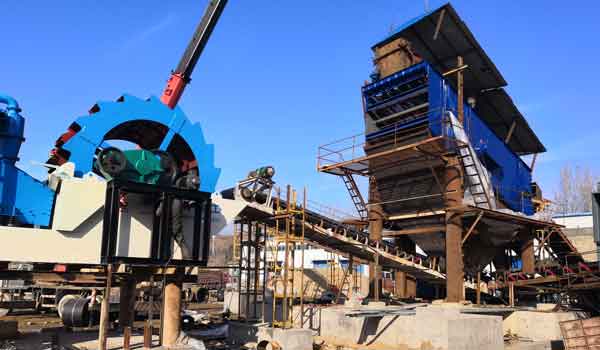
3 Major Problems in the Operation of Circular Vibrating Screens
Date: Aug. 11, 2021
A vibrating screen is a critical auxiliary piece of equipment in mining production. Any failure directly impacts the normal operation of the production line. As a common type of vibrating screen, what are the typical issues encountered during the daily operation of circular vibrating screens? How should these problems be resolved? This article analyzes the causes of three common circular vibrating screen issues and proposes effective countermeasures. 1. Broken Shaft in Circular Vibrating Screens Circular vibrating screens are primarily driven by a motor that powers an eccentric mass vibrator to generate vibration. During this process, the shaft is the key component driving the screen's vibration while simultaneously bearing significant stress. Consequently, shaft fracture is a relatively common failure mode in actual use. Once a shaft fracture occurs, the circular vibrating screen immediately ceases operation. Due to the complexity of its maintenance, high attention must be paid to preventing this issue. Root Causes and Countermeasures 1) Long-term Metal Fatigue or Substandard Shaft Material The shaft of a circular vibrating screen is made of metal and endures combined torque and repeated impact loads over extended periods during operation. Prolonged exposure to impact torque causes the internal structure of the shaft to gradually fatigue; once the fatigue limit is reached, fracture occurs. Furthermore, torsional strength varies significantly across different materials. Using substandard material inevitably results in lower bending strength and reduced fatigue resistance, making the shaft more susceptible to damage. It is recommended that when purchasing a circular vibrating screen, you must choose a regular manufacturer to ensure that the selection of materials for each component is reasonable. At the same time, it is strictly forbidden to start the circular vibrating screen with…
Date: Aug. 07, 2021
The water consumption of a represents a significant operational cost for users. This consumption is influenced by the quality of the , the type of material processed, the equipment configuration, and the operating methods employed. To reduce water usage in operations, consider the following aspects. Select a High-Quality Sand Washing Machine 1. Review the Equipment Manual The manual for a reputable will specify details such as materials, model numbers, product names, implementation standards, application scope, technical parameters, performance metrics, and maintenance requirements. If these critical details are missing from the manual upon purchase, you should question the authenticity and quality of the product. 2. Inspect the Appearance A high-quality exhibits superior craftsmanship. During procurement, carefully check for signs of impact damage, peeling paint, structural defects, or refurbishment. Ensure that welding seams are flat and uniform, and examine the equipment thoroughly from multiple angles and detailed perspectives. 3. Inspect the sand washing machine at an operational site Seeing is believing. To gain a deeper understanding of the quality of the sand washing machine, we recommend visiting an active operation site. On-site inspection allows you to assess the equipment's performance and build quality more intuitively. 4. Check the nameplate of the sand…
Date: Jul. 31, 2021
Stone powder is a byproduct generated during the sand-making process. While it typically contains higher levels of dust and impurities, it can be converted into high-quality sandstone through processing with a stone powder sand washing machine. What are the primary applications of washed stone powder? Once sieved and washed, provided that mud and stone powder content are controlled within reasonable limits, it serves as an effective substitute for ordinary machine-made sand across various industries. Its main purpose is to optimize concrete and mortar mixes by improving the gradation of ultra-fine aggregates. Additionally, it finds use in household chemicals, ceramics, cement, glass, smelting, and refractory materials. The Role of Stone Powder in Manufactured Sand Concrete 1. Hydration Studies indicate that ettringite formed during the early stages of hydration transforms into monosulfoaluminate in later stages, which can reduce the strength of the cement paste. However, adding stone powder containing calcium carbonate effectively addresses this issue. Furthermore, since stone powder is primarily composed of calcium carbonate, it reacts with C3A to form hydrated calcium aluminate, thereby enhancing concrete strength. 2. Filling Effect Stone powder fills voids within the concrete matrix, acting as a filler to increase density and functioning as an inert admixture.…
Date: Jul. 21, 2021
The dewatering screen is a mechanical separation device widely employed in crushing operations for solid-phase mud treatment. In practical applications, motor installation often poses a challenge for users. Because vibration motors are not restricted to a single fixed position, their placement varies based on specific production requirements. Today, Luoyang Longzhong Heavy Industry clarifies this issue. [caption id="attachment_2760" align="alignnone" width="600"] Vibration motor of the dewatering screen[/caption] Dewatering screen motors can be installed at the bottom, side, or top of the equipment. 1. Vibration Motor Installation on Both Sides of the Dewatering Screen Vibration motors can be mounted on both sides of the linear screen. This configuration reduces the overall device height, meets customer specifications regarding the linear screen's total height, and does not compromise operational efficiency. 2. Vibration Motor Mounted at the Bottom of the Dewatering Screen Mounting the motor at the base reduces the overall width of the linear vibrating screen, thereby maximizing the effective screening area. This configuration maintains optimal throughput and screening efficiency while minimizing the equipment's footprint. 3. Vibration Motor Mounted on Top of the Dewatering Screen Installing the motor on top ensures that neither the equipment width nor the discharge port height is increased. The three…
Date: Jul. 17, 2021
The hydrocyclone is one of the most effective fine-grain classification devices in modern mineral processing. In daily operations, hydrocyclones may experience various equipment failures. If these issues are not identified and resolved promptly, they can lead to unplanned shutdowns. So, what are the common faults encountered during routine operation? How can we address them? This article examines five typical failure modes, analyzing their root causes and providing practical countermeasures. 1. Significant Feed Pressure Fluctuations In the production process, feed pressure directly impacts the hydrocyclone’s processing capacity and classification particle size. Generally, the hydrocyclone’s feed pressure should be maintained at a stable level as required; significant fluctuations must be avoided, as they can compromise equipment performance and degrade classification efficiency. Large feed pressure fluctuations are typically caused by insufficient pump supply due to low tank liquid levels or air entrainment, or by debris blockage within the pump. If a drop in hydrocyclone pressure occurs after prolonged operation, it is primarily attributed to pump wear. Solution 1) If feed pressure fluctuations result from low pump tank liquid levels, adjust by increasing the liquid level, closing one or two cyclones, or reducing the pump speed. 2) If feed pressure fluctuations are caused by…
We are here for your questions anytime 24/7, welcome your consultation.
The latest sand washer price.
Installation and maintenance.
Screening
Sand Washing Machines
Sludge Treatment
Sand Recycling Machines
Address: Shuangyue Road, Changdai Town, Mengjin County, Luoyang, China
Email: export@lylzzg.com
Tel: +86-18736301510


 日本語
 Русский
 中文
 Español
 Français
 Português
 العربية
 Tiếng Việt
 Deutsch
 한국어
 Türkçe
 বাংলা
 हिन्दी
 Bahasa Melayu
 Kiswahili