
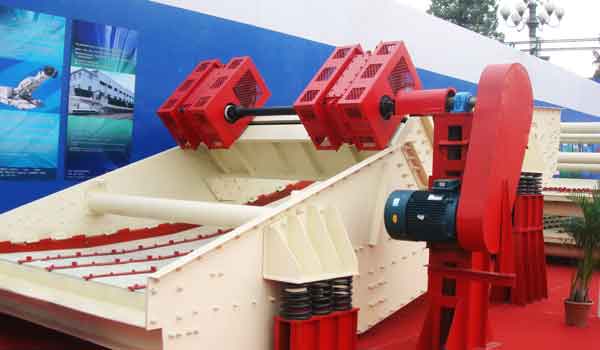
Take You To Know The Banana Sieve
Date: Sep. 01, 2021
1. Purpose The JR-type banana screen is designed for screening, dewatering, de-intermediation, and de-sliming of coal, sand, gravel aggregates, minerals, and other materials. This series features variable screening areas, aperture sizes, number of deck segments, and inclination angles to accommodate different applications and processing capacities. Available in single-layer and double-layer configurations, the working area ranges from 5.7m² to 30.2m². With 20 primary specifications and models, this equipment effectively meets the production requirements of diverse mining operations and coal preparation plants. 2. Structure and Technical Characteristics 1) Utilizing the principle of equal-thickness screening, the screen surface features a steeper incline at the feed end, which gradually decreases in angle toward the discharge port. As material traverses this sloped surface, it benefits from higher screening speeds and thinner bed depths. Because bulk material moves more rapidly across the steep initial section, early stratification occurs, allowing fine particles to approach the screen surface faster and pass through the apertures with minimal resistance. Consequently, banana screens deliver superior screening efficiency and significantly higher processing capacity compared to traditional grading screens, representing an advanced solution in screening machinery. 2) Vibrator: Features the world’s advanced JR box vibrator (see the introduction of the JR vibrator for details). It utilizes splash lubrication with a built-in lubricating oil channel in the housing to ensure adequate bearing lubrication. The gears are high-precision helical gears, and the bearings are specialized for vibration equipment. An oil drain plug with magnetic properties and an external organic plastic transparent oil sight glass allow for easy observation of the oil level. Special measures are adopted to ensure smooth operation of the bearings and gears; the vibrator noise is less than 75 decibels, and the…
Date: Aug. 28, 2021
Many customers experience rapid wear of the screen during vibrating screen operation, leading to frequent damage and the need for replacement, which increases production costs. This article explains why vibrating screens are often damaged and how to prevent such issues from recurring. Reason 1: Poor Fit Between Screen Mesh and Frame After the vibrating screen has been in operation for some time, prolonged contact between the material and the screen surface can cause the screen mesh to separate from the frame. This results in looseness, ultimately leading to screen damage over extended use. Solution: Regularly inspect and maintain the screen to ensure it remains securely fitted. If any looseness is detected, manually tighten the screen immediately. Reason 2: Poor Quality of Screen Material The screens used in vibrating screens are typically manufactured from stainless steel 304, carbon steel, or polyurethane. Stainless steel 304 offers superior durability and a longer service life compared to carbon steel. Polyurethane is the most durable option among all screen materials, although it comes at a higher cost. If low-quality screens are selected, they are prone to damage after a period of use. Solution: It is essential to purchase screens from reputable manufacturers to ensure that…
Date: Aug. 25, 2021
In recent years, rapid economic growth and the expansion of infrastructure projects have fueled rising demand for finished sand and gravel aggregates. Stone is a fundamental material across industries such as construction, road transportation, water conservancy, and hydropower. Amid today’s shortage of sand and gravel, investing in a stone crushing plant represents an opportunity aligned with "the right time, the right place, and the right people." So, what equipment does a stone crushing plant require? How much investment is needed? The following article provides you with the answers. Crushing Equipment Required for Sand and Stone Plants For stone crushing applications, commonly used equipment includes jaw crushers, impact crushers, cone crushers, hammer crushers, and the increasingly popular mobile crushers. Below is a recommended configuration plan for sand and gravel crushing systems to provide you with a clearer understanding. 1. Heavy Hammer Crusher + Sand Making and Shaping Machine The heavy hammer crusher offers high capacity, with single-unit throughput ranging from 100 to 3200 t/h, demonstrating strong processing capabilities. However, its discharge particle shape is less optimal, requiring an additional sand making and shaping machine for adjustment. These machines, often referred to as impact crushers, utilize the "stone-on-stone" principle to finely crush…
Date: Aug. 21, 2021
Tailings are materials generated during operations that contain low concentrations of valuable components and cannot currently be economically utilized in industrial production. They also constitute the primary component of industrial solid waste. As gold mining resources are continuously exploited and technologies for refractory gold ores advance, the volume of gold mine tailings discharged has increased year by year. This trend inevitably leads to a series of challenges, thereby driving the need for effective treatment and comprehensive utilization of gold mine tailings. Challenges in Mine Tailings Disposal 1. Extensive Land Occupation from Long-Term Stacking 2. Environmental Pollution Chemical agents are essential in the gold ore beneficiation process. Residual chemicals remain in the tailings, and if heavy metals, toxic substances, or harmful pollutants flow downstream or infiltrate the ground, they pose significant risks. Even ultra-fine tailings particles can become airborne via wind drift, causing harm to the surrounding environment. 3. Resource Waste Due to limitations in previous beneficiation technologies, a substantial amount of valuable resources remains unrecovered within the tailings, leading to missed opportunities for comprehensive utilization. 4. Safety Hazards 5. Structural Risks: Collapse and Landslides The accumulated tailings inventory faces critical safety hazards, including potential collapse and landslide incidents. Tailings Treatment…
Date: Aug. 14, 2021
Tailings are the portion of material from a beneficiation plant that contains low concentrations of valuable components, rendering it unsuitable for production use. They constitute the primary component of industrial solid waste. While tailings treatment is a critical link in mining operations, what are the specific methods used? Do you know? Why Is Tailings Treatment Necessary? Traditionally, concentrators rely on tailings dams for storage. However, toxic chemicals, wastewater, and heavy metal ions remaining from the beneficiation process not only cause pollution and ecological damage to the surrounding mine environment but also increase safety risks associated with tailings dams. Hidden hazards such as landslides, mudslides, and dam failures have been induced by these dumps. Consequently, tailings management has always been a priority. Tailings Treatment Methods Currently, tailings treatment generally follows three main directions: tailings re-selection, tailings dewatering, and backfilling mined-out areas (goafs) with tailings. Below, we will explain each of these three approaches separately. 1. Tailings Re-selection Process Although the content of valuable components in tailings is relatively low, employing advanced technologies and optimized process flows for re-selection can significantly recover these valuable components. This maximizes resource recycling and minimizes waste generation. The final discharge of tailings helps alleviate environmental pressure…
We are here for your questions anytime 24/7, welcome your consultation.
The latest sand washer price.
Installation and maintenance.
Screening
Sand Washing Machines
Sludge Treatment
Sand Recycling Machines
Address: Shuangyue Road, Changdai Town, Mengjin County, Luoyang, China
Email: export@lylzzg.com
Tel: +86-18736301510


 日本語
 Русский
 中文
 Español
 Français
 Português
 العربية
 Tiếng Việt
 Deutsch
 한국어
 Türkçe
 বাংলা
 हिन्दी
 Bahasa Melayu
 Kiswahili