
Date: Mar. 23, 2021
Wastewater generated during the production process of concrete batching plants contains not only conventional construction materials such as sand and cement but also concrete admixtures. Direct discharge would cause severe pollution to the natural environment. The sewage treatment plant designed and developed by Longding is a closed-loop, automated system. Based on recycling principles, it separates wastewater from mud and sand, achieves mud-water separation, and discharges solid waste in a dry state. Through processes including screening, washing, dewatering, recycling, solid-liquid separation, and sludge dewatering, the system effectively separates sludge from clean water. This ensures high recovery rates for screened sand and gravel, purifies and recycles sewage, conserves resources, reduces water consumption, and meets environmental protection standards, enabling concrete batching plants to achieve environmentally friendly production.
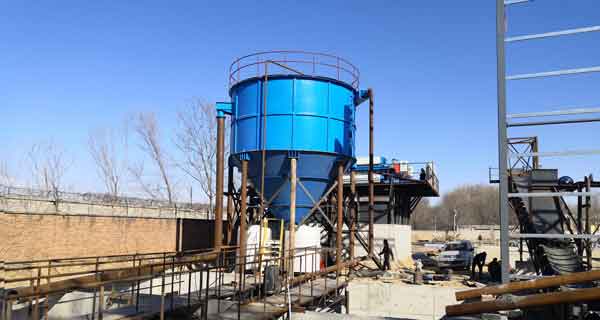
The sewage treatment plant for concrete batching plants primarily includes sewage treatment pipelines, sewage tanks, clean water tanks, sediment separation equipment, screening equipment, fine sand recovery equipment, dryers, thickening tanks, filter presses, and other components.
s.
Screening equipment: A dewatering screen is used to remove moisture from sand and gravel, while a swing screen classifies the materials for raw material reuse.
Fine sand recovery equipment: Integrated sand washing and recovery machines or dedicated fine sand recovery units utilize cyclones to wash, dehydrate, and recover materials that pass through the screening stage.
Dryer: Dried materials are fed into a grading sieve (swing sieve) for classification.
Concentration tank: Separates mud and water via concentration and sedimentation, purifying the tailwater.
Filter press: Thickened sludge from the concentration tank is pressed into filter cakes using belt or plate-and-frame filter presses, achieving efficient sludge dewatering and dry stacking.
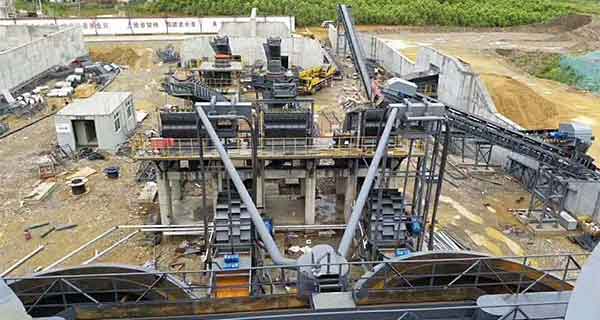
Sewage from the concrete mixing plant is collected into a sewage transfer tank via the treatment pipeline, where water and sand are separated through dehydration and screening. The sand and gravel are then directed to fine sand recovery equipment for recovery, drying, secondary screening, and grading. The screened sand and stone are reintroduced into the raw material plant for reuse in finished concrete production. Following dehydration, tailwater flows into a thickening tank for mud-water separation. Clean water overflows directly into the clean water rotating pool. Simultaneously, sludge settled at the bottom of the thickening tank is pumped into a filter press, where it is compressed into dry mud cakes suitable for other applications. After pressure filtration, the resulting clean water also enters the clean water rotating tank, enabling full recycling of clean water and achieving zero discharge throughout the entire process.
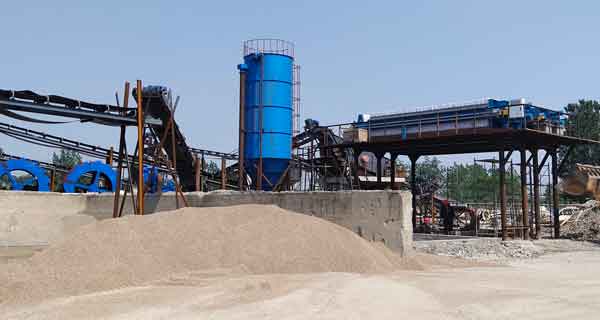
1. Throughout the entire production line, sewage is screened and washed, tailwater is purified, and solid waste is discharged in a dry state, enabling environmentally friendly zero discharge.
2. The sewage treatment system for concrete mixing plants is highly targeted, allowing equipment configurations to be tailored to specific customer requirements.
3. Featuring R&D-driven design, rational technology, and optimized structure, the treated water and sludge meet national environmental protection standards, while the entire production line is engineered for cost-effective intelligent operation.
Please enter your inquiry and contact. We will reply you as soon as possible.
We are here for your questions anytime 24/7, welcome your consultation.
The latest sand washer price.
Installation and maintenance.
Screening
Sand Washing Machines
Sludge Treatment
Sand Recycling Machines
Address: Shuangyue Road, Changdai Town, Mengjin County, Luoyang, China
Email: export@lylzzg.com
Tel: +86-18736301510


 日本語
日本語 Русский
 中文
中文 Español
 Français
 Português
 العربية
 Tiếng Việt
 Deutsch
 한국어
한국어 Türkçe
 বাংলা
বাংলা हिन्दी
 Bahasa Melayu
 Kiswahili