
Date: Mar. 13, 2021
In the sand washing industry, is an essential piece of equipment in any . During wet sand washing, fine and surface sand are inevitably lost with the wastewater flow, resulting in a loss of 5% to 25% per production line. Recovering these lost materials can significantly boost profitability. This article outlines four effective methods for recovery.
Regardless of the type of , agitation during the washing process causes most sand particles to be carried away by the water, leading to unclear separation and inevitable material loss.
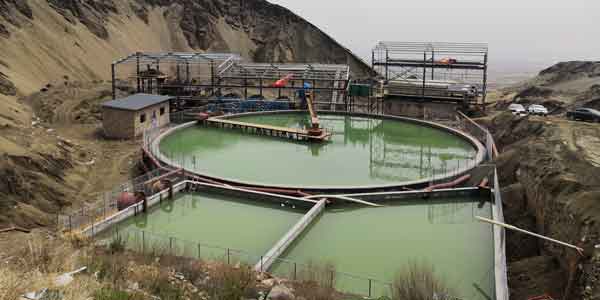
Sand washing wastewater flows into the sedimentation tank, which is preferably equipped with three layers to allow for gradual layer-by-layer settling over time. Due to the higher specific gravity of sand and mud, they can be effectively separated after prolonged precipitation. However, this method has notable drawbacks: the extended sedimentation process requires a large footprint for the tanks, and subsequent manual excavation of settled sand and mud is both time-consuming and labor-intensive.
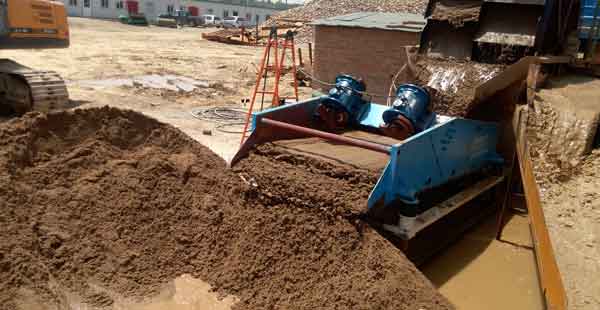
Sand washing wastewater is discharged directly onto the surface of the linear dewatering screen to recover lost fine sand.
The limitation of this approach is that it works well only if the raw material contains little or no mud. If the mud content is too high, the final stage becomes ineffective, preventing any meaningful recovery; instead, the output remains a mixture of mud and sand.
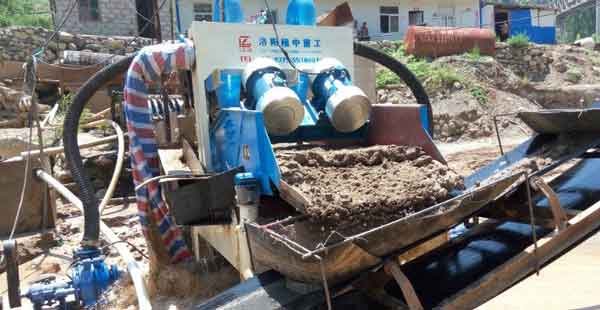
The wastewater from sand washing is discharged directly into the lower water tank of the fine sand recovery unit. The mixture of sand and muddy water is then pumped to the cyclone separator and discharged onto the screen surface by the slurry pump. Fine sand is discharged along the screen surface, while mud and water are separated. The water flows back to the lower tank to form a closed loop, continuously recovering sand from the wastewater.
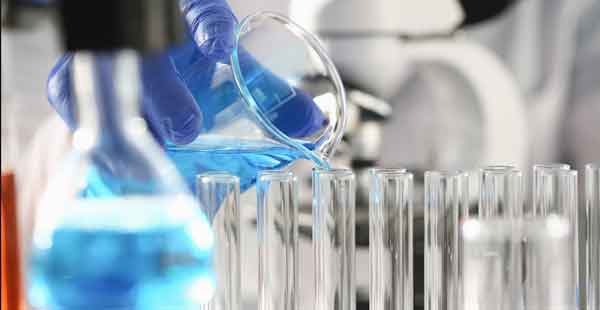
Discharge the lost sand and water into the settling tank and add chemical agents that cause the mud and sand to rapidly coagulate into flocs, achieving quick separation of sand and water. However, this method is primarily used in the coal slime industry for the recovery and utilization of refined coal and fine coal. Its application in sand and gravel plants has certain limitations and cannot be widely adopted at present.
Please enter your inquiry and contact. We will reply you as soon as possible.
We are here for your questions anytime 24/7, welcome your consultation.
The latest sand washer price.
Installation and maintenance.
Screening
Sand Washing Machines
Sludge Treatment
Sand Recycling Machines
Address: Shuangyue Road, Changdai Town, Mengjin County, Luoyang, China
Email: export@lylzzg.com
Tel: +86-18736301510


 日本語
日本語 Русский
 中文
中文 Español
 Français
 Português
 العربية
 Tiếng Việt
 Deutsch
 한국어
한국어 Türkçe
 বাংলা
বাংলা हिन्दी
 Bahasa Melayu
 Kiswahili