
Date: Oct. 08, 2021
Mineral resources are a vital material foundation for economic and social development. As key basic raw materials, sand and gravel aggregates see global annual production and consumption of approximately 40 billion tons, with China accounting for nearly half of this total. Against the backdrop of China’s current economic and social progress—particularly during the accelerated urbanization process—the aggregate industry holds a pivotal strategic position. For operators of sand and gravel plants, how well do you understand the fundamentals of gravel aggregates? Below, LZZG provides an overview of sand and gravel aggregates[[/T0]].
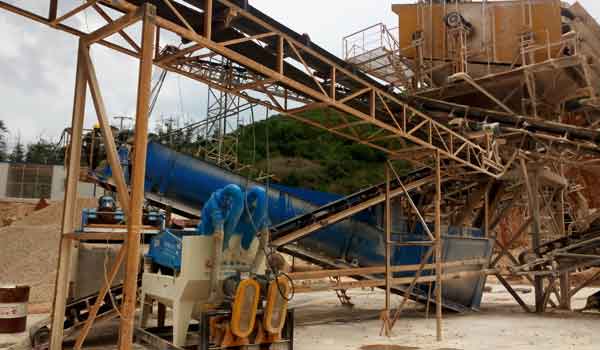
For coarse aggregate, primary control points include particle size, gradation, particle shape, stone powder content, mud content, and clay lumps. Each delivery vehicle must undergo a visual inspection; unqualified loads are prohibited from being unloaded. Additionally, all indicators must be tested in batches according to specification requirements. For fine aggregate, control focuses on fineness modulus, mud content, and clay lump content. Similarly, each vehicle requires a visual inspection, with non-compliant loads rejected upon arrival. Batch testing per specification standards is also mandatory.
The maximum particle size of coarse aggregate is constrained by the diameter of the concrete pumping pipeline and the required pumping height. Generally, the allowable particle size decreases as pumping height increases. For instance, when the pumping height is less than 50 m, the ratio of coarse aggregate particle size to pipe diameter must be ≤1:3. At a pumping height of 100 m, this ratio tightens to 1:5. Exceeding these limits significantly increases the risk of pipeline blockage.
aggregate for pumped concrete?
ete?
High needle and flake content results in relatively low flexural strength of needle-shaped coarse aggregates and reduced bonding strength between aggregates, leading to decreased concrete strength. For ready-mixed concrete, excessive needle and flake content causes poor aggregate shape, thereby reducing concrete fluidity. Additionally, needle and flake aggregates are prone to blockage within pipelines, which can cause pump blockages or even pipe bursts. Therefore, the needle and flake content in pumped concrete must be controlled below standard values, with even stricter requirements for high-strength concrete.
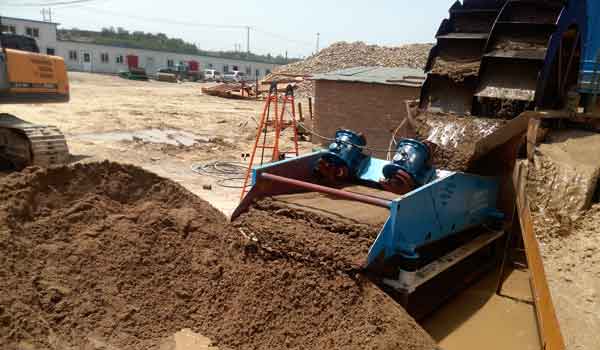
Concrete requires medium sand. In addition to meeting standard specifications for particle gradation and clay content, it is crucial that the proportion of sand passing through a 0.315mm sieve is no less than 15%. This factor significantly impacts concrete permeability. If this value is too low, it can easily cause pump blockages and result in poor water retention and bleeding in the concrete.
If the sand is too fine, the water demand for the concrete will increase. Moreover, concrete prepared with fine sand exhibits extremely poor pumpability and slump retention. This leads to decreased concrete strength and increased susceptibility to cracking.
If there are issues with the sand source, fine sand combined with some manufactured sand can be used to prepare pumped concrete. For example, fine sand with a fineness modulus of less than 2.0 can be mixed with manufactured sand having a fineness modulus of 3.0–3.2 at an approximate ratio of 6:4. Observe its fluidity and pumpability, and determine the optimal mix ratio through testing.
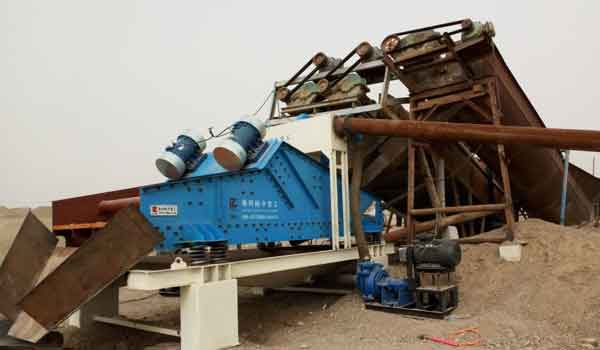
High sand content increases concrete water demand, reduces workability, amplifies shrinkage, lowers concrete strength, and makes structures prone to cracking. Therefore, the mud content in sand should be controlled at ≤3% for C30-C50 concrete grades, with even stricter requirements for high-strength concrete.
Beyond effects similar to those of mud in sand, it can severely compromise concrete strength. For instance, mud lumps weaken concrete cross-sections. During floor pouring, these lumps may float upward, creating surface defects such as pits after shrinkage occurs.
The dosage of sand and gravel in ready-mixed concrete typically ranges from 800–1100 kg/m³, where every 1% increase in moisture content introduces approximately 8–11 kg of additional water into the mix. Since sand is often sourced from rivers, its moisture content varies significantly. Failure to regularly monitor moisture levels and adjust mixing water accordingly leads to substantial fluctuations in concrete slump, pumpability, and strength.
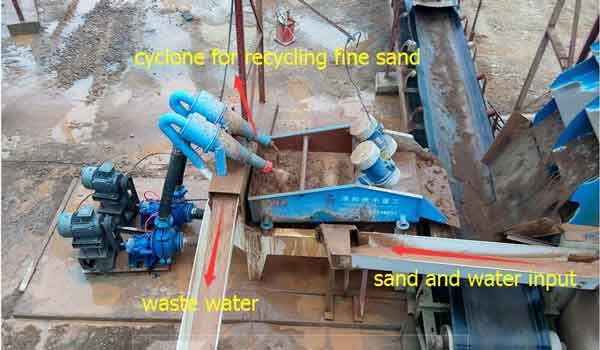
At LZZG, we go beyond supplying high-quality mining machinery. Our dedicated R&D team also provides customers with expert insights into sand and gravel aggregates, including material analysis, testing protocols, production line planning, and optimal equipment selection. Our after-sales support and cutting-edge technical specialists treat every client as a partner, offering comprehensive technical guidance tailored to your needs—especially for fine sand screening solutions.
Please enter your inquiry and contact. We will reply you as soon as possible.
We are here for your questions anytime 24/7, welcome your consultation.
The latest sand washer price.
Installation and maintenance.
Screening
Sand Washing Machines
Sludge Treatment
Sand Recycling Machines
Address: Shuangyue Road, Changdai Town, Mengjin County, Luoyang, China
Email: export@lylzzg.com
Tel: +86-18736301510


 日本語
日本語 Русский
 中文
中文 Español
 Français
 Português
 العربية
 Tiếng Việt
 Deutsch
 한국어
한국어 Türkçe
 বাংলা
বাংলা हिन्दी
 Bahasa Melayu
 Kiswahili