
Date: Sep. 25, 2021
Sludge thickening increases the sludge concentration from approximately 1% to 3–4%. Sludge dewatering removes most of the water from sludge with a concentration of about 3%, significantly increasing its dryness. There is a substantial difference in effectiveness between these two processes. Today, the LZZG Technical Department will guide you on how to distinguish between sludge dewatering and sludge thickening.
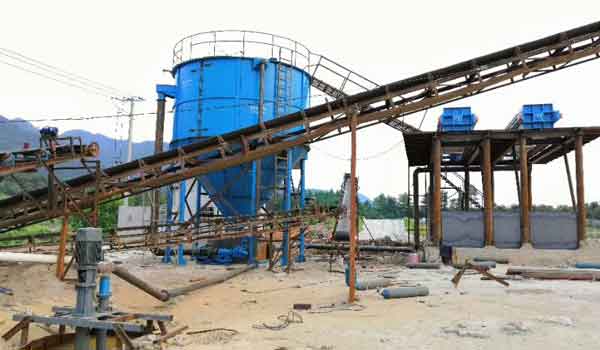
The sludge thickening process typically involves three methods: gravity concentration, mechanical concentration, and dissolved air flotation (DAF) concentration. Among these, gravity concentration—which utilizes natural gravity to separate liquid from sludge—is widely applied. Sludge thickening is a process that employs gravity or air flotation to reduce the moisture content and increase the density of the sludge. It serves as an effective method for lowering sludge moisture content and reducing sludge volume. Primarily, sludge thickening targets the reduction of interstitial water within the sludge. The resulting thickened sludge resembles a paste yet retains fluidity. While it represents the most economical and efficient approach to minimizing sludge volume, thickening generally cannot reduce the sludge moisture content to below 90%.
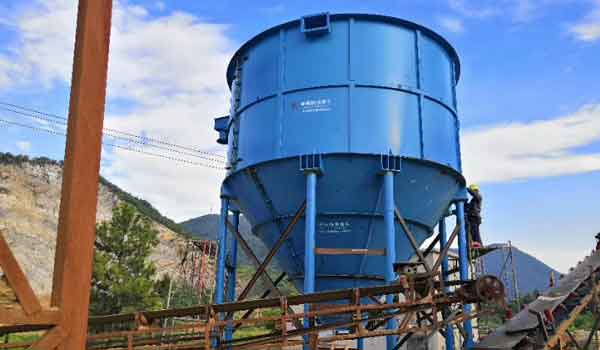
The LZZG High-Efficiency Deep Cone Thickener is based on traditional vertical flow sedimentation equipment. The internal barrel structure has been optimized to significantly enhance settling efficiency. The tank features a circular, suspended design where solids settle into the conical sludge pit at the bottom under gravity, while clarified water discharges via the overflow weir around the upper perimeter of the tank. The overflow outlet is equipped with a scum filter device and baffles to ensure high-quality effluent. Underflow concentration reaches up to 70%, with processing capacity 3–8 times that of conventional thickeners.
Sludge dewatering is a treatment process that removes water from raw, concentrated, or digested sludge, converting it into semi-solid or solid form. Following dehydration, the moisture content of the sludge can be reduced to 55%-80%. Mechanical dewatering is a widely adopted method for this purpose. Typically, sludge undergoes pretreatment to enhance its dewaterability before being processed. During filtration, wet sludge passes through a filter layer, allowing filtrate to permeate while retaining the filter cake on the surface.
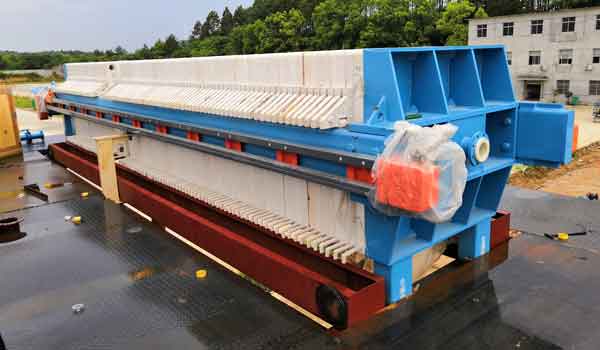
1. The LZZG Chamber Filter Press utilizes plate-and-frame compression to force water out of the sludge through the filter cloth, achieving effective dehydration. This equipment is extensively used in the chemical industry due to its high filtration driving force and ability to produce mud cakes with low residual moisture content.
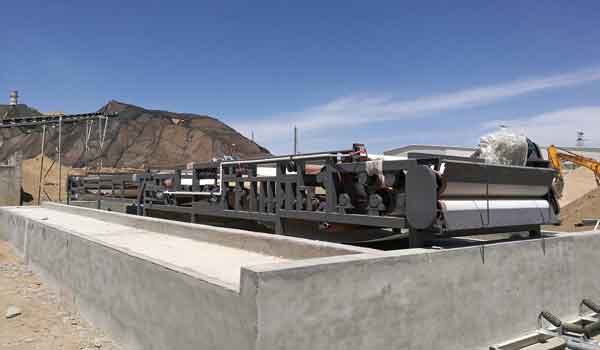
2. LZZG belt filter press is an advanced filtration solution. The sludge layer is carried between two tensioned filter belts, passing through a series of rollers arranged in an S-shape. The tension of the filter belts generates squeezing and shearing forces on the sludge, expelling capillary water to produce a mud cake with higher solid content, thereby achieving effective sludge dewatering. This belt filter press dehydrator exhibits minimal sensitivity to fluctuations in sludge load, offering advantages such as low final moisture content, stable operation, low energy consumption, simplified management and control, and reduced demands on operator skill levels.
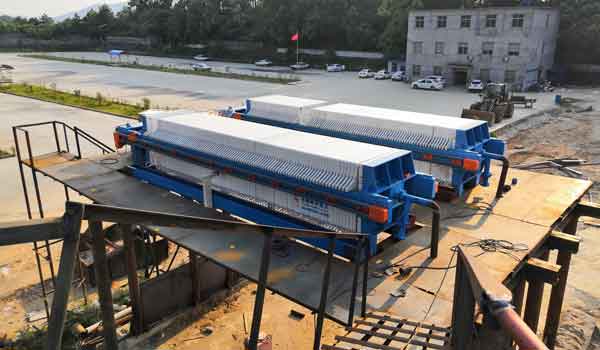
1. Mud Cake Solid Content Requirements: Compared to other types of dehydrators, plate and frame filter presses generally achieve a higher solid content in the mud cake, reaching up to 35%. If minimizing land occupation for sludge storage is a priority, the plate and frame filter press is the recommended solution.
2. Frame Material Specifications: The materials used for the filter plates and filter cloths must be corrosion-resistant, and the filter cloth must possess adequate tensile strength.
3. How to move the filter plate. This process can be completed automatically or semi-automatically via a hydraulic-pneumatic system, significantly reducing operator labor intensity.
For insights into sludge dewatering equipment, explore LZZG’s chamber filter presses and belt filter presses. For sludge thickening solutions, check out the LZZG high-efficiency deep cone thickener (three hydrogen purifier).
To learn more about the functions and pricing of your required equipment, contact our online customer service team or leave us a message; our technicians will reach out to you promptly.
Please enter your inquiry and contact. We will reply you as soon as possible.
We are here for your questions anytime 24/7, welcome your consultation.
The latest sand washer price.
Installation and maintenance.
Screening
Sand Washing Machines
Sludge Treatment
Sand Recycling Machines
Address: Shuangyue Road, Changdai Town, Mengjin County, Luoyang, China
Email: export@lylzzg.com
Tel: +86-18736301510


 日本語
日本語 Русский
 中文
中文 Español
 Français
 Português
 العربية
 Tiếng Việt
 Deutsch
 한국어
한국어 Türkçe
 বাংলা
বাংলা हिन्दी
 Bahasa Melayu
 Kiswahili