
Date: Dec. 24, 2021
Silica sand products are pure and uniform in particle size, with no visible soil impurities. However, since raw silica sand ore is mined from mountains, it often contains significant amounts of mud. Therefore, thorough cleaning and impurity removal are essential.
1. Common methods for removing soil and impurities include high-pressure water flushing and acid pickling. Silica sand manufacturers typically use high-pressure water guns to target larger material pieces, effectively washing away adhering soil. Acid pickling is employed to remove surface metal impurities such as iron and aluminum. The pickling process involves soaking the material in 6mol/L hydrochloric acid for 2 hours, or heating and soaking in concentrated hydrochloric acid for 30 minutes, followed by filtration, washing with water until neutral, and drying.
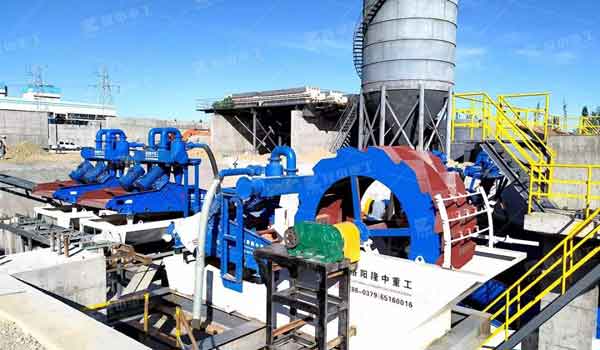
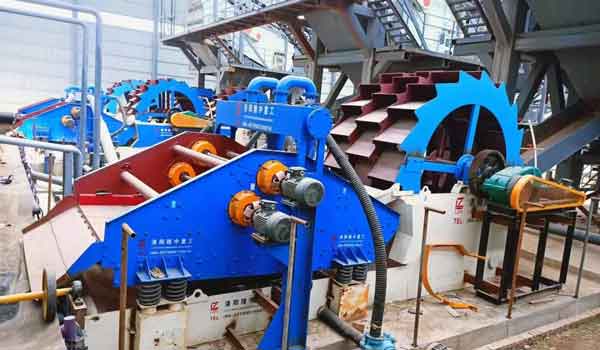
2. A significant amount of fine powder is also generated during the silica sand production process, which can compromise the purity of the final silica sand products. This stage necessitates ore washing. Typically, operators select specialized ore washing equipment, such as tumbling scrubbers. For filtration purposes, some facilities employ ultrasonic cleaning systems to purify the silica sand.
As widely known, silica sand is a quartz particle produced by crushing quartz stone. Quartzite is a non-metallic mineral characterized as a stable, wear-resistant silicate with consistent chemical properties. Since minerals generally contain impurities, silica sand also requires purification. How can these impurities be effectively removed?
Mechanical force and the grinding/peeling action between sand particles are used to remove thin-film iron, bonded materials, and muddy impurity minerals from the surface of the silica sand. This process further grinds reconstituted mineral aggregates, followed by grading operations to achieve enhanced purification of the silica sand.
Products requiring higher purity levels and superior whiteness undergo water washing, which effectively removes dust and certain impurities from the sand.
If the product sand exhibits a reddish hue and high iron content, it proceeds to the acid leaching (pickling) process.
Magnetic separation is primarily employed to eliminate magnetic minerals from silica sand. For instance, weakly magnetic minerals such as hematite, limonite, and biotite can be removed using a high-intensity magnetic separator, whereas strongly magnetic minerals like magnetite are effectively separated by low-intensity magnetic separators. Flotation is subsequently applied to remove impurities that cannot be addressed via magnetic separation, such as feldspar and mica, thereby further enhancing the purity of the silica sand.
The preferred method is the water-washed stone-grinding process. Silica sand produced through this technique exhibits high hardness, superior strength, minimal semi-broken particles, and low dust content. It is predominantly utilized as filter media for water treatment applications. The final product from wet processing is characterized by its washed state.
The above outlines the methods for cleaning and removing impurities from silica sand. If you have any further questions or require clarification, please contact us; our professional team is ready to assist you.
Please enter your inquiry and contact. We will reply you as soon as possible.
We are here for your questions anytime 24/7, welcome your consultation.
The latest sand washer price.
Installation and maintenance.
Screening
Sand Washing Machines
Sludge Treatment
Sand Recycling Machines
Address: Shuangyue Road, Changdai Town, Mengjin County, Luoyang, China
Email: export@lylzzg.com
Tel: +86-18736301510


 日本語
日本語 Русский
 中文
中文 Español
 Français
 Português
 العربية
 Tiếng Việt
 Deutsch
 한국어
한국어 Türkçe
 বাংলা
বাংলা हिन्दी
 Bahasa Melayu
 Kiswahili