
Date: Feb. 25, 2022
How to assess the economic efficiency and return on investment of a ? It primarily depends on whether the configuration of this is optimized. A superior design scheme not only effectively boosts production capacity but also generates significant economic benefits for customers. First, let’s examine the process flow of the sand-making production line.
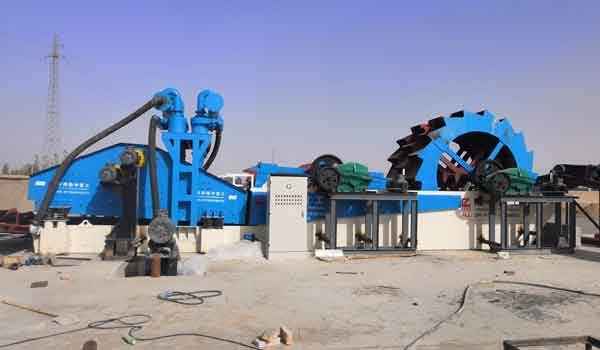
First, blasted raw stone from the quarry is transported by loading trucks via detonators and industrial explosives to the vibrating feeder.
The vibrating feeder evenly conveys the raw stone to the primary jaw crusher. The jaw crusher performs the first stage of crushing, known as coarse crushing. The production line can be designed with closed-loop circulation to achieve the desired particle size; subsequently, the crushed material discharged from the jaw crusher is sent via belt conveyor to a cone crusher or impact crusher for secondary crushing.
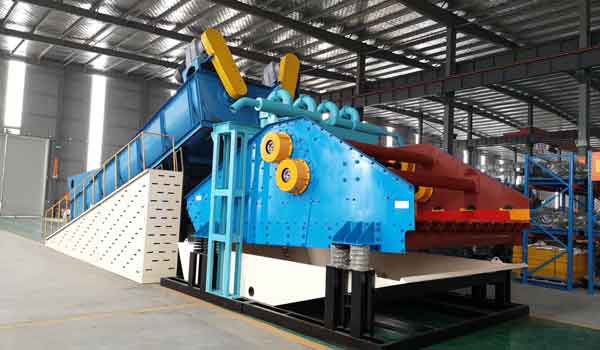
After secondary fine crushing, the stone material is transported by belt conveyor to the sand-making machine for further fine crushing. The finely crushed material is then processed through vibrating screen equipment to separate finished products of various sizes. Final product quality is ensured through cleaning processes involving sand washing machines, dewatering screens, filter presses, and other auxiliary equipment. While these three steps generally constitute a complete production line, an additional sand washing stage can be incorporated after fine crushing and screening for projects with strict requirements on powder content in the sand.
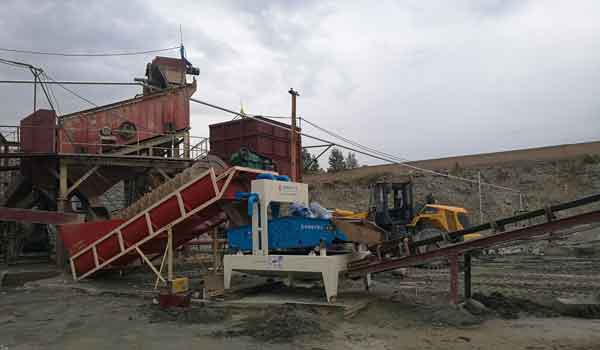
Next, we will outline how to configure sand production lines for different materials.
(The output of the production line below represents the minimum capacity. To increase throughput, equipment with corresponding specifications can be configured based on specific characteristics such as stone type, soil content, moisture levels, and discharge particle size.)
The primary component of cobblestone is silicon dioxide, offering advantages such as non-toxicity, odorlessness, strong corrosion resistance, high hardness, and excellent pressure resistance. It serves as a key raw material for artificial sand and aggregate production, as well as a green building material.
A cobblestone sand production line with a capacity of 60 to 100 tons per hour includes: vibrating feeder + jaw crusher + sand making machine + vibrating screen + sand washing machine + fine sand recovery machine + belt conveyor
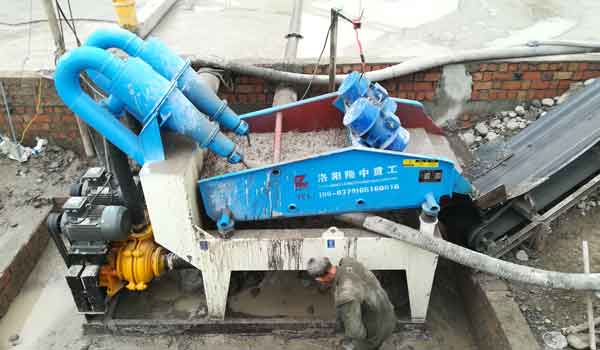
Granite is characterized by its hard texture, high strength, wear resistance, and weather resistance. Known as the “King of Rocks,” it is an excellent building material. Granite resources are abundant; while mining costs are low, the production value remains high.
A granite sand production line with a capacity of 80 to 150 tons per hour includes: vibrating feeder + jaw crusher + vibrating screen + cone crusher + sand making machine + sand washing machine + fine sand recovery machine + belt conveyor
The primary component of quartzite is silica. It is hard, wear-resistant, and chemically stable, serving as a crucial industrial mineral raw material. After crushing and sand making, quartzite is widely utilized in the glass, building materials, and other industries. Processing and utilization are primarily conducted through quartz stone production lines.
A quartzite sand production line with a capacity of 50 to 80 tons per hour includes:
vibrating fee
der + jaw crusher + sand making and shaping machine + vibrating screen + sand washing machine + fine sand recovery machine + belt conveyor
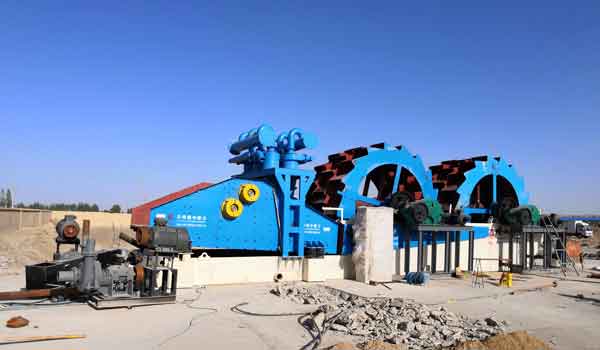
Sandstone is a sedimentary rock, primarily composed of quartz or feldspar, and serves as a widely used building stone.
A sandstone production line with an output capacity of 60 to 100 tons per hour includes the following equipment: silo + vibrating feeder + jaw crusher + impact crusher + sand making machine + vibrating screen + sand washing machine + fine sand recovery machine + belt conveyor.
The main component of limestone is calcium carbonate. With medium to low hardness, it is commonly utilized as both building material and industrial raw material. Limestone sand production lines are also highly prevalent in the industry.
A limestone sand production line with an output capacity of 100 to 150 tons per hour includes the following equipment: silo + vibrating feeder + jaw crusher + impact crusher + sand making machine + vibrating screen.
Please enter your inquiry and contact. We will reply you as soon as possible.
We are here for your questions anytime 24/7, welcome your consultation.
The latest sand washer price.
Installation and maintenance.
Screening
Sand Washing Machines
Sludge Treatment
Sand Recycling Machines
Address: Shuangyue Road, Changdai Town, Mengjin County, Luoyang, China
Email: export@lylzzg.com
Tel: +86-18736301510


 日本語
 Русский
 中文
 Español
 Français
 Português
 العربية
 Tiếng Việt
 Deutsch
 한국어
 Türkçe
 বাংলা
 हिन्दी
 Bahasa Melayu
 Kiswahili