
Date: Oct. 16, 2021
Vibrating screens are indispensable equipment in the sand washing industry. The efficiency of a vibrating screen directly impacts overall operational performance. Low screening efficiency leads to unnecessary waste and reduces enterprise profitability. Improving vibrating screen efficiency is a key concern for many customers, which this article addresses.
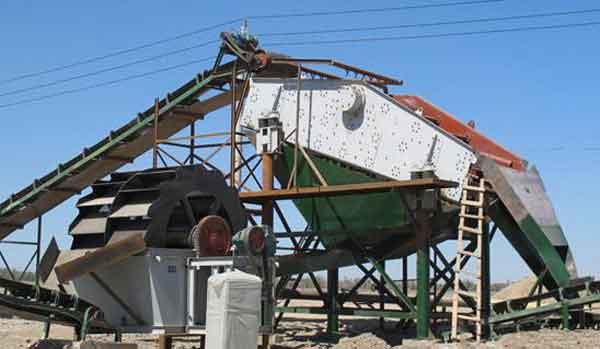
Factors affecting the screening efficiency of the vibrating screen: material factors, equipment factors. Among them, the material factors include the moisture content, bulk density, particle size, and particle shape that affect the screening effect.
During dry screening, materials with high moisture content or good wettability and adhesion are more likely to agglomerate, causing blockage of the screen holes and greatly reducing the screening efficiency.
When the bulk density of the material is large, the screening capacity of the vibrating screen is proportional to the bulk density.
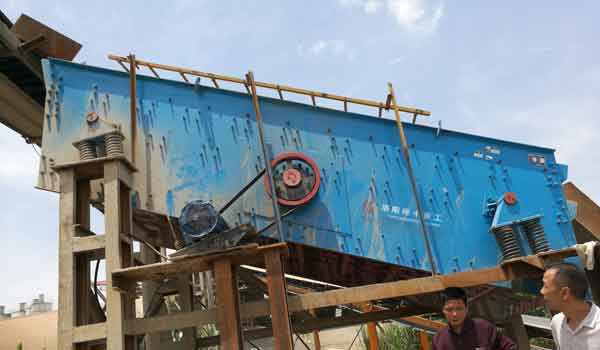
The higher the proportion of particles capable of passing through the mesh, the easier it is to screen the material; conversely, screening becomes more difficult. Particles with a size d=1~1.5a (where a is the aperture size) tend to get stuck in the mesh of the , a phenomenon known as blinding or obstruction. These granules hinder the material from passing through the sieve. Therefore, the greater the amount of difficult-to-screen and obstructive particles in the feed, the lower the screening efficiency of the .
Spherical particles pass easily through square and round mesh openings. In contrast, strip-like, flaky, or polygonal particles find it more difficult to pass through square and round apertures but move more readily through rectangular sieve holes.
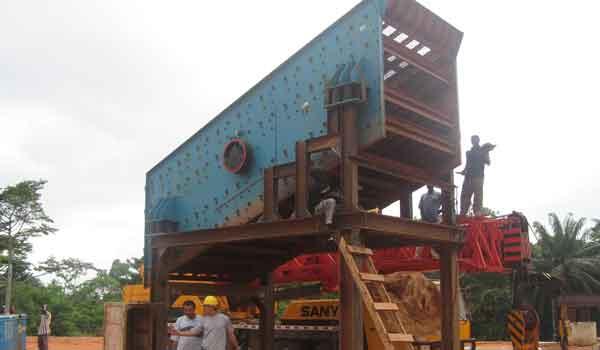
Beyond material properties and equipment specifications, several factors influence vibratory screening outcomes. Reputable manufacturers of vibrating screens pay close attention to critical details such as screen surface design, aperture configuration, and inclination angles, offering customized solutions tailored to diverse customer requirements. This approach significantly minimizes losses while enhancing both screening efficiency and discharge quality. Equipment-related factors are specifically categorized into screen surface dimensions, inclination angle, open area ratio, and aperture shape.
An excessively high or low aspect ratio for the screen surface can reduce screening efficiency. The optimal aspect ratio for a vibrating screen surface typically falls within the range of 2.5 to 3.
If the screen surface inclination is too shallow, production capacity may suffer; conversely, if the inclination is too steep, screening efficiency declines. Therefore, setting an appropriate inclination angle is crucial for vibrating screens. Generally, vibrating screens operate with an inclination between 0° and 25°, whereas fixed screens typically require an inclination of 40° to 45°.
The open area ratio refers to the proportion of total sieve hole area relative to the entire screen surface area. Screens with a higher open area ratio generally deliver superior screening efficiency and greater throughput, though this often comes at the cost of reduced structural strength in the screen mesh.
en is low and the life is short.
The geometry of the sieve openings significantly impacts material throughput. Therefore, when selecting a vibrating screen, ensure that the mesh pattern is compatible with the particle shape of the material in your production line.
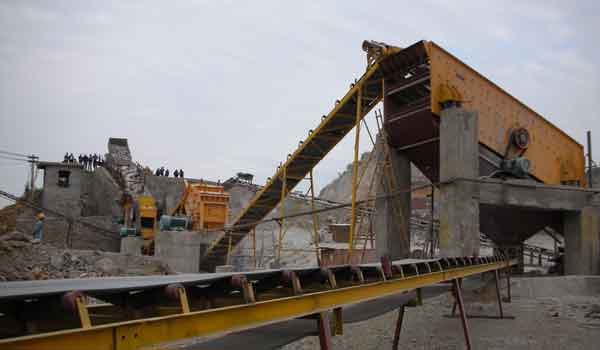
The feed volume should be properly controlled to avoid excessive or insufficient loading. During operation, material must be fed continuously and evenly to ensure uniform distribution across the screen surface, effectively maximizing production capacity and screening efficiency. In some cases, if the vibrating screen is not fed across its full width, the screen surface will not be fully utilized. Therefore, it is essential to regularly inspect and adjust the feeding method during operation. If screening efficiency is unsatisfactory, consider adjusting the inclination angle of the vibrating screen. An appropriate inclination angle helps reduce material bed thickness. Increasing the open area ratio of the sieve plate enhances screening performance; typically, stainless steel welded sieve plates offer a higher open area ratio. To minimize hole blockage in the vibrating screen, select sieve plates with self-cleaning capabilities. Wet sieving generally yields better results than dry sieving. For dry screening processes, incoming moisture content must be strictly controlled.
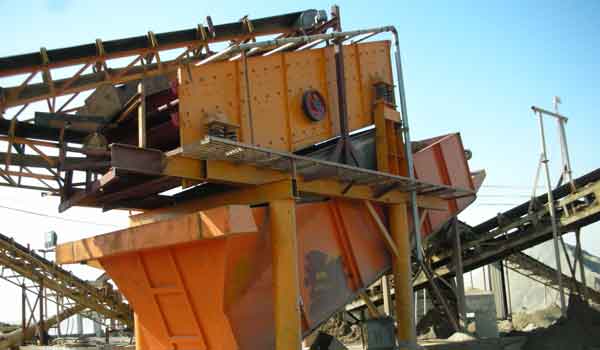
Material screening is a critical step in production processes across the mining, chemical, cement, and other industries. By conducting the aforementioned analysis when operating s and making the necessary equipment adjustments, you can significantly improve screening efficiency and material quality.
Please enter your inquiry and contact. We will reply you as soon as possible.
We are here for your questions anytime 24/7, welcome your consultation.
The latest sand washer price.
Installation and maintenance.
Screening
Sand Washing Machines
Sludge Treatment
Sand Recycling Machines
Address: Shuangyue Road, Changdai Town, Mengjin County, Luoyang, China
Email: export@lylzzg.com
Tel: +86-18736301510


 日本語
日本語 Русский
 中文
中文 Español
 Français
 Português
 العربية
 Tiếng Việt
 Deutsch
 한국어
한국어 Türkçe
 বাংলা
বাংলা हिन्दी
 Bahasa Melayu
 Kiswahili