
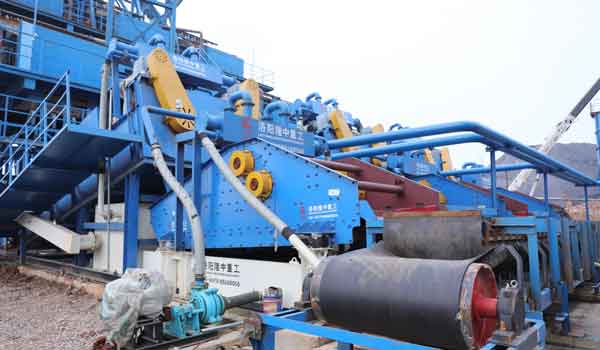
6 Major Trends in the Future Development of Sand Making Machines
Date: Jan. 27, 2022
With the rapid development of sand-making machines, major manufacturers face intense day-to-day competition. To stand out in the industry, they must continuously monitor the evolution of technology and adopt a holistic strategic perspective. Looking ahead, the key development trends are as follows. 1. Large-Scale Development Driven by the expanding scale of mining enterprises, growing demand for sand and gravel resources, and increasing production capacity, equipment is inevitably trending towards large-scale operations. 2. Environmental Protection Focus During the operation of , inertial factors result in very fine particle sizes. Enhancing the sealing performance through the use of environmentally friendly materials is crucial to improving the environmental protection standards of . 3. Advancement in Automation In the future, can be equipped with vibration monitoring and alarm systems to trigger warnings during abnormal vibrations, automatically halting equipment operation. Implementing automated production and testing processes enhances safety for both the and operators. 4. Integration of Mechatronics High efficiency and energy conservation remain critical priorities for . The rapid advancement of technology will accelerate the electromechanical integration of , significantly boosting production efficiency and capacity compared to traditional models. 5. Simplified Structural Design For , simplifying the structure not only effectively reduces noise but also streamlines maintenance, overhaul, and lubrication processes for the equipment. This design enhances operational convenience and usability, allowing the machine to fully realize its performance potential. 6. Standardization Development Standardizing the production of facilitates the design and manufacturing of , thereby reducing production costs—a key trend in mechanical engineering. Standardized production provides reference data for subsequent designs, saves time during the optimization analysis of the , and further advances research into technology.
Date: Jan. 20, 2022
With the rapid development of the sand and gravel industry this year, trommel screen equipment has become an indispensable solution for material processing. Widely applied in mixing plants, road and bridge engineering, construction sites, quarries, and other sectors, it delivers superior screening and filtering performance when integrated with other systems. Key advantages include anti-clogging screen apertures, stable operation, low noise levels, a simple structure, and convenient maintenance. The enclosed screening cylinder facilitates effective dust collection and sealing, ensuring high overall machine reliability with minimal initial investment. Boasting high screening efficiency and extended service life, it remains the most widely adopted equipment for material classification. 1. Shaftless Drum Screen Shaftless Drum Screen Composition Power system, roller system, frame assembly, support wheel system, guard assembly, inlet assembly, and outlet assembly. Working Principle of the Shaftless Trommel The roller device is installed on the frame at an incline and features a non-central shaft structural design. The motor drives the pinion gear to mesh with the drum’s large gear or chain, or the motor drives the chain directly; alternatively, the drum rests on two rollers driven by the motor. The drum rotates under the action of the drive system. As material enters the drum,…
Date: Jan. 13, 2022
The sand washing and recycling integrated machine combines water washing with fine sand dewatering and recycling. It is also known as the sand washing and recycling integrated machine, the fine sand recycling and dewatering integrated machine, or mud and sand washing and separating equipment. This unit cleverly integrates the with the , featuring a rational structure, a compact footprint, and lower investment costs compared to purchasing two separate pieces of equipment. 1. Function Introduction The sand washing and recycling integrated machine consists primarily of a sand washing section and a fine sand recovery section. The sand washing section performs the same functions as a standard wheel sand washer, handling water washing, dewatering, and desliming. The recovery section can be customized according to customer requirements: for fine sand recycling needs, it can be connected to a standard fine sand recycling system; for fine sand dewatering and recycling, it can be linked to a dewatering fine sand recycling machine. To achieve different sand production outcomes, a multi-layer dewatering screen can also be configured. 2. Working Principle 1) Structural Composition The system comprises a high-pressure separator, dewatering screen, impeller separator, reducer, vacuum high-pressure pump, cleaning tank, elevated return tank, motor, vibration motor, and…
Date: Jan. 07, 2022
The equipment in a machine-made sand production line primarily includes crushers, sand-making machines, vibrating feeders, vibrating screens or drum screens, sand washing machines, fine sand recovery machines, belt conveyors, filter presses, and other auxiliary systems. Designing a rational and efficient not only ensures smooth operation of the equipment but also helps conserve resources and reduce operational costs. This article shares 8 key design principles for building a reasonable and efficient machine-made sand production line. 1. Determine an optimal location for primary crushing based on the quality of existing or newly acquired mine resources. Consider long-term planned mining life and position the gravel plant close to the quarry to minimize raw material transportation distances. If the quarry is far from the main end-user, arrange the primary crusher at the quarry site, then transport intermediate crushed materials to the main processing plant for further manufacturing. 2. Site Selection for Sand and Gravel Plants 1) The site must be located outside blasting hazard zones, with safety distances compliant with relevant regulations; the distance from any blasting point should exceed 200m. 2) The plant site should be situated close to existing transportation routes, water sources, and power supplies. 3) The plant site should be…
Date: Jan. 07, 2022
A sand washing machine is a versatile piece of equipment widely used for sand washing. Rising production costs and industry overcapacity have created significant challenges within the sector. In this article, we analyze the key issues facing the development of the sand washing machine industry. Current Challenges in the Sand Washing Machine Industry 1. Rising Production Costs In recent years, fluctuations in raw material prices—particularly steel and upstream components—have driven up manufacturing costs for sand washing machines. Additionally, heavy tax burdens combined with limited investment in R&D by most manufacturers have slowed overall industry progress. 2. Industry Overcapacity The rapid expansion of the sand washing machine sector in recent years has attracted numerous investors. While this influx of capital has led to a proliferation of manufacturers of varying sizes, it has also resulted in significant overcapacity. This surplus capacity is intensifying competition and reshaping the market landscape. 3. Lack of Regulatory Policies The sand washing machine industry is characterized by an excessive number of factories and manufacturers, which has resulted in insufficient oversight by relevant regulatory bodies. Consequently, the quality of sand washing machines available on the market cannot be consistently guaranteed. This lack of uniformity across the industry leads…
We are here for your questions anytime 24/7, welcome your consultation.
The latest sand washer price.
Installation and maintenance.
Screening
Sand Washing Machines
Sludge Treatment
Sand Recycling Machines
Address: Shuangyue Road, Changdai Town, Mengjin County, Luoyang, China
Email: export@lylzzg.com
Tel: +86-18736301510


 日本語
 Русский
 中文
 Español
 Français
 Português
 العربية
 Tiếng Việt
 Deutsch
 한국어
 Türkçe
 বাংলা
 हिन्दी
 Bahasa Melayu
 Kiswahili