
How to Handle Sand Production from Iron Tailings
Date: Nov. 18, 2021
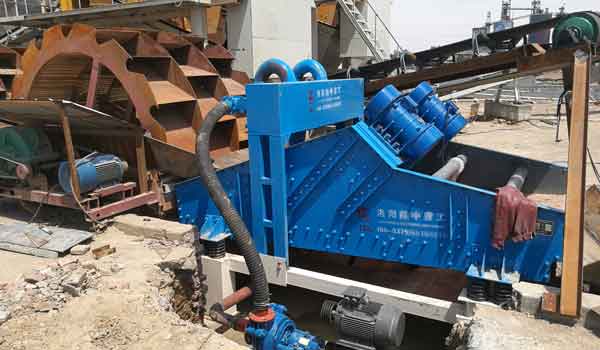
With the continuous tightening of regulations on sand and gravel resources, comprehensive utilization and mine ecological restoration have become key industry focus areas over the past two years. Given the non-renewable nature of mineral resources, the effective use of is urgent. Can iron ore be processed into sand? How should one approach sand production from iron ? 1. Can iron be used to produce sand? Recently, several clients have successfully launched sand-making projects. By using raw materials such as iron ore , granite , and coal gangue for aggregate production, it has been demonstrated that these processes can yield recycled aggregates in various specifications. Furthermore, tests on hardness, density, gradation, and other indices confirm that the resulting material is suitable for applications including concrete preparation, pavement base laying, and the firing of recycled bricks. 2. What is the process for producing sand from iron , and what equipment is required? Iron ore typically possess high hardness. To effectively produce sand, a combination of cone crushers and vertical shaft impact (VSI) sand-making machines is generally required. The specific details are outlined below. 1) Single-stage crushing: Single-cylinder cone crusher Production capacity: 36-2181t/h Discharge granularity: 6-41mm The single-cylinder hydraulic cone crusher integrates mechanical, hydraulic, electrical, automation, and intelligent control technologies. It is widely applicable for medium, fine, and ultra-fine crushing operations in metal and non-metallic mines, cement production, sand and gravel processing, metallurgy, and other industries. This equipment offers high crushing efficiency, low operational costs, convenient maintenance and adjustment, and superior product particle size distribution. 2) Two-stage sand making: Impact sand making machine Production capacity: 40-650t/h Discharge granularity: 0-5mm Our stationary lineup includes the , high-capacity , low-capacity roller-type, and fine crushers. However,…
Date: Nov. 11, 2021
When the filter press is operating, its primary function is to remove water from the filtrate. However, in winter, cold temperatures can cause this water to freeze easily. Freezing poses a significant risk of machine damage and prevents subsequent operations from proceeding. For companies, continuously enhancing the working performance of the filter press remains an enduring priority. To effectively improve filter press performance, it is essential to first understand the relevant influencing factors. 1. Pressure Control Pressure control is the main factor affecting the filtration efficiency of the filter press. As widely known, the core working principle of a filter press relies on pressure regulation and adjustment to achieve filtration. Consequently, the condition of the pressure system is critical; its operational status directly determines the quality of the filtration results. 2. Filtration Speed The second factor influencing filter press performance is filtration speed. Many manufacturers blindly prioritize high filtration rates, often overlooking the fundamental principles of effective filtration. In reality, the optimal filtration speed for a filter press should be determined based on the concentration of the slurry. Key variables such as resistance must be carefully evaluated to ensure the operating speed is appropriately calibrated for maximum efficiency. 3. Filter…
Date: Nov. 11, 2021
Given the critical role of wastewater treatment and recycling in the sand washing industry, scientific methods must be applied in practical operations to continuously optimize wastewater management strategies. By prioritizing water environment protection, addressing key challenges across all aspects of wastewater treatment technology, and steadily enhancing system reliability, a sustainable future can be achieved. Below is an overview of LZZG’s complete set of sand washing wastewater treatment equipment. 1. Thickener LZZG’s concentration tank is engineered on the foundation of traditional vertical flow sedimentation equipment, featuring an optimized internal feed barrel structure that significantly enhances sedimentation efficiency. The tank body has a circular plan view; suspended solids settle into the conical sludge bucket at the bottom under gravity, while clarified water discharges through the overflow weir along the upper rim. To ensure high-quality effluent, the overflow port is equipped with a scum filter and baffle. Underflow concentration can reach up to 70%, delivering a processing capacity 3–8 times higher than conventional thickeners. This solid-liquid separation equipment operates via gravity sedimentation. During operation, solid particles suspended in the slurry within the thickener’s cone settle under gravity, leaving clarified water in the upper zone for effective separation. Slurry wastewater with a solid content…
Date: Nov. 04, 2021
Wastewater treatment in sand and gravel plants presents a complex challenge, with many customers seeking guidance on how to manage this process correctly and effectively. To achieve optimal results, it is essential first to identify the sources of wastewater and then customize a reasonable treatment plan based on those specific origins. Sources of Sand and Gravel Wastewater 1. Washing Wastewater: This stream contains significant amounts of fine-grained ore, mud, sand, and minor quantities of ore particles. A can be employed for recycling and washing purposes. 2. Crushing Process Wastewater: This type contains ore particles that can be recovered through precipitation. 3. Gravity Separation and Magnetic Separation Wastewater: Primarily consisting of mineral particles and suspended solids, this water can generally be reused after clarification. 4. Flotation wastewater: This primarily originates from overflow water and tailings pond discharge generated after concentrate and tailings undergo a two-stage dewatering process involving thickening and filtration. It contains flotation reagents and a small quantity of suspended solids. Tailings water can be processed using a combination of thickeners and filter presses for pressure filtration and sedimentation, enabling dry discharge of solid waste and secondary environmentally friendly reuse of the tailings. Treatment plan for sand and gravel…
Date: Nov. 04, 2021
How to Set Up a Zero-Pollution Sand Washing and Sewage Treatment Line? This is a question many customers ask. Today, we provide an in-depth analysis. A zero-emission production line for weathered sand tailings requires the integration of , , and . Currently, tailings treatment methods generally follow three main directions: tailings re-selection, tailings dewatering, and goaf backfilling with tailings. We will explain these three aspects separately below. In response to these treatment methods, LZZG’s R&D department has launched a zero-emission production line solution for weathered sand tailings. This program is designed to recycle and reuse metal and non-metal tailings, improving resource utilization while addressing washing and beneficiation processes. It focuses on managing solid waste generated during processing and purifying and reusing sand washing tailwater. The entire system offers excellent manufacturability, high material screening efficiency, and recovery rates, ensuring all tailwater is reused, which significantly enhances overall resource utilization. Screening equipment: Tailings dewatering screens or tailings dry discharge systems are used to dehydrate and classify materials. Thickener: Separates mud from water through concentration and sedimentation, purifying the overflow water. Filter press: Thickened sludge from the thickener is pressed into a filter cake by the filter press, achieving sludge dewatering and dry…
We are here for your questions anytime 24/7, welcome your consultation.
The latest sand washer price.
Installation and maintenance.
Screening
Sand Washing Machines
Sludge Treatment
Sand Recycling Machines
Address: Shuangyue Road, Changdai Town, Mengjin County, Luoyang, China
Email: export@lylzzg.com
Tel: +86-18736301510


 日本語
 Русский
 中文
 Español
 Français
 Português
 العربية
 Tiếng Việt
 Deutsch
 한국어
 Türkçe
 বাংলা
 हिन्दी
 Bahasa Melayu
 Kiswahili