
Date: Aug. 14, 2021
Tailings are the portion of material from a beneficiation plant that contains low concentrations of valuable components, rendering it unsuitable for production use. They constitute the primary component of industrial solid waste. While tailings treatment is a critical link in mining operations, what are the specific methods used? Do you know?
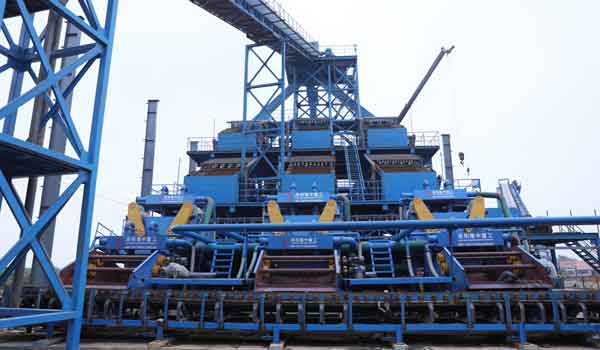
Traditionally, concentrators rely on tailings dams for storage. However, toxic chemicals, wastewater, and heavy metal ions remaining from the beneficiation process not only cause pollution and ecological damage to the surrounding mine environment but also increase safety risks associated with tailings dams. Hidden hazards such as landslides, mudslides, and dam failures have been induced by these dumps. Consequently, tailings management has always been a priority.
Currently, tailings treatment generally follows three main directions: tailings re-selection, tailings dewatering, and backfilling mined-out areas (goafs) with tailings. Below, we will explain each of these three approaches separately.
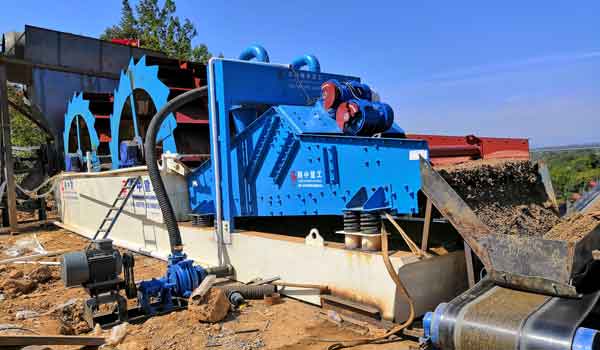
Although the content of valuable components in tailings is relatively low, employing advanced technologies and optimized process flows for re-selection can significantly recover these valuable components. This maximizes resource recycling and minimizes waste generation. The final discharge of tailings helps alleviate environmental pressure caused by tailings storage. Currently, common tailings re-processing methods include:
The flotation process is used to treat tailings containing colemanite, zinc oxide, apatite, and other minerals. With the development of new reagents and innovative techniques, some simpler tailings streams—particularly legacy tailings—can be effectively re-floted. Through this processing, recyclable concentrate products are obtained.
Utilize new gravity separation equipment to recover fine-grained minerals from tailings. Following invention and continuous improvement, many traditional gravity separation devices are now suitable for the re-selection of fine and ultrafine tailings, including vertical centrifugal concentrators, compound stand shakers, compound force field centrifuges, and more.
This technology primarily leverages the biochemical actions of microorganisms to enhance tailings properties and extract harmful metal ions through microbial leaching or microbial mineralization, thereby preventing environmental pollution.
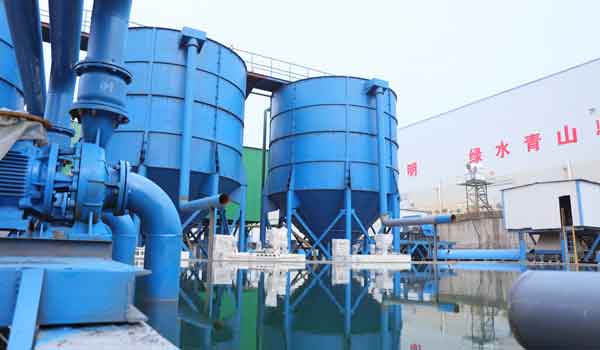
During the separation stage, slurry often contains a high volume of water. Excessive moisture content in tailings can easily lead to tailings dam failures. Therefore, tailings concentration and dehydration are critical steps in mineral processing plants. The following two approaches are commonly employed.
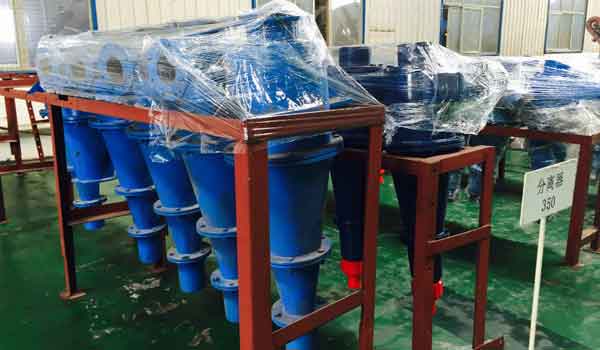
As equipment that utilizes centrifugal force for solid-liquid separation, hydrocyclones offer a compact footprint and high underflow concentration. This concentration process primarily employs hydrocyclones and thickeners in a series of closed-circuit operations to achieve high-concentration products.
In gold mine tailings treatment, filter press dehydration is also widely applied. This method offers the advantages of low moisture content in the filter cake and reusable filtrate. However, due to the limited processing capacity of individual units, it is challenging to handle large-scale beneficiation tailings effectively.
Dry tailings discharge is an advanced technology that utilizes equipment such as dehydration cyclones, high-efficiency high-frequency dewatering screens, and high-efficiency deep cone thickeners. It can reduce the moisture content in tailings to less than 15%, lower operational costs, and effectively mitigate environmental pollution.
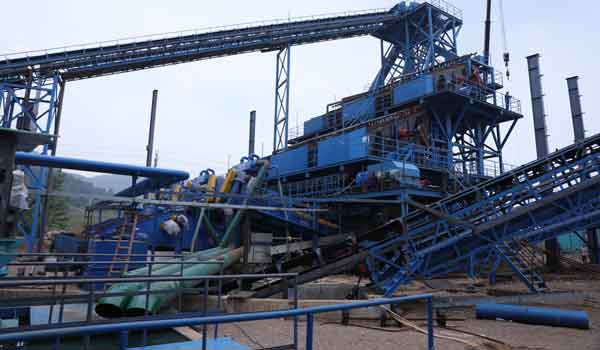
Tailings backfilling involves using treated tailings waste to refill mined-out areas, thereby preserving terrain integrity and reducing tailings dam construction costs. Currently, there are two primary methods for tailings goaf filling:
Full tailings cemented filling utilizes dehydrated tailings mixed with cement, fly ash, and other additives to create a filling aggregate with a hardness of 1 to 2 MPa. The filling slurry is transported to the designated area via pipeline self-flow to effectively fill the goaf.
High-water consolidated full tailings filling is similar to full tailings cemented filling, except that high-water materials are used as binding agents instead of cement. This method employs a first material primarily composed of aluminate and sulfoaluminate, and a second material mainly consisting of anhydrite, quicklime, and coagulants. These materials are separately pulped and transported, then mixed prior to filling, resulting in rapid setting characteristics.
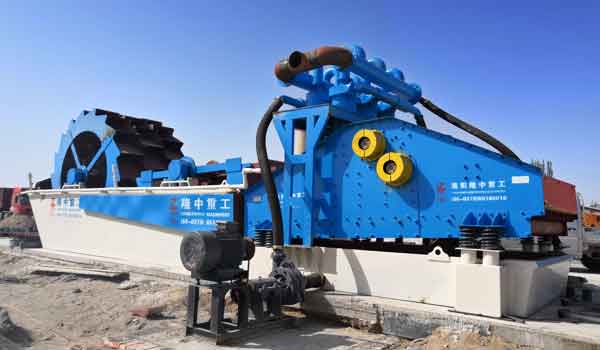
The three aspects outlined above represent the primary directions for . The actual application of a must be determined based on the scale and investment capacity of the . We recommend consulting a provider with qualified design capabilities to select the most suitable for your specific requirements.
Please enter your inquiry and contact. We will reply you as soon as possible.
We are here for your questions anytime 24/7, welcome your consultation.
The latest sand washer price.
Installation and maintenance.
Screening
Sand Washing Machines
Sludge Treatment
Sand Recycling Machines
Address: Shuangyue Road, Changdai Town, Mengjin County, Luoyang, China
Email: export@lylzzg.com
Tel: +86-18736301510


 日本語
日本語 Русский
 中文
中文 Español
 Français
 Português
 العربية
 Tiếng Việt
 Deutsch
 한국어
한국어 Türkçe
 বাংলা
বাংলা हिन्दी
 Bahasa Melayu
 Kiswahili