
Which Is More Suitable for Concrete: River Sand or Machine-Made Sand
Date: May. 19, 2022
River sand and machine-made sand are both widely used raw materials for concrete production in infrastructure projects. Which is the more suitable option? As construction activity expands, so does the demand for concrete and aggregates. Facing cost pressures from rising natural sand prices, along with resource scarcity and environmental regulations, machine-made sand is emerging as the primary direction for future development in aggregate engineering. What are the characteristics of artificial sand compared to river sand? 1. Compared to river sand, machine-made sand features sharp edges and corners, a higher proportion of needle-like and flaky particles, and a rougher surface texture, making it visually distinguishable. 2. The hardness of machine-made sand is slightly lower than that of river sand, but it still meets relevant industry standards. 3. Machine-made sand and gravel powder typically contain a high proportion of fines. Currently, the primary methods for managing this are dry dust collection and wet water washing. The dry method utilizes dust collectors but is generally suitable only for Class III production. Water washing is the key technology for producing high-quality machine-made sand; however, attention must be paid to water conservation and environmental protection. 4. Natural sand typically has a fixed fineness modulus with various gradations. In contrast, the fineness modulus of machine-made sand can be artificially controlled through the production process, allowing output to be tailored to specific user requirements—a capability that natural sand lacks. 5. Machine-made sand offers superior adhesion, higher compressive strength, and a longer service life. 6. The mineral and chemical composition of machine-made sand is consistent with its raw materials, making it less complex than that of natural sand. Which equipment is best for producing manufactured sand? In today’s…
Date: May. 12, 2022
In wet sand washing wastewater, fine and surface sand inevitably wash away with the water flow. Each production line loses approximately 5%–25% of its content, resulting in significant annual losses. This article outlines four effective methods for . Sand Washing Machine Classification The sand washing machine is categorized into bucket-type and spiral-type models. The wheel bucket sand washer is widely used for material washing in mining, building materials, chemicals, transportation, concrete mixing plants, and other industries. Its washing process involves circular motion. Spiral sand washing equipment utilizes spiral blades to agitate and clean soil. Similarly, it separates sand from mud and water based on their differing specific gravities, allowing water and mud to drain along the chute. However, regardless of the sand washing machine type, agitation inevitably lifts a substantial portion of sand. This results in incomplete separation, causing sand to escape with the overflow water and leading to significant material loss. Four Methods for Recovery 1. Multi-Stage Sedimentation Tank Method Sand washing wastewater flows into the sedimentation tank, preferably equipped with three layers, allowing for layer-by-layer settling over time. Due to the high specific gravity of sand and mud, separation can be achieved after a relatively long period. However,…
Date: May. 06, 2022
The decline in natural sand reserves has led to a gradual shift in market demand away from natural sand, driving a substantial increase in the demand for machine-made sand. This surge has resulted in continuously rising prices for machine-made sand and rapid growth in the production equipment sector. What kind of sand-making equipment does a machine-made sand production line require? This article provides an analysis. What kind of sand-making equipment is needed for the machine-made sand production line? To understand the cost of purchasing a set of sand production line equipment, users need to know what equipment is included in the sand production line. Generally speaking, the machine-made sand production line is composed of auxiliary equipment such as a crusher and sand-making machine. 1. First of all, whether it is a machine-made sand production line or other ore processing production lines, a stone crusher is required. The crusher is divided into a coarse crusher and a medium crusher. The jaw crusher is a commonly used coarse crushing equipment, and the impact crusher is a Commonly used medium crushing equipment. 2. Secondly, a machine-made sand production line must of course include sand-making machines. Many sand-making machines on the market can achieve…
Date: Apr. 29, 2022
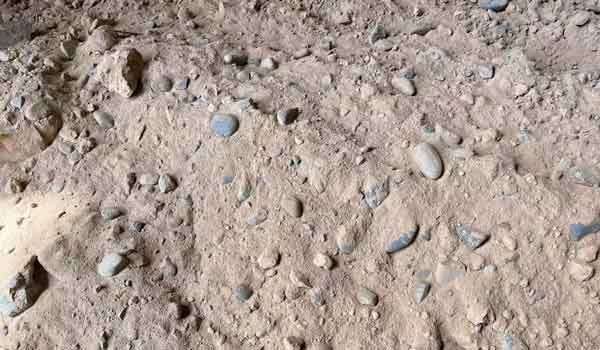
The only two sand and gravel plants in Luoyang City have adopted equipment from Longzhong Heavy Industry. Thanks to its regional advantages, Luoyang features numerous old riverbeds. These conditions are essential prerequisites for the operation of a sand and gravel plant. Cobblestone is a byproduct of yellow sand mining, named for its resemblance to natural cobblestones. It is characterized by high hardness, bright and simple coloration, and the durability of natural stone against compression, wear, and corrosion, making it a frequently used green building material. Additionally, it serves as an ideal raw material for manufactured sand, widely applied in construction, decoration, landscaping, sewage treatment, and other sectors. Cobblestone raw material sourced from ancient riverbeds contains 70% sand and gravel, resulting in low crushing costs. After crushing and washing, the sand yield is significantly higher than that of conventional raw materials, enabling customers to achieve substantial profits. Additionally, these ancient riverbed materials can undergo magnetic separation to extract gold and iron powder. The recovered gold and iron powder represent another major revenue stream for customers. 1. Cobblestone production process The cobblestone crushing production line is similar to a standard stone production line, with differences primarily in particle size requirements. Customers can…
Date: Apr. 22, 2022
As the demand for construction sand and gravel rises, the application of has become increasingly widespread. However, operational challenges are inevitable and can impact economic efficiency. So, what actions are prohibited and what must be done when operating a ? Read on to find out! 14 Prohibitions 1. Iron is strictly prohibited. 2. Do not start or stop the machine while material is present. 3. Avoid operating the machine under overcurrent or low voltage conditions. 4. Stop the machine immediately if abnormal noises occur. 5. Never inspect or adjust the machine while it is running. 6. Prevent eccentric feeding into the machine. 7. Do not feed bulk materials exceeding the maximum particle size specified by the equipment into the crushing chamber. 8. Do not operate the crusher if the lubricating oil temperature is below 15℃. 9. Do not operate the crusher if the lubricating oil return temperature exceeds 60℃. 10. Do not operate the crusher if the lubricating oil filter is blocked. 11. Do not operate the crusher if the lubrication station alarm light is illuminated. 12. Do not operate the crusher in an unbalanced state by throwing the wheel. 13. For double-motor sand-making machines, do not start one motor…
We are here for your questions anytime 24/7, welcome your consultation.
The latest sand washer price.
Installation and maintenance.
Screening
Sand Washing Machines
Sludge Treatment
Sand Recycling Machines
Address: Shuangyue Road, Changdai Town, Mengjin County, Luoyang, China
Email: export@lylzzg.com
Tel: +86-18736301510


 日本語
 Русский
 中文
 Español
 Français
 Português
 العربية
 Tiếng Việt
 Deutsch
 한국어
 Türkçe
 বাংলা
 हिन्दी
 Bahasa Melayu
 Kiswahili