
Date: Mar. 30, 2021
Quartz is a fundamental material in industrial production. Its most basic applications include use as a filter and absorbent, foundry sand, filler, or abrasive. In high-tech industries, quartz plays an extensive and critical role, particularly in the production of ultra-pure and high-value-added quartz products such as optical fibers and monocrystalline silicon. These materials are essential for the electronics industry and photovoltaic cells. Additionally, specialized experimental glassware used in synthesis and analytical chemistry represents another high-value category.
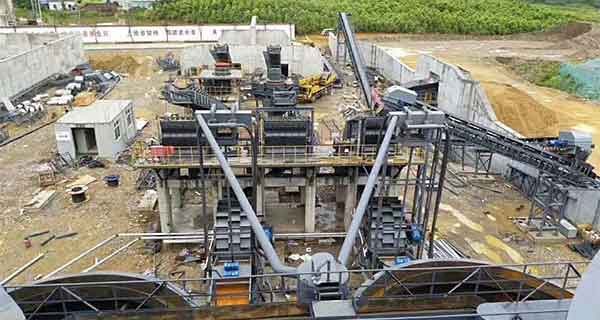
Today, the quality of raw quartz sand is steadily declining. To meet industry demands, beneficiation processes are employed to enhance purity. The primary purification methods are outlined below.
Scrubbing utilizes mechanical force and inter-grain abrasion to remove thin-film iron, adhesives, and muddy impurity minerals from the surface of quartz sand. This process also breaks down unconsolidated mineral aggregates, allowing for further purification through grading. Currently, the main techniques include rod scrubbing and mechanical scrubbing. Key factors influencing scrubbing efficiency are the structural characteristics and configuration of the scrubber. Secondary factors include scrubbing duration and concentration (typically maintained at 50%–60%).
Magnetic separation is primarily used to eliminate magnetic minerals from quartz sand. For instance, weakly magnetic minerals such as hematite, limonite, and biotite can be removed using high-intensity magnetic separators, while strongly magnetic minerals like magnetite are effectively separated using low-intensity magnetic separators.
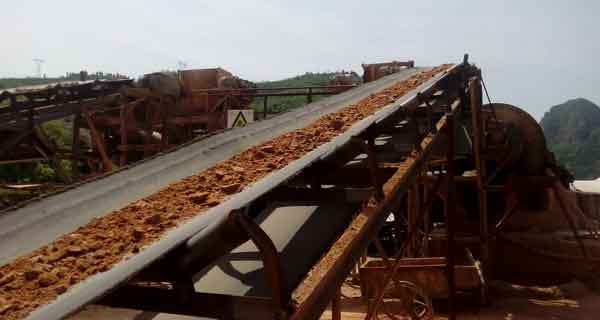
Flotation is employed to eliminate impurities that magnetic separation cannot remove, such as feldspar and mica in quartz sand, thereby further enhancing its purity.
Acid leaching exploits the fact that quartz is insoluble in acid (except for hydrofluoric acid), while other impurity minerals can be dissolved in acid, enabling further purification of the quartz.
This process involves using microorganisms to leach thin-film iron or impregnated iron from the surface of quartz sand particles. It represents a newly developed iron removal technology.
Please enter your inquiry and contact. We will reply you as soon as possible.
We are here for your questions anytime 24/7, welcome your consultation.
The latest sand washer price.
Installation and maintenance.
Screening
Sand Washing Machines
Sludge Treatment
Sand Recycling Machines
Address: Shuangyue Road, Changdai Town, Mengjin County, Luoyang, China
Email: export@lylzzg.com
Tel: +86-18736301510


 日本語
日本語 Русский
 中文
中文 Español
 Français
 Português
 العربية
 Tiếng Việt
 Deutsch
 한국어
한국어 Türkçe
 বাংলা
বাংলা हिन्दी
 Bahasa Melayu
 Kiswahili