
Date: Jun. 26, 2021
Sand washing wastewater refers to the effluent generated during the sand washing process in a sand washing plant. Sand and gravel are fundamental construction materials. With the rising demand for these aggregates, natural sand faces increasing pressure from resource depletion and environmental regulations. As a key source of construction sand, washed sand is entering the building materials market.
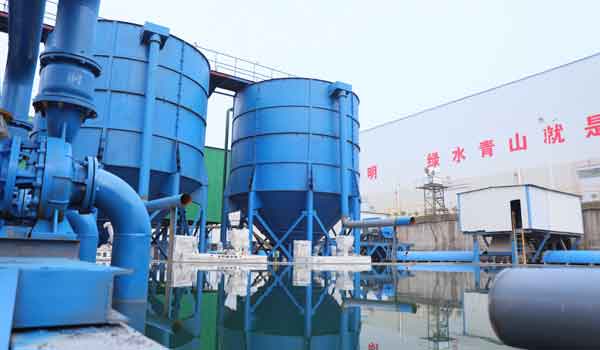
The primary pollutants in sand washing wastewater are chemical oxygen demand (COD) and suspended solids. The content of suspended solids is high, with concentrations reaching approximately 3000mg/L, resulting in significant volumes of mud water. The characteristics of this mud depend on its composition and geological conditions. Generally, mud sewage appears earthy yellow, uniform, and viscous, without stratifying over long periods. If sludge wastewater is not treated promptly and effectively, it will not only waste substantial water resources, pollute water quality, affect road traffic, and disrupt the normal production and daily life of nearby residents, but may also intensify social conflicts and introduce disharmony into society.
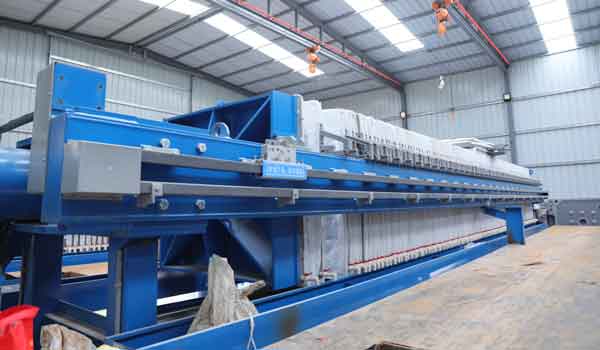
LZZG has developed environmentally friendly zero-discharge equipment to address challenges in sand washing wastewater recycling and mud purification treatment. The zero-emission system primarily consists of a fine sand recovery machine, chamber filter press, and three-stage hydrogen purification equipment. Treating sand washing wastewater essentially involves sediment separation via physical methods. Given the high sediment content in sand washing wastewater, fine sand is first settled using natural gravity settling in the primary sedimentation tank. This step controls the solid content entering the dosing and flocculation stage, thereby reducing chemical costs and investment. Subsequently, adding flocculants induces particle precipitation; the supernatant flows into the clean water tank for reuse, while the lower sludge enters the chamber filter press for dewatering, with the resulting sludge cake transported for disposal.
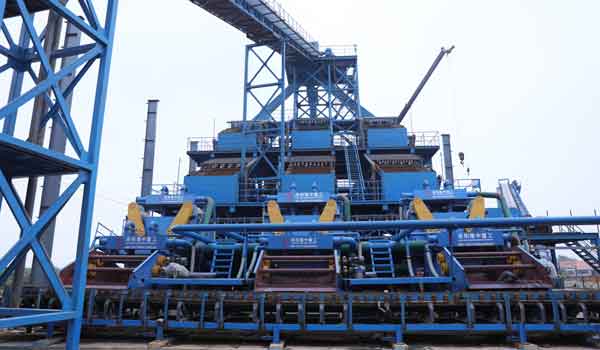
Wastewater from the sewage transfer pool is pumped by a vertical pump (4/3) into the (S-6000). The thickened sludge from the flows naturally into the sludge transfer tank. It is then fed into the chamber filter press via a dedicated pump, where it is filtered into dry cake and discharged. Simultaneously, clarified water overflows from the , while filtrate from the filter press returns to the clean water rotating tank. This process enables fine sand recovery, dry disposal of solid waste, and the recycling and reuse of water resources.
Please enter your inquiry and contact. We will reply you as soon as possible.
We are here for your questions anytime 24/7, welcome your consultation.
The latest sand washer price.
Installation and maintenance.
Screening
Sand Washing Machines
Sludge Treatment
Sand Recycling Machines
Address: Shuangyue Road, Changdai Town, Mengjin County, Luoyang, China
Email: export@lylzzg.com
Tel: +86-18736301510


 日本語
日本語 Русский
 中文
中文 Español
 Français
 Português
 العربية
 Tiếng Việt
 Deutsch
 한국어
한국어 Türkçe
 বাংলা
বাংলা हिन्दी
 Bahasa Melayu
 Kiswahili