
Date: May. 12, 2022
In wet sand washing wastewater, fine and surface sand inevitably wash away with the water flow. Each production line loses approximately 5%–25% of its content, resulting in significant annual losses. This article outlines four effective methods for .
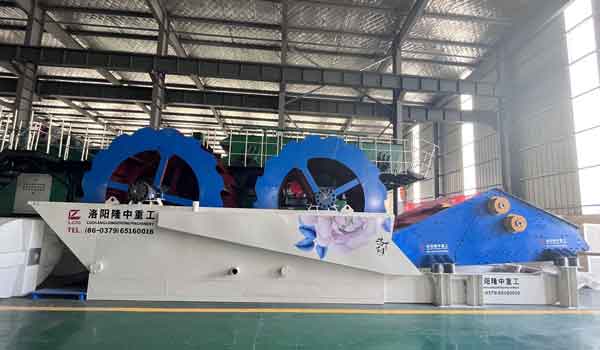
The sand washing machine is categorized into bucket-type and spiral-type models. The wheel bucket sand washer is widely used for material washing in mining, building materials, chemicals, transportation, concrete mixing plants, and other industries. Its washing process involves circular motion. Spiral sand washing equipment utilizes spiral blades to agitate and clean soil. Similarly, it separates sand from mud and water based on their differing specific gravities, allowing water and mud to drain along the chute.
However, regardless of the sand washing machine type, agitation inevitably lifts a substantial portion of sand. This results in incomplete separation, causing sand to escape with the overflow water and leading to significant material loss.
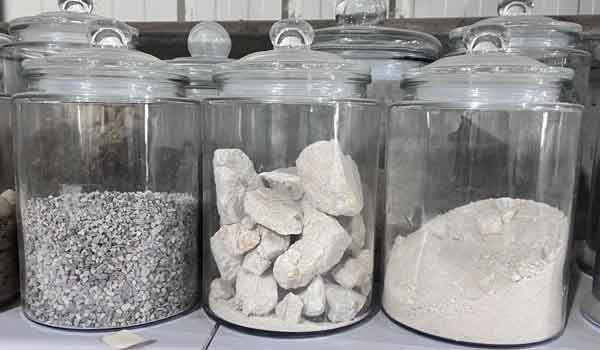
Sand washing wastewater flows into the sedimentation tank, preferably equipped with three layers, allowing for layer-by-layer settling over time. Due to the high specific gravity of sand and mud, separation can be achieved after a relatively long period.
However, this method has drawbacks. The prolonged precipitation process requires a large footprint for the sedimentation tanks, and the settled sand and mud must be manually excavated later, consuming significant time and labor.
Sand washing wastewater is discharged directly onto the screen surface of a linear dewatering screen to recover lost sand.
The disadvantage is that if there is excessive mud content, recovery may fail entirely, resulting in a mixture of sediment rather than clean recovered material.
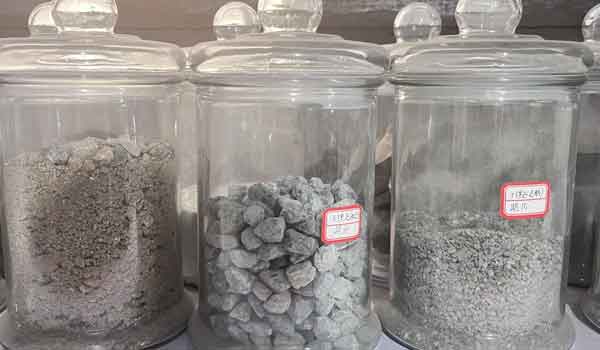
Wastewater from sand washing is discharged directly into the lower water tank of the fine sand collector. The slurry pump then transports the mixed sand and mud water to the cyclone, which discharges it onto the screen surface. The fine sand fraction is discharged via the screen, while the mud and water flow back into the lower water tank, creating a continuous cycle that effectively extracts sand from the wastewater.
Two key operational considerations for the fine sand recycling machine are: first, avoid feeding material during startup; second, account for total power requirements when configuring the transformer and adjust voltage levels appropriately to ensure normal equipment operation without low-voltage issues.
Lost sand-water mixtures are discharged into a settling tank, where chemical agents are added to rapidly aggregate mud and sand into flocs, enabling quick separation of sand, mud, and water. However, this method is primarily used in the coal slime industry for recovering clean and fine coal. Its application in sand and gravel yards faces certain limitations and is not yet widely adopted.
Please enter your inquiry and contact. We will reply you as soon as possible.
We are here for your questions anytime 24/7, welcome your consultation.
The latest sand washer price.
Installation and maintenance.
Screening
Sand Washing Machines
Sludge Treatment
Sand Recycling Machines
Address: Shuangyue Road, Changdai Town, Mengjin County, Luoyang, China
Email: export@lylzzg.com
Tel: +86-18736301510


 日本語
 Русский
 中文
 Español
 Français
 Português
 العربية
 Tiếng Việt
 Deutsch
 한국어
 Türkçe
 বাংলা
 हिन्दी
 Bahasa Melayu
 Kiswahili